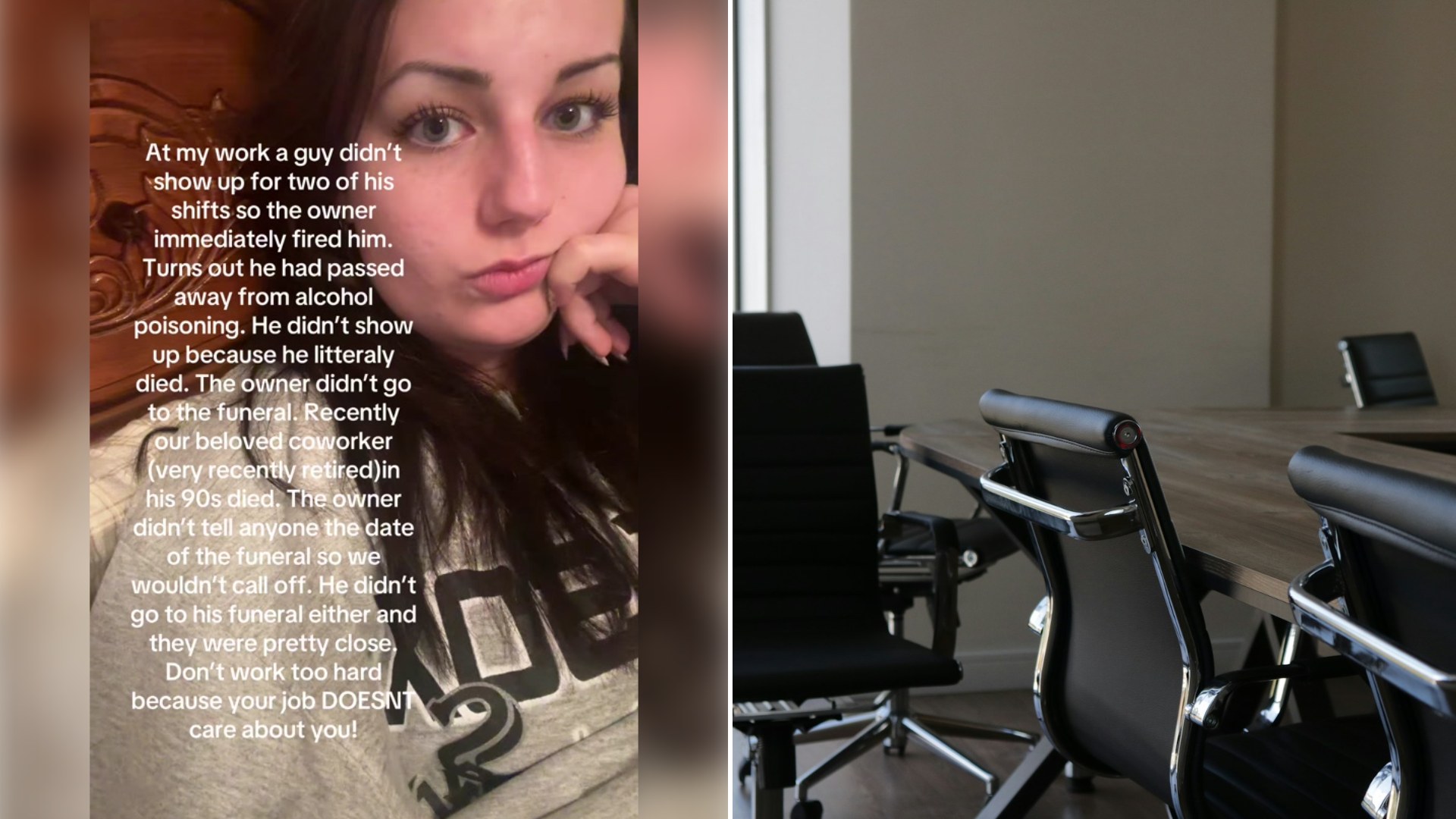
A TikTok creator who posts as @ashleysthoughts8 has shared a pointed critique of her employer, alleging in a video viewed 1.6 million times that the company fired a worker who had died and separately hid a coworker’s funeral date so staff wouldn’t call off work to attend. She frames both incidents as evidence of a broader lack of empathy running through the workplace.
The claims, delivered through on-screen text and narration, are presented as the creator’s own account of workplace events, and they have not been independently corroborated. Her caption reflects genuine frustration and exhaustion: “I have given so much to my job and they treat us as if we’re nothing,” tagged with #grief, #work, and #sad, framing the video less as a formal complaint and more as an emotional release after what she describes as repeated instances of the company failing to treat its employees with basic compassion.
According to the creator, one of the incidents involved an employee who had died being formally terminated by the company, a detail that, as she presents it, speaks to a kind of bureaucratic coldness, processing an employee’s death as an administrative matter to be resolved through termination paperwork rather than treating the loss with any apparent sensitivity. The second incident she describes involves a coworker’s funeral date being concealed from staff, which she alleges was done specifically to prevent employees from requesting time off to attend, prioritizing staffing levels over allowing coworkers to grieve and pay their respects together.
Workplace grief and bereavement policies have become a recurring subject of frustration in viral workplace content, as employees increasingly use social media to call attention to what they see as inadequate or even dehumanizing corporate responses to death and loss. @ashleysthoughts8’s video fits into that broader pattern, using two specific alleged incidents to make a larger argument about company culture rather than treating either event as an isolated failure.
Because these are allegations made by a single employee without a stated response from the employer, the specifics deserve appropriate caution; workplaces facing this kind of public criticism are typically given the opportunity to respond or clarify their policies, and no such response appears alongside the video’s claims. Still, the emotional core of the video, a sense of having given significant effort to a job that, in her telling, offers little empathy in return, is presented as her genuine and deeply felt experience, regardless of how the underlying incidents might be characterized by the company itself.
The video’s reach, 1.6 million views, suggests the frustration she describes resonated widely with an audience of viewers who may have encountered similar treatment in their own workplaces, particularly around how employers handle sensitive moments involving death, grief, and time off.
The Takeaway
Workplace experts generally agree that how an employer handles moments of grief and loss says a great deal about its broader culture, and that policies allowing reasonable time off for bereavement, along with transparent communication about funerals and memorials, tend to build long-term trust and loyalty among staff. Employees who feel a workplace has handled a colleague’s death poorly are encouraged to document specific incidents, raise concerns through HR or employee relations channels where available, and connect with coworkers who may share similar concerns, since collective feedback often carries more weight than an individual complaint. Where a company’s response falls short repeatedly, it may also be worth exploring whether local labor protections or bereavement leave laws apply to the situation.