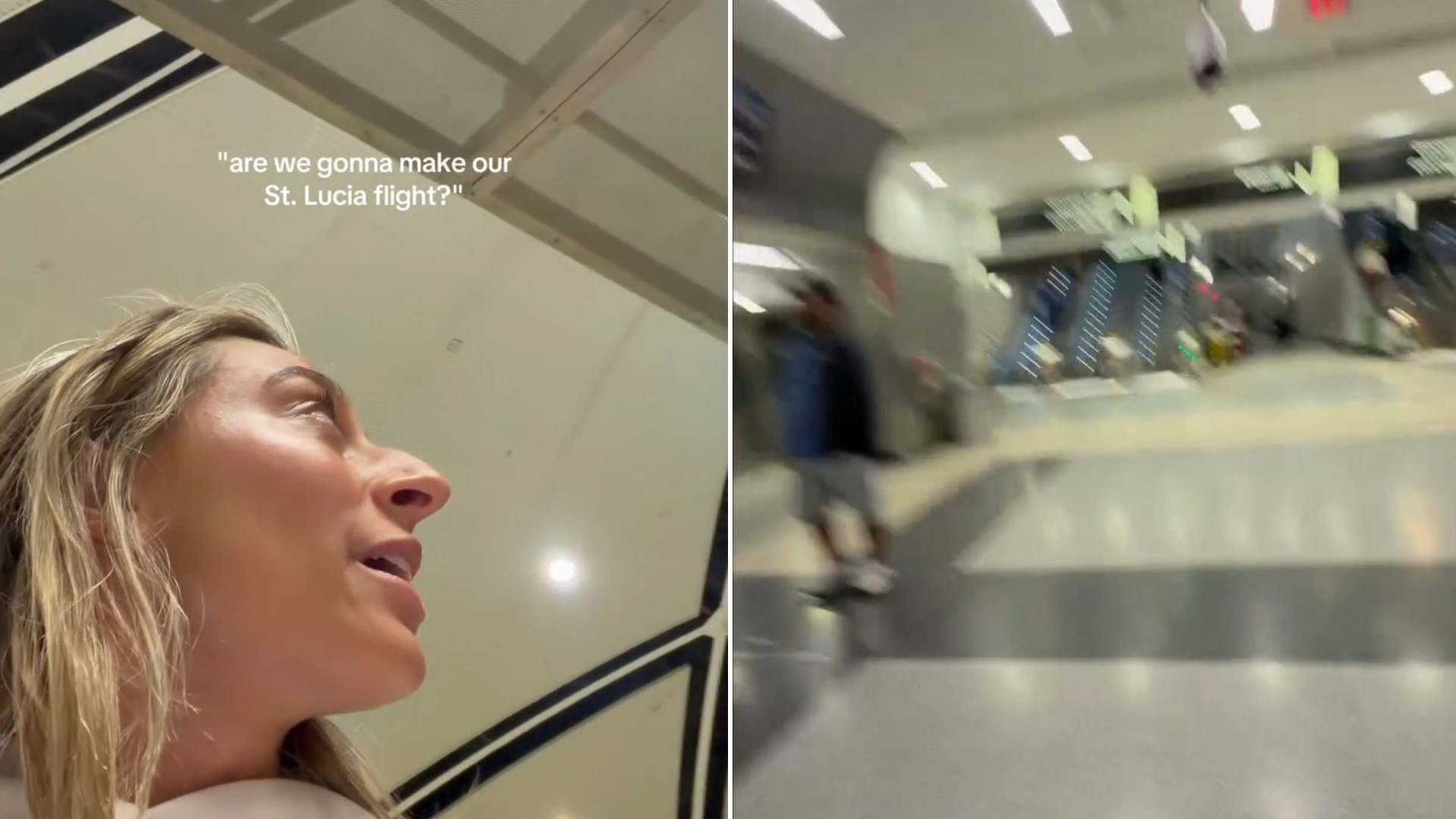
There is a particular kind of panic that only a missed connection can produce, the kind where a boarding pass suddenly feels like a countdown clock. For one newlywed couple, that panic arrived in the middle of their honeymoon, at an airport counter, with a gate agent standing between them and the next leg of a trip they had spent months planning.
The bride, who posts under @macey_mexico, filmed the entire scramble as it happened, turning her phone toward the counter as she and airline staff worked through the options in real time. There was no reenactment, no staged retelling after the fact. The video captures the stress exactly as it unfolded, the kind of unscripted tension that makes viewers lean in because they genuinely do not know how it ends.
What makes the clip resonate is not just the near miss itself, but the tone she gives it. Rather than framing the moment as a disaster that nearly ruined the trip, she captions it as a memory she and her new husband will be laughing about for years, the story they will tell at dinner parties and, eventually, to their own kids. It is a reframe that a lot of newly married couples instinctively reach for once the adrenaline fades: the flight delay, the lost reservation, the rained-out hike become the texture of the marriage rather than a blemish on it.
That instinct is worth paying attention to, because travel stress is one of the most universal experiences a couple can share, and how a couple handles it early on tends to say something about how they will handle bigger disruptions later. Airports strip away control. You cannot argue your way onto a delayed flight or negotiate with a mechanical issue. What you can control is how you treat the person standing next to you while everything else falls apart, and viewers responding to this video seem to sense that the couple passed that test without even realizing they were being tested.
There is also a practical layer underneath the emotional one. Missed connections are far more common on honeymoon itineraries than most travelers expect, in part because couples often book the most scenic or most affordable routing rather than the most reliable one, stacking multiple short layovers instead of paying more for a direct flight. A tight connection that looks fine on paper can unravel the moment the first leg leaves the gate even a few minutes late. Airlines generally have more flexibility to rebook than travelers assume, especially when a missed connection is the airline’s own doing rather than the passenger’s, but that flexibility usually has to be requested calmly and specifically rather than assumed.
Travel agents and frequent flyers often recommend a few habits precisely because moments like this one are so common: screenshotting the full itinerary before departure, knowing the rebooking policy of the specific airline rather than a general rule of thumb, and asking a gate agent directly and politely for every available option rather than accepting the first one offered. None of that guarantees a smooth trip, but it does shrink the odds of a scramble turning into a lost day entirely.
What the video ultimately captures, though, is less a travel hack and more a small marriage milestone hiding inside a stressful afternoon. Plenty of couples spend years together before facing a real test of teamwork under pressure. This couple got theirs within days of the wedding, filmed it by accident, and came out the other side with proof that they can handle chaos together. That is arguably a better souvenir than anything they could have bought at the destination they were racing to reach.
For anyone watching and recognizing their own honeymoon nerves in it, the takeaway is a gentle one. The itinerary is never the point. The story you tell afterward is, and sometimes the best stories are the ones that felt the worst while they were happening.
There is a wider lesson in this kind of moment about how couples build resilience together long before anyone would think to use that word. The stress of a missed connection is small compared to the bigger disruptions a marriage will eventually face, whether that is a job loss, a family emergency, or a health scare, but the muscle used to get through it is the same one. Staying calm, dividing tasks, and treating the other person as a teammate rather than someone to vent frustration at are skills that show up first in low-stakes situations like an airport counter, long before they get tested in higher-stakes ones. Couples counselors often encourage newly married partners to pay attention to exactly these small, unplanned tests, because they tend to be far more predictive of long-term compatibility than any conversation had before the wedding about values or goals. A honeymoon rarely goes exactly as planned, and in a strange way, the parts that go wrong are often the parts that end up mattering most once the trip is long over.
It is a small thing, in the end, to be handed a boarding pass and a resolved itinerary after a scare like that. But small things are often exactly what people remember longest, long after the honeymoon suntan has faded and the souvenirs have found a shelf to sit on.
Gate agents themselves have confirmed in interviews that the single most effective thing a stranded traveler can do is stay visibly calm and specific about what they need, since agents are juggling dozens of disrupted passengers at once and tend to prioritize the ones who make their job easier rather than harder, a small behavioral detail that this couple’s composed-but-stressed demeanor on camera happens to illustrate well.