Some of the most significant turns in a person’s life arrive disguised as something else entirely, and for one man, a trip his mother sent him on for graduate school ended up rewriting the whole trajectory of his future in a way nobody, including him, could have predicted.
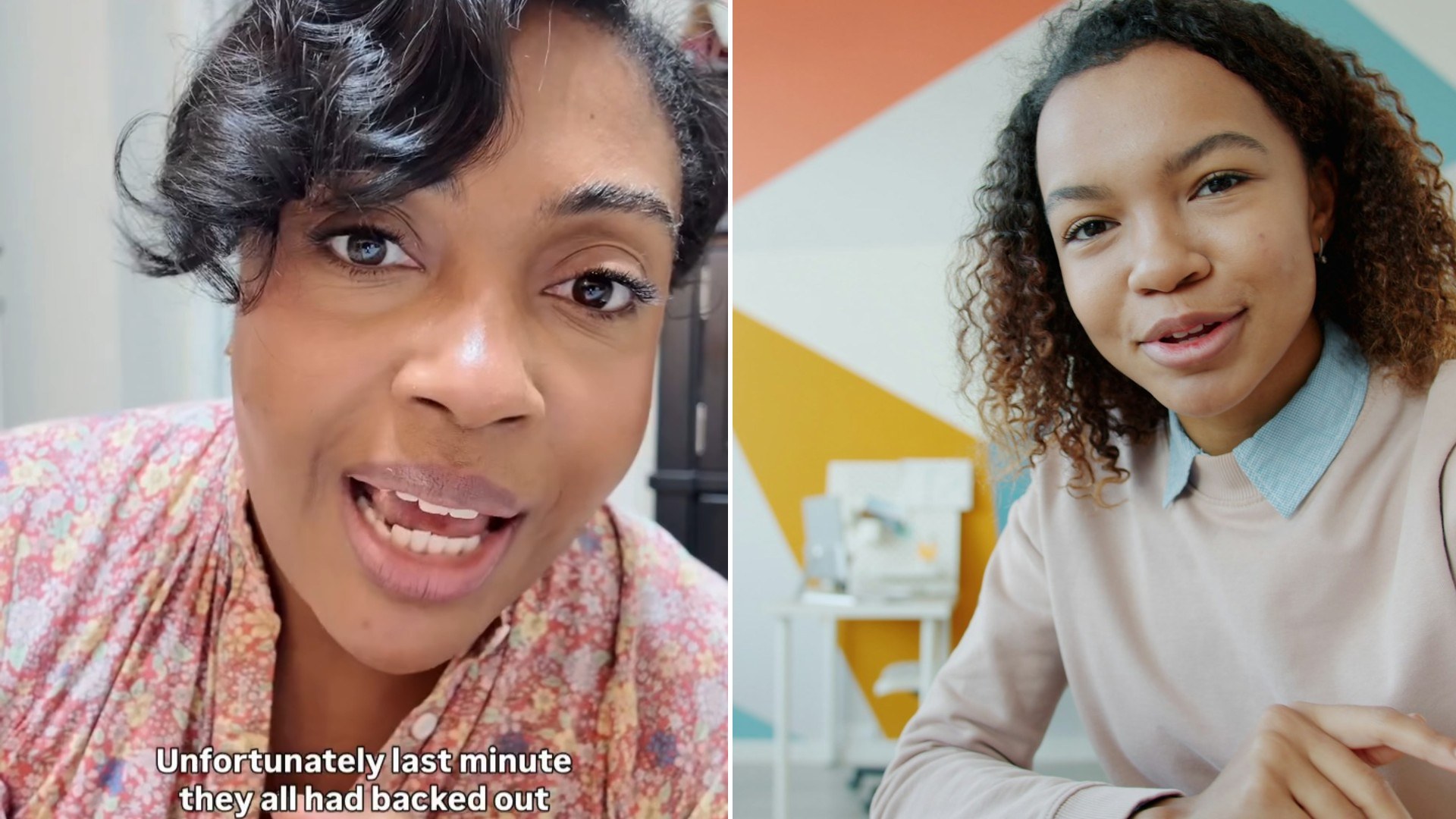
His wife, @thekarnes, tells the story directly to camera, recounting how her husband moved from India to the United States back in 2017 to pursue graduate studies, a decision driven largely by his mother’s encouragement rather than his own initial plan. What was meant to be a chapter defined by coursework and a degree became, instead, the setting where he met the woman he would eventually marry.
What gives the story its particular charm is a detail the creator makes a point of including: her husband is not someone who talks easily about love or emotional topics. That detail matters, because it reframes the entire video. This is not a couple who naturally narrates their romance in sweeping, sentimental terms. It is one partner stepping in to tell the story precisely because the other one would not typically choose to, which gives the account a kind of second-hand tenderness, a love story told partly on behalf of someone who finds it easier to live it than to describe it.
International graduate students relocating for school often experience one of the more disorienting versions of moving abroad, arriving in a new country not for a job or a relationship but for an academic program, with a support network still fully rooted back home. It is a transition built around books and coursework, not around meeting people, which is exactly what makes a life-altering personal connection formed during that period feel so unplanned. He went for a degree. He left with a marriage.
There is a recognizable shape to this story that echoes well beyond one couple. Major life relocations, whether for graduate school, a new job, or family circumstances, are so often framed narrowly around their stated purpose that the personal consequences get treated as incidental, almost beside the point. Yet for many people who have made a similar move, the professional or academic reason that got them on the plane in the first place is not actually what they remember most vividly years later. It is the people they met once they landed, the community they built from nothing, and, for some, the partner they found in an environment where they otherwise knew almost no one.
That pattern is worth naming for anyone currently facing a similar transition, whether it is graduate school, a work relocation, or any other move that uproots a familiar life in pursuit of a specific, narrower goal. The explicit reason for the move rarely captures the full value of the experience. Being placed somewhere unfamiliar, without an existing social circle to fall back on, tends to accelerate the kind of connections that might otherwise take years to form in a more comfortable, settled environment. Necessity pushes people to build relationships faster and more intentionally than they might in a hometown surrounded by decades of established friendships.
There is also something worth noting in the fact that his mother was the one who pushed for the trip in the first place. Parents encouraging a child to study abroad are almost always thinking about career prospects, academic credentials, and long-term opportunity. Rarely does anyone frame that encouragement around the possibility of a life partner, yet it is often exactly these unplanned, secondary consequences of a parent’s practical advice that end up mattering most in the long run. A mother wanted her son to get a graduate degree. What she actually gave him, as it turned out, was an entirely different life.
Told by the person who knows him best, in a way he might not tell it himself, the story stands as a reminder that some of the most important chapters of a life are the ones nobody actually planned. He crossed an ocean to sit in a classroom, and ended up building a family instead.
There is also something worth noting about how relocation stories like this one tend to get remembered differently by each person involved. He may still describe the move primarily in terms of the degree he came for, the coursework, the specific academic goals that brought him across an ocean in the first place. She, by contrast, remembers it as the beginning of their relationship, the moment two entirely separate lives happened to intersect because of a decision that had nothing to do with either of them personally. Both versions of the story are true at once, and that duality is common in relationships that begin during a period defined by something other than romance. The degree was real. The graduate program was real. But so was the far less planned outcome sitting quietly alongside it, waiting to be recognized only once enough time had passed to see the fuller shape of what that move had actually set in motion.
It is a fitting kind of tribute, in the end, that the story of a quiet man’s love is being told loudly, warmly, and publicly by the one person he chose to let all the way in.
International students in graduate programs frequently describe this exact dynamic, where the structured, almost accidental socializing built into orientation weeks, shared coursework, and campus housing ends up producing deeper, faster friendships and relationships than the more deliberate, slower-paced dating most people experience back in a familiar hometown surrounded by existing social circles.