Taking on a full RV renovation is a significant undertaking under any circumstances, but doing it alone, as a single mother, while planning to eventually live in that RV full time with a family, raises the stakes considerably. That’s the project one creator has begun documenting in a new video series, starting with an unfinished shell of a vehicle and a clearly stated goal: to build it, largely on her own, into a full-time home on wheels.
The first video in the series shows the RV’s rough starting condition, unfinished interiors, exposed structural elements, and the kind of blank-slate mess that makes a project like this feel daunting before a single wall panel goes up. In voiceover, @coramonster walks through her early steps and the labor already involved, while candidly explaining the logistical challenges facing her, from budgeting materials to figuring out sequencing on a build most people would hire professionals to handle in full.
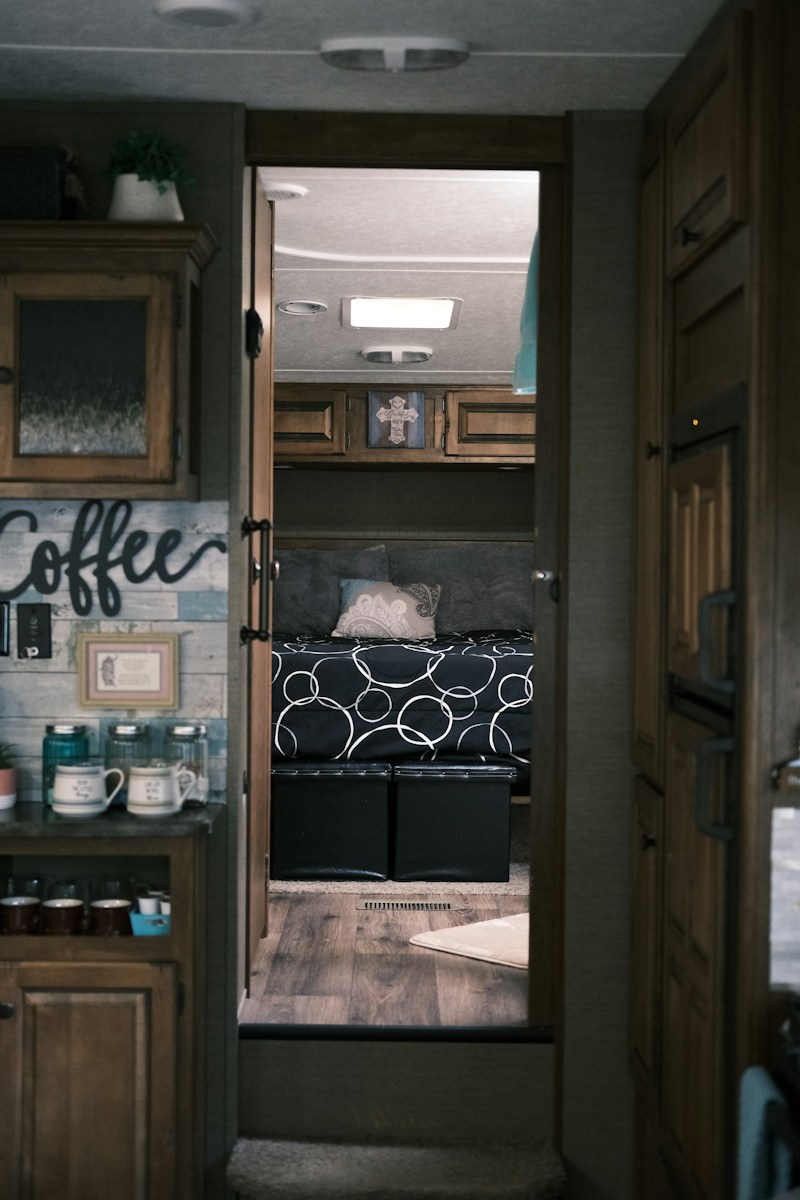
image: a kitchen and dining area of a motor home. photo credit: unsplash
View this post on Instagram
Full-time RV living has grown into a genuine housing alternative for a segment of families looking to sidestep the costs and constraints of traditional home ownership or renting, particularly in markets where both have become increasingly out of reach. But most of the content around that lifestyle tends to focus on the finished product: a polished, fully renovated interior, ready for a scenic road trip. What makes this series notable is that it starts at the opposite end, showing the unglamorous, labor-intensive middle stretch that most van-life content skips entirely.
Renovating an RV from a bare shell into a livable space is a genuinely complex project, involving electrical work, plumbing, insulation, framing, and finish work, all inside a footprint far smaller and more irregular than a standard home renovation. Doing that work solo, without a partner to share the physical labor or split decision-making, adds an entirely different layer of difficulty. It also means every choice, every measurement, and every mistake falls on one person’s shoulders, which is precisely why documenting the process carries real value for anyone considering a similar path.
For other single parents specifically, a project like this represents something beyond a home renovation story. It’s a demonstration that a nontraditional housing solution, one that requires serious upfront labor and problem-solving, is achievable without a second set of hands, provided there’s enough patience and willingness to learn skills as needed along the way. Renovation content built around a two-person team or a hired contractor crew doesn’t offer much of a practical roadmap to someone tackling the project alone; this kind of series does, simply by showing what solo problem-solving on a build like this actually looks like in practice.
There’s also a broader value in watching a project like this unfold in real time rather than only seeing the finished result. Renovation series that document early, rough stages alongside later progress give viewers a realistic sense of how long these projects actually take and how much troubleshooting happens along the way, tempering the kind of unrealistic timeline expectations that heavily edited before-and-after content can create. Anyone seriously considering an RV renovation of their own would do well to watch a series like this from the beginning, precisely because it doesn’t skip the hard, unfinished parts.
Ultimately, what’s being built here is more than a living space. It’s a home meant to house a family, assembled piece by piece by someone determined to make it work on her own terms, and that combination of practical skill-building and clear personal motivation is likely why the early stages of this project have already found an audience willing to follow it through to the end.
There’s also a useful, practical lesson buried in the way a project like this needs to be sequenced. Renovating a livable space from a bare shell generally requires tackling structural and mechanical work first, framing, insulation, electrical, and plumbing, well before any of the more visually satisfying finish work like flooring, cabinetry, or paint can begin. For a solo renovator without a construction background, that sequencing has to be learned rather than assumed, often through research, trial and error, and a willingness to redo something that wasn’t done correctly the first time. Documenting that learning curve honestly, rather than skipping straight to polished results, is part of what gives a series like this genuine value to anyone considering the same kind of build.
For other parents weighing a nontraditional housing path of their own, whether that’s an RV, a van, or a tiny home, the biggest takeaway from a project like this one may simply be permission: permission to start before every skill has been mastered, and to learn the rest along the way, one wall and one wiring diagram at a time. Full-time RV living isn’t a fit for every family, but for those drawn to it, watching someone else navigate the unglamorous, uncertain middle stretch of the build can make the entire idea feel considerably less intimidating.
There’s also a quiet but important point here about how solo big projects get finished at all: not through a single burst of motivation, but through consistent, incremental progress documented and revisited over time. Sharing the process publicly, messy early stages included, can function as its own kind of accountability, turning a private renovation into a commitment that’s harder to quietly abandon once an audience is following along and waiting to see the next step.