Some of the most affecting encounters happen in the span of a single meal with someone whose name you might not even remember a year later, but whose words stay with you regardless.
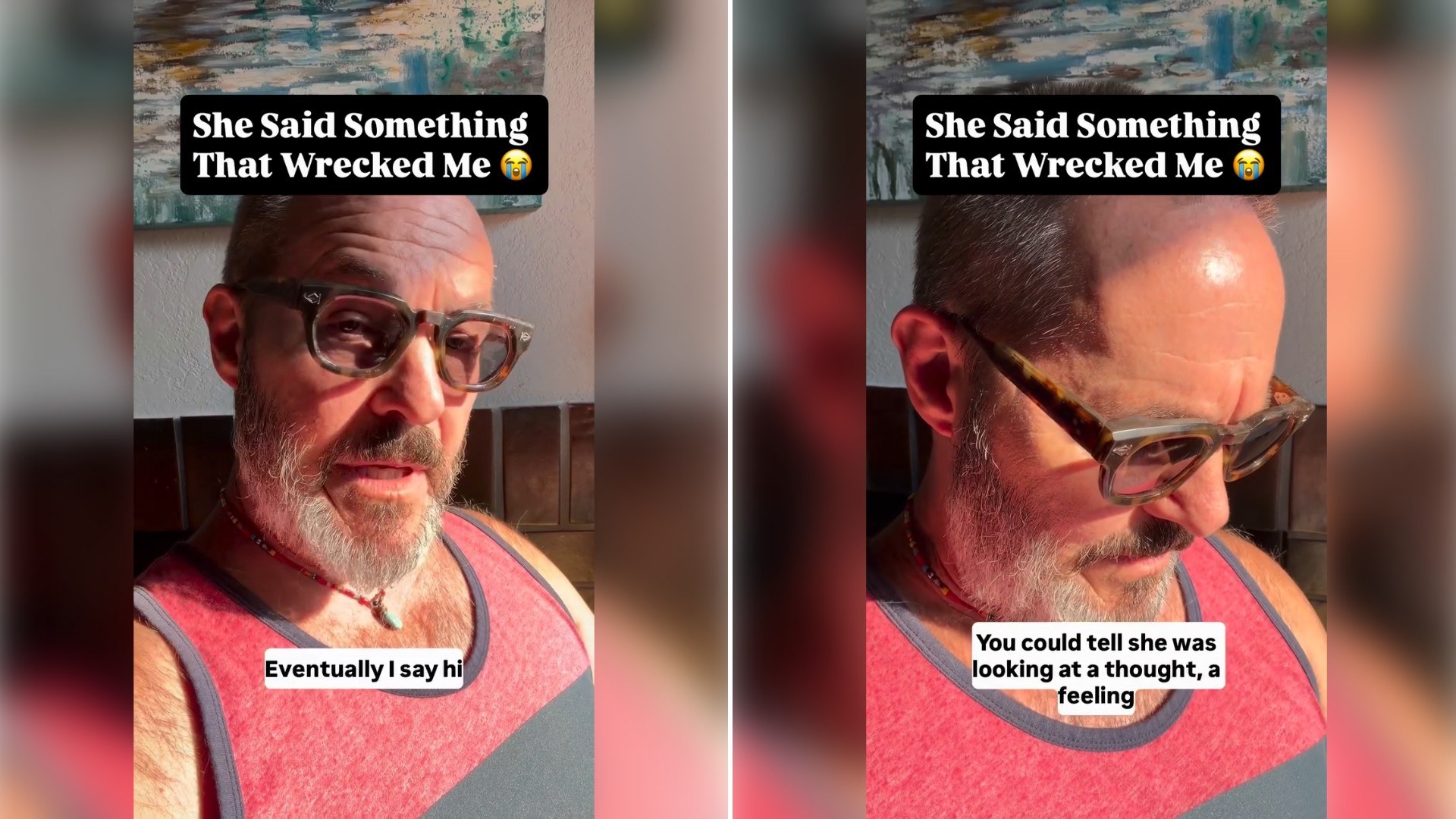
The creator, @craig_westhoff, tells a personal, single-shot storytime about sharing a meal with someone he encountered while out, and a specific thing she said to him that stuck emotionally long after the meal ended. The caption teases the moment directly, “she said something that wrecked me,” without spelling out the full detail in the caption itself, leaving the video to carry the weight of the reveal.
View this post on Instagram
There’s a specific kind of vulnerability required to tell this kind of story on camera, sitting in front of a lens and describing, in a single unedited take, a moment that genuinely reshaped how you see things. Storytime formats like this one work precisely because they mirror how these encounters actually unfold in real life: unscripted, often with a total stranger, and impossible to predict until the words are already out.
The decision to withhold the exact wording from the caption, while making clear how much it mattered, is a deliberate storytelling choice worth examining. A caption that spelled out the full quote up front would let a scrolling viewer absorb the punchline without ever watching the setup, the context, the buildup that gives the eventual line its weight. By holding it back, the creator forces the platform’s own algorithm and audience to actually sit through the telling, which mirrors the original experience: nobody walking into a shared meal with a stranger knows in advance which sentence is going to be the one that stays with them. The suspense built into the format isn’t a gimmick so much as an honest recreation of how these moments actually land in real life, unannounced and only recognizable as significant in hindsight.
Psychologists who study meaningful stranger interactions often describe a specific phenomenon where brief, low-stakes encounters with people who have no stake in our daily lives can deliver insight that close friends and family, weighed down by history and context, sometimes can’t. A stranger has nothing to lose by being blunt, and sometimes that bluntness lands exactly where it needs to. Close relationships come with an accumulated history of past conversations, unspoken tensions, and mutual awareness of how a comment might be received, all of which can make even well-meaning friends and family hedge their words carefully. A stranger, met once and likely never to be seen again, has no such history to protect, which frees them to say the thing that needs saying without calculating the social cost of saying it.
There’s also something worth noting about the specific setting of a shared meal as the backdrop for this kind of exchange. Eating together has a long-documented way of lowering social guardedness in ways that a passing conversation on the street or in a waiting room rarely manages. The ritual of a shared meal, the pace it imposes, the mutual vulnerability of eating in front of someone, creates space for exactly the kind of unguarded honesty that produces a sentence significant enough to be remembered as life-altering. It’s not a coincidence that so many of these meaningful-stranger stories seem to happen over food rather than in a hallway or an elevator; the meal itself does some of the emotional work of opening the conversation up.
Storytime videos built around a single transformative sentence have become a durable genre online precisely because they promise something rare: the sense that an ordinary day can be interrupted by an insight big enough to reroute how someone sees their entire life going forward. Viewers are drawn to this kind of content not just out of curiosity about what was said, but because it offers proof that this kind of moment is still possible, that meaning can still ambush a person in the most mundane setting imaginable, a shared meal with someone they may never cross paths with again.
There’s also a particular kind of honesty inherent to the single-take, direct-to-camera storytime format that separates it from a more polished, scripted piece of content. No cutaways, no b-roll, no edited pauses for effect, just one person talking through what happened as it comes back to them. That rawness mirrors the emotional state the story itself describes: someone still visibly processing an encounter that clearly hasn’t fully settled yet. Viewers can sense the difference between a story that’s been rehearsed and repeated many times and one being told while the speaker is still working out exactly how much it affected him, and it’s usually the latter that draws the strongest reaction, because the vulnerability on screen reads as unmistakably real.
It’s worth considering, too, how rare it has become for strangers to have this kind of unguarded exchange at all. Much of modern life is structured to minimize exactly this sort of encounter, headphones in, eyes on a phone, transactions kept brief and efficient. A meal shared with a stranger long enough for a genuinely significant sentence to surface runs against nearly every default setting of how people now move through public space. That rarity is likely part of why the story resonated as widely as it did online; it’s a small, hopeful counterexample to the more common assumption that meaningful connection with strangers has become nearly extinct.
Whatever she actually said, the video makes clear it wasn’t a passing comment. It was the kind of sentence that apparently rearranged something in him, the kind most people only get from a handful of encounters in an entire lifetime, delivered not by someone who knew him well, but by someone who, for the length of one meal, simply happened to be paying closer attention than anyone expected.