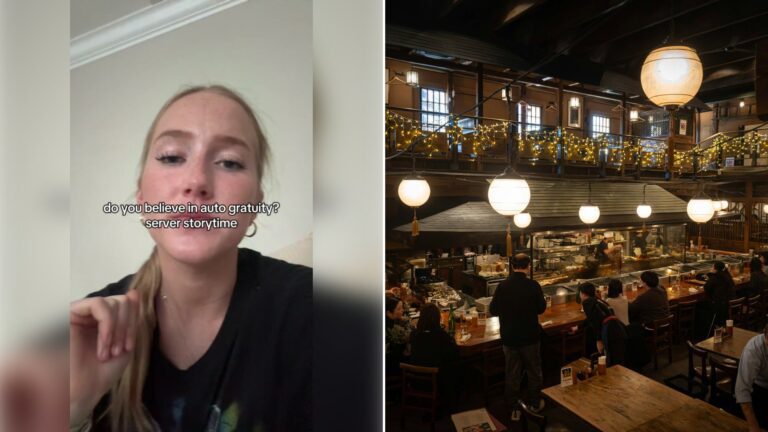
Restaurant servers see the same etiquette slips repeatedly, and while most customers never hear about it directly, these are the behaviors that come up most often when servers talk about what actually bothers them.
1. Snapping fingers or waving to get attention
Servers consistently name this as one of the most immediately off-putting ways a customer can ask for help.
2. Being on the phone when ordering
Making a server wait while finishing a phone call before ordering is widely cited as a basic courtesy most customers overlook.
3. Stacking plates to be ‘helpful’
Many servers say this well-intentioned habit actually disrupts their system rather than genuinely helping.
4. Not acknowledging the server as a person
Servers frequently note the difference between a customer who makes eye contact and says thank you and one who treats them as invisible.
5. Leaving a large mess on purpose
Deliberately leaving an excessive mess, beyond normal eating, is a frequently cited frustration among serving staff.
6. Complaining to leave a smaller tip after eating everything
Servers note this specific pattern, eating the full meal before registering a complaint, as a common and recognizable tactic.
7. Assuming the server set the price or policy
Taking out frustration about a price or restaurant policy on the server, rather than management, is consistently named as an unfair but common habit.
Most of these mistakes come down to basic consideration rather than any specialized etiquette knowledge, which is part of why servers find them so consistently frustrating, they are avoidable with very little effort.
More from Cultivated Comfort
- Woman Drives Six Hours From Ohio to North Carolina to Test Out a Rapper’s Chicken and Waffles Restaurant, Then Her Comment Section Argues Over Whether It Was Worth It
- Food Creator Tries Balkan Cuisine for the First Time at a One Man Restaurant in Texas, Then Viewers From the Region Step In to Explain Every Dish
- Food Creator Revives Anthony Bourdain’s Old Rules About Fish on Mondays and Skipping Brunch to Argue Exclusivity Does Not Always Mean Great Dining in New York City