In a 13 second reel, travel creator izkiz opens with on screen text that begins “Sure Santorini and Mykonos are cool but have you heard of…” and then answers it with one word that fills the frame: Kimolos. The island sits in the Cyclades, and the caption calls it “tiny, quiet” and “still wonderfully untouched compared to some of its Cycladic neighbours.”
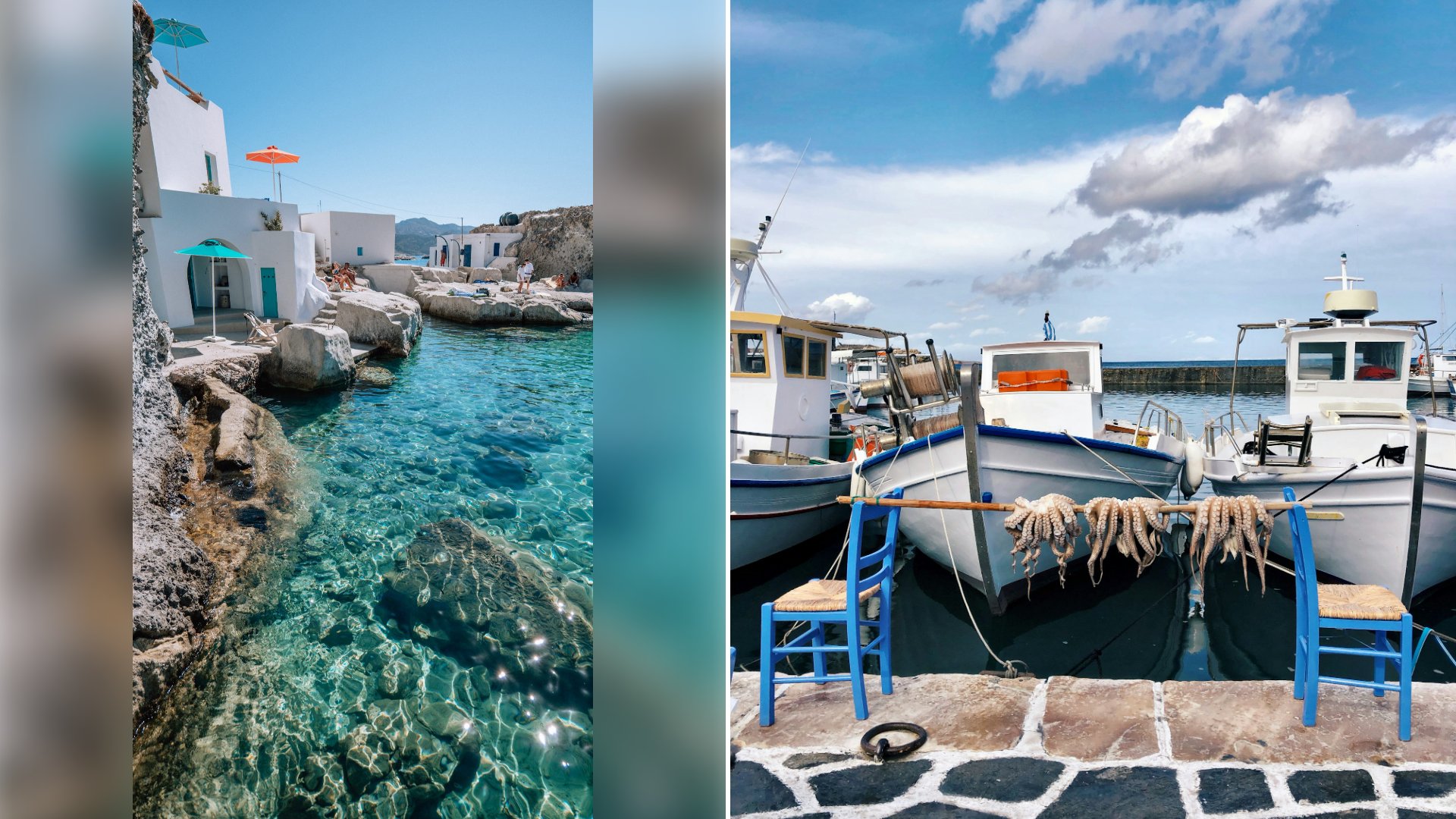
The clips move quickly. Someone dives off a flat rock into open blue water. A whitewashed lane is strung with small flags and lined with turquoise chairs. A boat floats over green shallows beside a cluster of white houses built at the water’s edge. A table on a terrace holds a green bottle of beer, a glass, a basket of bread, fried potatoes and a dip, with the sea behind it. Later frames show a suite with a plunge pool, a striped towel with a straw bag and an open book on the rocks, goats on a golden hillside at sunset, a woman in a white dress beside a bougainvillea, and a blue domed church under Greek flags.
The caption turns the reel into a short itinerary. The creator writes that “September in Greece is my favourite, especially on Kimolos,” and that it is “one of those Greek islands I already know I’ll come back to time and time again.” Then comes a list headed “Save these for your trip,” with nine stops: an evening wander through Chorio, the main village, when “everyone spills out into the little squares”; a swim at Prassa Beach, described as famous for its “ridiculously clear turquoise water”; an afternoon at Bonatsa Beach; a boat trip around Kimolos and neighbouring Polyaigos for hidden coves; the old Kastro in Chorio; Goupa and the colourful sirmata, the traditional fishermen’s boat houses built into the rock; a hike to Skiadi, a huge mushroom shaped rock formation; long lunches in the tavernas, with ladenia, a local speciality “a bit like a Greek tomato and onion flatbread”; and sunset, to enjoy “just how peaceful the island becomes in the evening.”
The creator is also clear about what the island is not. “Kimolos isn’t the island for beach clubs, big resorts or packed itineraries,” the caption says. “Come here for quiet beaches, tiny villages, ridiculously blue water and a much slower side of Greece.”
What the island’s official tourism site says supports the small scale. According to the municipality of Kimolos, the island covers 36 square kilometres with a 38 kilometre coastline and has “approximately 600 permanent residents,” most of them in Chorio. The highest point, Paliokastro, reaches 365 metres.
Getting there takes planning, and the municipality explains how. Milos is the closest island, about 900 metres away, and ferry boats, traditional trawlers and speedboat taxis run daily between the two. Crossings leave from Psathi, the harbour of Kimolos, and arrive at Apollonia on Milos, and “depending on the vessel the trip lasts from 10 to 25 minutes.” From Piraeus, Kimolos is 87 nautical miles away, and the municipality says the journey takes from 4.5 to 7.5 hours depending on the ship. It also says an inter island ship serving several Cyclades calls at Kimolos two or three times a week, and the municipality points travelers to its ferry timetables page for current schedules.
Two of the creator’s stops come with details worth knowing. Polyaigos, the island named in the boat trip, lies roughly one nautical mile northeast of Kimolos. The municipality describes it as the largest uninhabited island of the Aegean, about 18 square kilometres, and its page mentions only private boats and yachts for visiting. It is part of the Natura network and is home to wild goats, the Mediterranean monk seal and Eleonora’s falcon.
Skiadi, the mushroom shaped rock in the hiking tip, is listed in the Atlas of Geological Monuments of the Aegean according to the municipality. Its softer base rock is worn away by wind carried dust and sand while the harder top stays almost intact, which gives it the shape in the caption. The island’s page says the walk from the car drop off to the rock takes 30 to 35 minutes on a signed path, and the full circular route takes 70 to 90 minutes. It advises bringing water, a cap and sun lotion in summer, plus long trousers and shoes suited to long walks.
For a short stay, the post offers a workable shape. Pair evenings in Chorio with a morning swim at Prassa, leave an afternoon for the boat trip, and keep one early start free for the Skiadi walk before the heat.
More from Cultivated Comfort
- Man Demonstrates a Potato Recipe He Says Melts in Your Mouth, Then Tells a Humorous Story About the Trip to Santorini That First Inspired Him to Perfect It
- Caribbean Tourism Headlines Almost Always Go to the Same Handful of Big Name Islands, but a Tiny Island Most Americans Could Not Find on a Map Just Posted Its Best Six Months Ever
- Los Cabos Views Are Unmatched — and This Travel Creator Gave It a Perfect 10