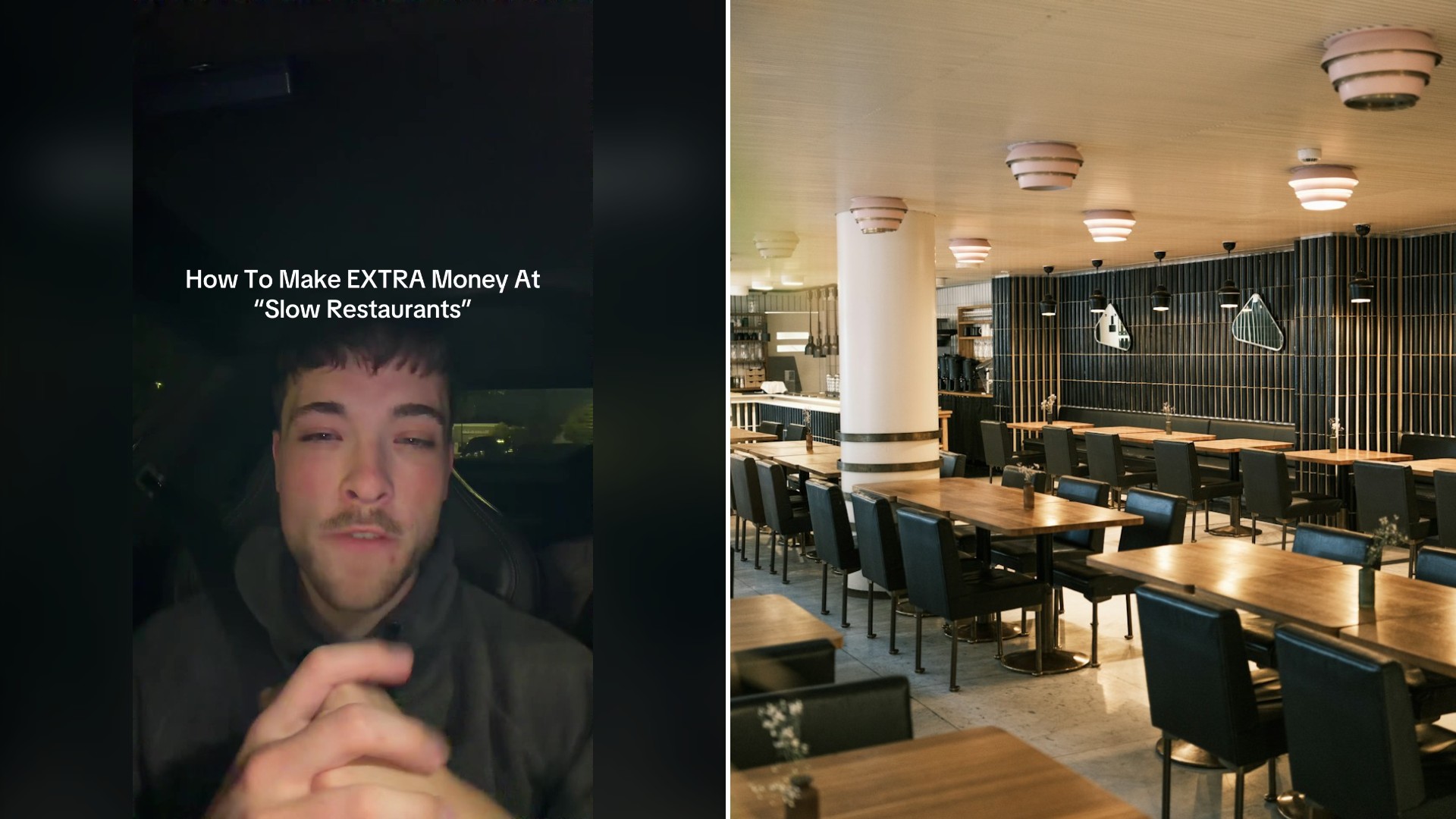
Every server knows the feeling of standing around an empty dining room watching the clock. Ryan Stannard, a server who shares restaurant tips on TikTok as @ryan_stannard4, says he has figured out how to make good money even on dead shifts, and his strategy has pulled in more than 136,000 likes along with plenty of pushback from other servers.
Show Up Early, Leave Rich
His plan starts before the shift does. Ryan says he arrives about 15 minutes early and offers to help coworkers who are already on the floor. That goodwill pays off in two ways. Sometimes coworkers hand him tables. Other times he helps them get ahead on their tables and side work so they can be cut early, and once they leave, he finishes the remaining side work and keeps the tips from the tables that come in after.
The second part of his approach is simple hustle. Instead of scrolling on his phone in the back when it is slow, he walks the floor and checks on his tables. More attention, he says, usually means a better tip at the end of the night.
He is also honest that there is a limit. “I’ve made great money at dead restaurants but it’s basically impossible without regulars, and it’s very stressful,” he wrote. His last piece of advice is the bluntest: “if your restaurant is CONSISTENTLY dead, go somewhere else.” He adds that “Restaurants within walking distance of other restaurants almost ALWAYS do well,” and tells servers, “Don’t stress about if people are going to walk in the door.”
@ryan_stannard4
Other Servers Had Questions
The biggest objection was the very first step. “What restaurants do y’all work at that you’re allowed to clock in fifteen minutes early?” one server asked. Another was even more direct: “No dead restaurant manager letting you clock in 15 minutes early.” At many restaurants, labor costs are watched closely on slow days, and early clock ins are the first thing managers cut.
Others disagreed with handing off tables at all. “I won’t transfer. If I start the table, I’ll finish the table,” one wrote. Another said they keep their late tables on purpose, because those guests are usually ordering dinner and cocktails, and a third added, “I make most of my money the last 20 minutes of my shift.”
Still, some servers said the early arrival idea has worked for them. One described showing up 20 minutes early on a night with no doubles scheduled. “In those 20 minutes I was the only server and got 6 tables,” they wrote.
What Actually Helps on a Slow Shift
Ryan’s specific tactics depend heavily on how a restaurant is managed, but the ideas behind them hold up across most dining rooms.
- Be the server managers trust. Coworkers and managers are far more likely to send tables to the person who helps without being asked.
- Stay visible on the floor. Guests notice attentiveness, especially when the room is quiet and they can see staff standing around.
- Learn your regulars. Remembering names, drinks and usual orders turns occasional guests into people who ask for your section.
- Ask before you assume. Every restaurant has its own rules on clocking in early, picking up tables and transfers, so check with a manager first.
- Track your own numbers. Note which shifts and days actually earn the most so you can request the ones worth working.
- Know when to move on. A restaurant in a busy area with steady foot traffic can be worth more than any trick at a place that is always empty.
Why Slow Shifts Hurt Servers So Much
For guests, an empty restaurant just means fast service. For servers, it can mean a nearly worthless shift. Federal rules allow employers to pay tipped workers a base cash wage as low as $2.13 an hour as long as tips bring them up to the full minimum wage, and the Department of Labor lists how each state handles it. When the room is empty, there are no tips to make up the difference beyond that minimum, which is why servers fight so hard over every table.
That is also why this video got so heated. A strategy that helps one server pick up an extra table can mean another server goes home with less. Ryan frames it as teamwork, and some commenters agreed, but the debate shows how competitive a slow night can get.
Credit for the original video goes to @ryan_stannard4 on TikTok.
More from Cultivated Comfort
- This Food Creator Discovered a One Man Bosnian Restaurant Called Euro Grill and Cafe in Charlotte, North Carolina, Where the Owner’s Warmth and Cevapi Plate Are Stealing Hearts
- This Creator Rushed to a Suddenly Viral Turkish Restaurant and Cafe After One of Its Employees Blew Up Online, Tasting the Food Herself to See What All the Fuss Was About
- Food Reviewer Drives Two Full Hours Just to Critique One Small Food Truck and Delivers His Honest Feedback Directly to the Owners Face to Face Instead of Hiding Behind a Screen