Open almost any pantry in America and there is a good chance you will find a jar of peanut butter. It is a lunchbox classic, a late night snack and a comfort food all in one. That is part of why a recent comparison of old and new jars has struck such a nerve. According to one creator, the jars you have been buying look nearly identical to the ones from years ago, but they hold a good deal less.
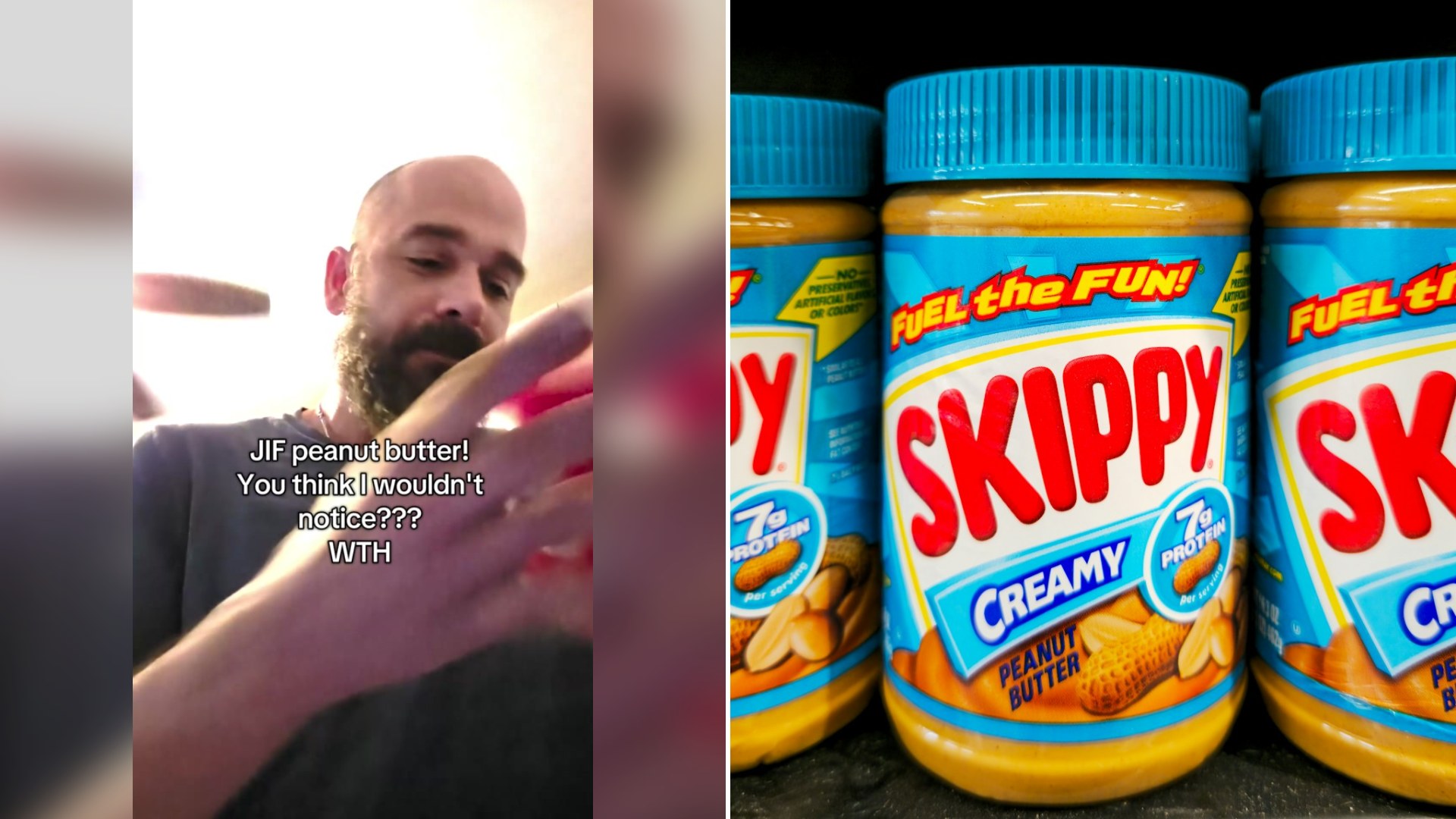
Creator @skaught85 sat down with two jars of Jif and a very unusual prop to explain what he sees as a quiet change in how products are packaged. His caption sums up his feelings, calling it shrinkflation and saying he is frustrated that companies make it nearly impossible to tell by sight how much you are getting.
@skaught85
The same jar, with less inside
He began by describing what Jif used to sell. Years ago, he said, there was a jar that looked just like the one in his hand, and it held 18 ounces of peanut butter. Today, the jars hold 16 ounces, while keeping what he called the same silhouette profile. In other words, the outside shape is the same, but the amount inside is not.
The secret, he explained, is a small divot in the bottom of the jar. The deeper that dent gets, the less room is left inside for peanut butter, even though the jar keeps the same overall height and width. Because most shoppers grab a jar by its shape and do not turn it over to read the weight, the difference can go unnoticed.
He also pointed out a further step. In his example, he showed a jar that is now labeled 13 ounces, compared with the 16 ounces he mentioned a moment earlier. He even held up a receipt to show the two sizes. His point was that the shopper pays more and gets less, and the company benefits from smaller packaging that is easier and cheaper to ship.
A lesson from a British beer glass
What makes his explanation memorable is the second object he brought along. He held up a traditional British nonic pint glass, the kind with a little bulge near the top. He explained that this design dates to the early 1900s and was made so the glass is easier to hold, and so the rim is less likely to chip if it is knocked over.
He then described an even older tradition. Going back to the 1600s, he said, pint glasses in Britain carried a crown stamp to certify that the glass held exactly a pint. In his telling, British drinkers are so particular about getting what they pay for that the system built a kind of customer protection right into the glass.
His comparison was simple. One design is made for accuracy and honesty. The other, in his view, is meant to take advantage of the fact that most of us do not check how much we are getting. As he put it, a person can judge the amount in a glass by looking, but with the jar there is no way to know without reading the label.
Putting the “mess free” claim to the test
He also decided to test the jar’s own promise of being stress free and mess free. He peeled back the pull tab and scooped out a bit of peanut butter, then screwed the lid back on. If he had stopped there, he said, it would have been stress free and mess free. But he still had to use the peanut butter, and he showed how the pull tab ends up coated and cannot simply be put back in. He admitted that if he wiped it off, he would essentially be using more peanut butter than he had meant to, so there was nothing saved.
His closing thoughts were pointed. He said this kind of design hopes the customer is not paying attention, and he asked companies to be as honest as that British glass. His message to viewers was to value the work it took to earn their money and to reward the companies that are straightforward with them.
What shrinkflation is and why it happens
Shrinkflation is the practice of reducing the size or quantity of a product while keeping the price the same, or raising it. It is not unique to peanut butter. Over the last several years, shoppers have reported smaller cereal boxes, lighter bags of chips, shorter rolls of paper towels and ice cream cartons that are no longer a full half gallon.
Companies often point to rising costs for ingredients, shipping and labor. Cutting the size of a product can make it possible to hold a familiar price point, which many shoppers prefer to a visible price hike. But customers often feel that it would be more honest to simply raise the price and keep the portion the same.
How to protect your grocery budget
- Read the net weight. It is printed on the front label, usually near the bottom. Check it each time you buy a staple, since it can change without notice.
- Compare unit prices. The shelf tag lists the cost per ounce. That is the best way to compare one jar to another, or one brand to another.
- Flip the jar over. As he showed, a deep dent in the base can mean less product inside, even when the outside looks the same.
- Try the store brand. Many store brand peanut butters cost less per ounce, and plenty of shoppers find them just as tasty.
- Look at natural varieties. Peanut butters with only peanuts and salt are often sold in simple jars. They need a good stir, but they can be a good value.
- Keep a receipt or a photo. If you buy the same item every month, a quick photo of the label gives you something to compare against next time.
Making your peanut butter last
If you want to stretch what is in the jar, there are a few easy tricks. Use a clean, dry knife each time so the jar stays fresh. Scrape the sides to get every last bit. When the jar is nearly empty, add a spoonful of warm milk or oatmeal and shake it into a quick breakfast, or stir the leftover film into a smoothie. Little habits like these cut down on waste, which matters more when each jar holds less.
Most of all, his message is a reminder that the information is always printed on the package. A few extra seconds in the grocery aisle might not feel exciting, but it can add up to real savings over the course of a year.