A post in a Facebook group for tipped restaurant workers has set off a fresh round of the argument nobody seems able to settle. The message was addressed to “dear guests,” and it did not mince words: your server is not a volunteer, and servers do not work for free.
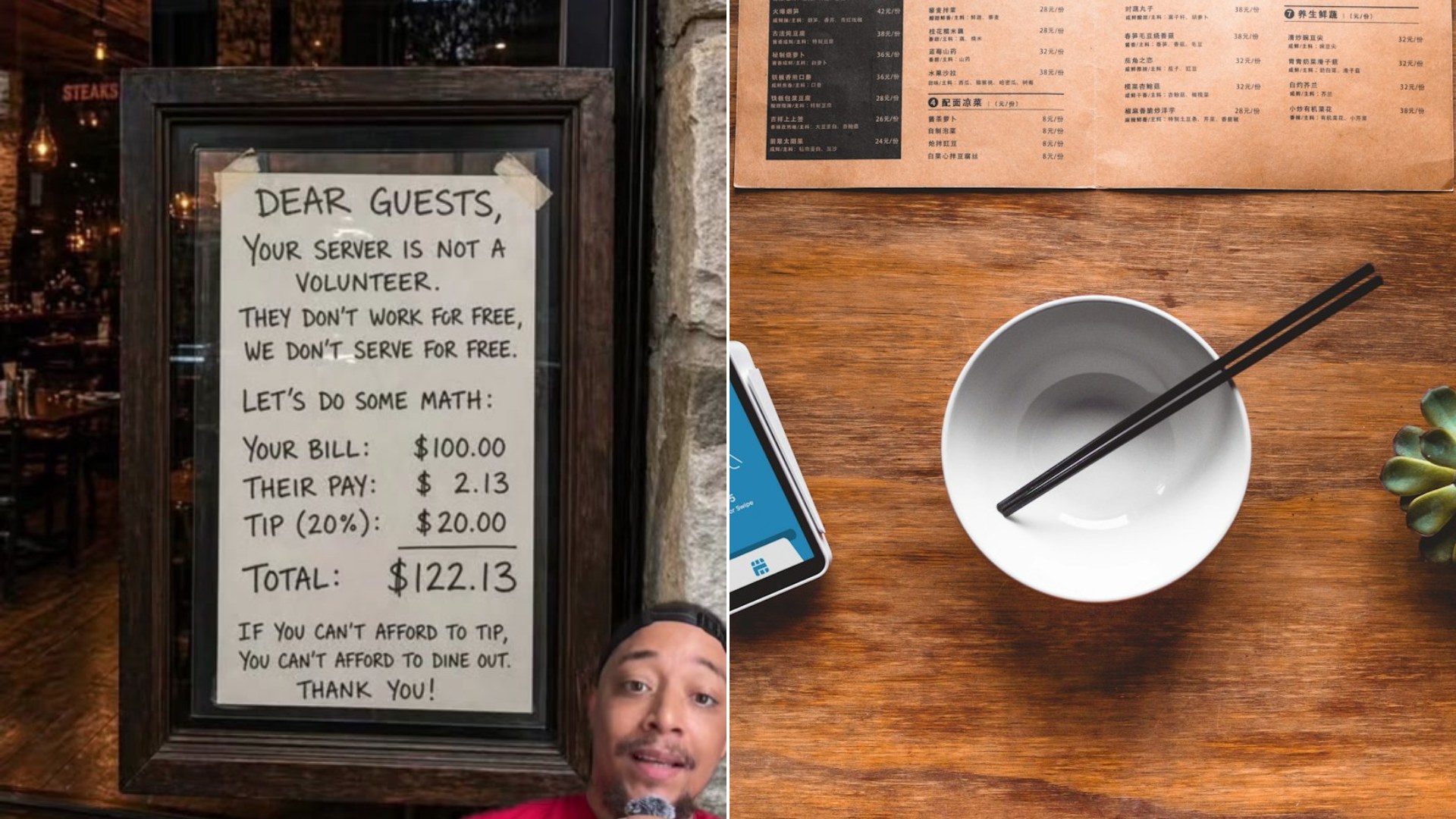
The post then did the math. If your bill is $100, it said, the server’s pay is $2.13, the tipped wage, plus a $20 tip, so your total should be $122.13. And the line at the bottom, the one that got under the skin of @thad_345, said that if you cannot afford a tip, you cannot afford to dine out.
@thad_345 responded with a post of their own, and then took it to TikTok.
@thad_345
Flipping the Slogan
In their reply, @thad_345 suggested a different line altogether. Instead of “if you can’t afford a tip, you can’t afford to dine out,” how about this: if a restaurant cannot pay its employees a livable wage without depending on the generosity of customers, then it cannot afford to be in business.
The creator’s frustration was aimed less at servers than at the way the system is set up. As they see it, big restaurant companies have convinced workers that the customer is the problem for not wanting to pay extra on top of a bill they have already paid, when the real question is why the pay structure leans so heavily on tips in the first place. They pointed out that they have visited three other countries with the same restaurant chains found in America and never had to tip at any of them.
They also described tipping fatigue as already a real thing, and said that being stared at while tapping the keypad does not change their mind. Their line in the sand: they do not tip on to-go orders.
What That $2.13 Actually Means
The number in the original post is not made up. The federal minimum cash wage for tipped employees has been $2.13 an hour for decades. But it is only half the story, and it helps to know the rest.
- Tips are supposed to make up the difference. Under federal law, if a worker’s cash wage plus tips does not reach the regular federal minimum wage, the employer is required to cover the gap.
- States set their own rules. Many states require a higher cash wage for tipped workers, and some require the full state minimum wage before tips. The amount a server earns per hour before tips depends a lot on where you live.
- Tips are income. Servers pay taxes on them, and many restaurants also share a portion with bussers, bartenders, and other support staff.
So a server in one state may be getting a cash wage near $2.13 while a server a few miles across a state line gets considerably more. That is part of why two people can have such different feelings about the same $100 check.
How to Decide What You Owe
Whatever your feelings about the system, there is a real person standing at your table, and most of us would like to treat them fairly without feeling squeezed. A few practical guidelines help.
- Look at the bill first. Some restaurants add a service charge or automatic gratuity, especially for larger parties. If it is already included, you generally do not need to add another full tip on top.
- Tip on the right number. Many diners calculate on the pre-tax total. You do not have to tip on the tax.
- Match the tip to the service. Customary full-service tipping in the United States is often around 15 to 20 percent. A great server earns the high end. A server who ignored you earns less, and it is fair to say so quietly rather than leaving nothing.
- Treat counter service as optional. Screens that flip around at coffee shops and carryout counters are a newer habit, and there is no firm rule. Many people tip a little for a complicated order or great service, and skip it for a simple pickup.
- Do not be shamed. The amount is your decision. A polite “no, thank you” at a keypad is perfectly fine.
The Math Is Not the Point
Notice what the original post and @thad_345 actually agree on, underneath the sharp words. Both think the current setup is unfair to somebody. One says the customer is shortchanging the server. The other says the restaurant is shortchanging the server and passing the bill to the customer. Servers and diners are, in a sense, looking at the same problem from opposite sides of the table.
It is worth remembering that in the middle of that debate is someone who showed up for a shift and is trying to make rent. Being a fair tipper and wanting a fairer system can both be true at once. You can leave a decent tip tonight and still wish the owner would simply raise the wages.
If tipping fatigue is wearing on you, one easy step is to decide your approach before you walk in. Pick a number you are comfortable with for sit-down service, pick a policy for counters and carryout, and stick with it. It takes the guesswork, and the guilt, out of the moment the screen turns toward you.
More Stories You May Like
- Jersey Mike’s Employee Told a Rude Customer to Leave After She Demanded a Half Sandwich and Threatened to Sue the Store
- Restaurant Owner Says an Influencer Praised Her Food to Their Faces and Left a 6 Dollar Tip on 200 Dollars Before Trashing Them Online
- Diner Let His Texas Roadhouse Waitress Choose His Entire Meal, and While the Steak Was a Total Letdown, One Surprise Pick Ended Up Saving the Whole Night