Checking into a hotel usually goes the same way: hand over your card, grab your key, and head upstairs. But one traveler, @pierredalati, says there’s a smarter way to do it, starting with one simple question at the front desk that can land you a better room without paying a cent more. His quick video walks through his whole routine, from the moment you arrive until long after you’ve checked out.
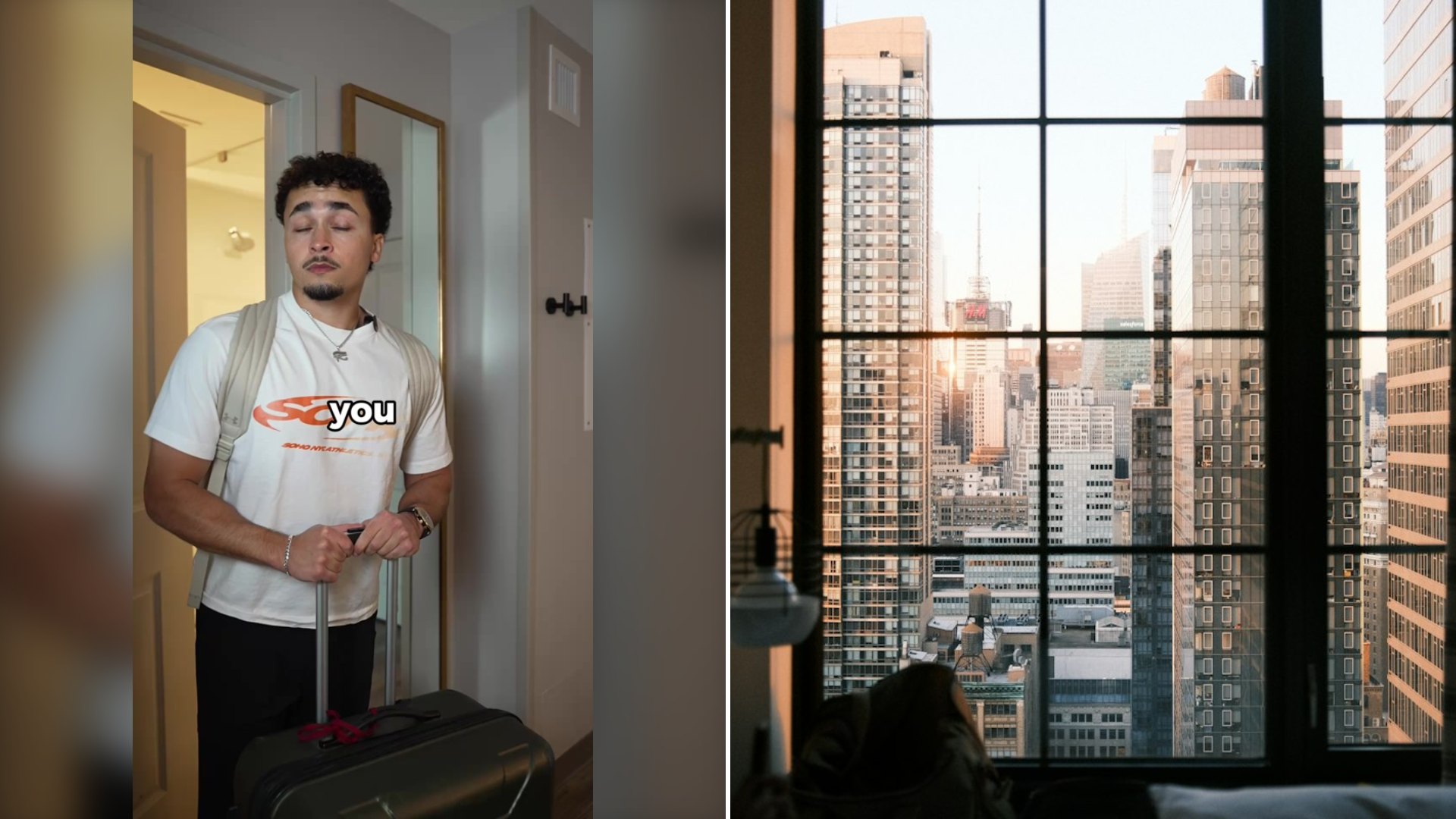
His first move happens right at check in. “You ask, do you have a corner room or a high floor room available?” he said. “If they do, chances are they can upgrade you for free.”
From there, he laid out a series of habits that seasoned travelers will recognize and newer ones will appreciate.
@pierredalati
His Room Routine From Check In to Check Out
Tip the person who carries your bags. “If someone helps bring your bags up, you tip them,” he said simply.
Inspect before you unpack. This is the step many people skip. As soon as you walk in, check under the sheets, the cleanliness of the bathroom, the air conditioning, and the view. “If anything is wrong, it’s much easier to ask for a new room now,” he explained. Once your suitcase is emptied across every drawer, moving rooms becomes a hassle.
Settle in. Once everything checks out, he hangs up his clothes right away so they don’t wrinkle in the bag, and puts his keycard in his wallet so he doesn’t forget it.
Know what you can take home. Bathroom amenities and slippers are fair game, he said. Hair dryers, pillows and robes are not.
Do a final sweep. Before leaving, he checks the outlets, the drawers, and the bathroom so nothing gets left behind.
Watch your card. After checkout, he makes sure there weren’t any unnecessary charges on his card.
Why That Corner Room Question Works
Corner rooms often have extra windows, better light, or a bit more space, and higher floors tend to be quieter with better views. Neither is guaranteed to be a true upgrade at every hotel, but asking signals to the front desk that you’d appreciate something nicer if it’s available.
Front desk agents often have some flexibility to assign rooms, especially when the hotel isn’t full. A friendly, specific request is easier to say yes to than a vague “any upgrades?” A few extra tips can improve your odds:
- Be kind and patient. Desk staff deal with tired, frustrated travelers all day. A smile and a little patience stand out.
- Mention a special occasion. If you’re celebrating an anniversary or birthday, say so. Some hotels like to make those stays memorable.
- Join the loyalty program. Signing up is usually free, and members are often prioritized for room requests and upgrades.
- Ask about quiet rooms. If you’re a light sleeper, request a room away from the elevator, ice machine, and street side.
Protect Yourself and Your Wallet
Several of his tips are about avoiding headaches, and they’re worth taking seriously.
About that bed check. Pulling back the sheets and looking at the mattress seams and headboard area is a smart habit for spotting cleanliness problems, including bedbugs, which can leave small dark spots or tiny reddish stains. If you see anything concerning, ask for a different room, ideally one that isn’t right next door.
Keep luggage off the floor and bed. Using the luggage rack until you’ve checked the room is another easy precaution.
Know the take-home rules. Small bottles of shampoo, conditioner, and lotion, along with soap and disposable slippers, are generally meant for guests to use and take. Robes, towels, hair dryers, pillows and linens belong to the hotel, and many hotels will charge your card if they go missing.
Review your final folio. Ask for an itemized receipt at checkout or check it by email. Look for minibar charges you didn’t make, extra resort or parking fees you weren’t told about, or a second night billed by mistake. If something’s wrong, call the front desk promptly. Hotels can usually reverse errors quickly, and if they won’t, you can dispute the charge with your credit card company.
Protect your keycard. Keeping it in your wallet, as he does, means you’re less likely to leave it in the room. It’s also wise not to keep it in the little paper sleeve with your room number written on it.
Find the exits. When you first get to your room, take a moment to locate the nearest stairwell and count the doors between it and your room. In a fire or power outage, hallways can be dark or smoky, and knowing the route ahead of time is a simple safety habit fire officials recommend.
Use every lock. Use the deadbolt and the security latch whenever you’re in the room, and if someone knocks claiming to be staff when you didn’t call, check with the front desk before opening the door.
None of these steps takes more than a minute or two, but together they can make your stay calmer, cleaner, and sometimes a little more luxurious. Next time you step up to that front desk, it can’t hurt to ask the question that started it all.
More From Cultivated Comfort
- Man Says the Best Tacos in Ireland and Maybe All of Europe Came from a Place He Did Not Expect
- Guest Is Charged a Wedding Fee for Choosing to Attend a Wedding and Asks Whether This Is Where Etiquette Ends
- Woman Says Never Have a Destination Wedding and Lays Out Why the Dream Trip Turns into a Headache for Guests and Family