One bacon cheeseburger. One small fries. One soda. No table service, no server, no plate, just a brown paper bag. The total on the receipt: $24.10.
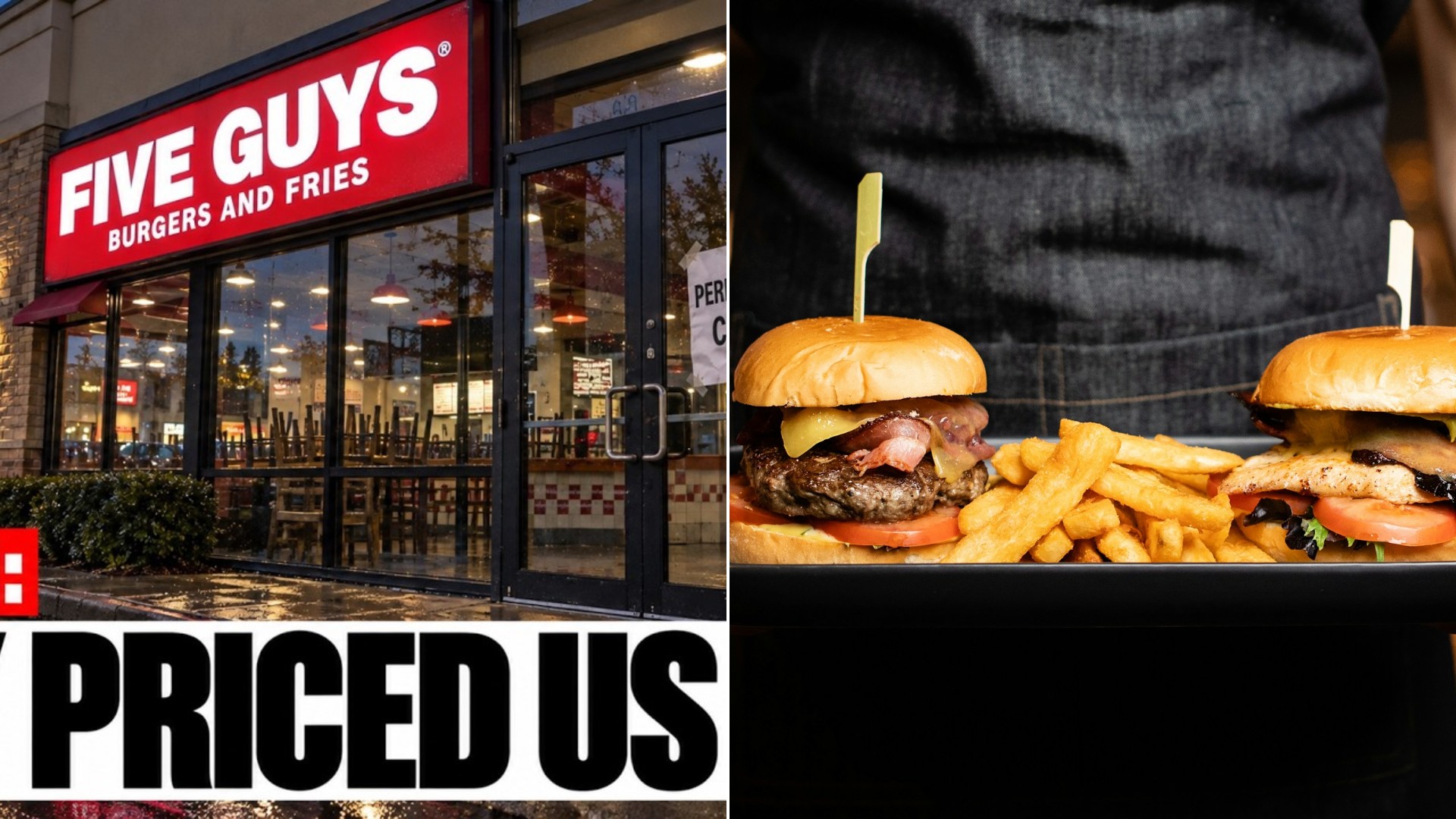
That receipt from Five Guys went around the internet in March of 2024, and according to the team at Retail Reality, what stood out was not the anger. It was how many people replied with a receipt of their own. It kicked off a countdown of 12 big American restaurant chains the channel says pushed prices too far and are now paying for it.
Fewer people paying more
The video’s opening numbers are striking. Since the end of 2019, it says, restaurant prices have climbed about 38%, groceries about 32%, and overall inflation about 29%. Eating out got more expensive faster than almost anything else. Meanwhile, it says, restaurant traffic, the actual number of people walking through the door, was negative in 11 of the 12 months leading up to this spring, according to Black Box Intelligence. Sales often stayed positive anyway, because the people who kept coming paid more.
The creator’s take: that is not growth. It is a company swapping its customers for a higher number on the receipt and hoping it never runs out of customers.
Five Guys, in fairness
The video is careful to say Five Guys is not collapsing. It still plans 37 new restaurants in 2026. But it also says 31 locations closed in 2025 and at least 14 more in the first half of 2026. The charm of Five Guys, the video says, was always that it was the splurge that was worth it. The trouble starts when the splurge becomes a number people have to think about first, and customers who used to come monthly start coming twice a year.
It is also fair about the cause. Raising prices is not a crime, it notes. Beef costs more, wages are higher and rent did not get cheaper. What separates the chains on its list from those thriving is one decision: when costs went up, who was asked to cover them?
A few chains on the list, in the video’s words
Applebee’s. In May of 2024, the parent company’s chief executive told investors the consumer was “more price sensitive.” The video says sales at existing restaurants fell 4.6% that quarter and another 1.8% in the second quarter of 2026. Its closest rival, Chili’s, built its pitch around a “3 for Me” meal starting at $10.99, and the video says its same-restaurant sales grew more than 9% over its last fiscal year, the 21st straight quarter of growth.
Denny’s. Known for its value menu, the chain told investors it raised menu prices about 7% in a year, according to the video. It says Denny’s announced in October 2024 it would close 150 restaurants and was taken private in a $620 million deal in January 2026. For many older Americans, the video says, Denny’s is the one restaurant they can still walk into without doing math first.
Subway. Remember the $5 footlong? The video says a footlong now usually runs between $11 and $17, while one analysis found Subway raised prices less than most big chains. It says franchisees disliked a $6.99 footlong promotion, and that Subway closed 729 American restaurants in 2025.
Cracker Barrel. The video says it raised menu prices nearly 5% in one quarter of fiscal 2024 while traffic fell 4%, and that after a logo backlash in the summer of 2025 traffic fell further. For a retired couple on a fixed income, it says, price is the whole relationship.
McDonald’s. It points to a viral Connecticut menu board showing a Big Mac meal at nearly $18, which the company called an exception, noting franchisees set their own prices. By the company’s own figures, the video says, the average menu item rose about 40% since 2019. It also reports McDonald’s chief executive describing a “two-tier economy.”
The video also covers Papa John’s, Jack in the Box, KFC, Pizza Hut, Popeyes and Wendy’s, citing sales declines and closures for each. Those figures are the channel’s from earnings calls and filings, so check the latest reports for any chain you care about.
The two that did the opposite
The video says Chili’s and Texas Roadhouse went the other way. It reports Texas Roadhouse kept total price increases under 3% despite higher beef costs, and saw traffic rise about 3%. It says that in 2025, sit-down chains grew total sales about $2 billion, and $1.7 billion of that came from Texas Roadhouse, Chili’s and Olive Garden.
What you can do
You do not have to go along quietly. A few practical ideas:
- Check the menu price before you order, and compare the full-meal total at a sit-down place with the drive-thru. The video notes a medium Big Mac meal in California averaged $10.98, about the price of a full sit-down combo at Chili’s.
- Look for lunch specials, early-bird menus and the senior discounts many restaurants offer, and ask about them.
- Skip the add-ons that pad the total, such as a fountain drink, and try water.
- When something feels overpriced, say so, and share your receipt. Restaurants watch what shoppers say.
As the video puts it, the moment someone stops going is almost never dramatic. It is the regular order, a total that makes you pause for half a second longer than usual, and a quiet decision that this was the last time.
More Stories You May Like
- Man Walks into the Worst Rated Restaurant in Flint Michigan Expecting a Disaster and Finds Out Whether the Reviews Were Fair
- Diner Tests the Viral Shake Shack No Tip Surcharge Claim at Rockefeller Center and Finds a Burger and Milkshake Cost the Same With or Without a Tip
- Food Reviewer Went to Test a Sushi Spot Accused of Forcing Customers to Tip and Sure Enough the Server Pushed Him to Select a Tip on the Card Screen