
Food journalist @lizzyacker doesn’t usually write about restaurants she doesn’t like. “We don’t do a lot of bad reviews at the Oregonian,” she explains at the top of the video. “Generally, for me, if I like something, I will write about it. If I don’t like something, I’ll just not write about it.” But every so often, she says, an experience comes along that breaks that rule entirely. “Sometimes you have an experience that you think, I think the world needs to know this. This is one of those.”
That experience was Le Petit Chef, a dinner concept running out of the back room of a hotel restaurant near the Portland airport. The premise: a tiny animated chef is projected directly onto the table, narrating a small adventure while the actual kitchen prepares each course in sync with the story. “It’s cute,” Lizzy admits. It’s also, for her and her coworker Vicky, $380 for two people.
What follows is less a takedown of the animation — which she calls genuinely charming — and more a running list of things that simply didn’t add up. The food, for one, was a strange match for the projected French storyline: Thanksgiving-style sweet potatoes alongside a feta-stuffed chicken, a tiki-themed drink menu in the middle of an otherwise French, or unthemed, dinner. Dessert was a scoop of salted caramel ice cream with raspberries. “Confusing,” she says flatly, more than once.
The bigger confusion, though, was about the concept’s actual audience. The tiny animated chef and the storybook format read as something built for kids — but the dinner starts at 7 p.m. and runs two hours, well past a young child’s bedtime, and the food itself isn’t especially kid-friendly. Add in the price — $150 per person, $75 for kids — and Lizzy is left asking the question that anchors the whole review: “Who is this even for?”
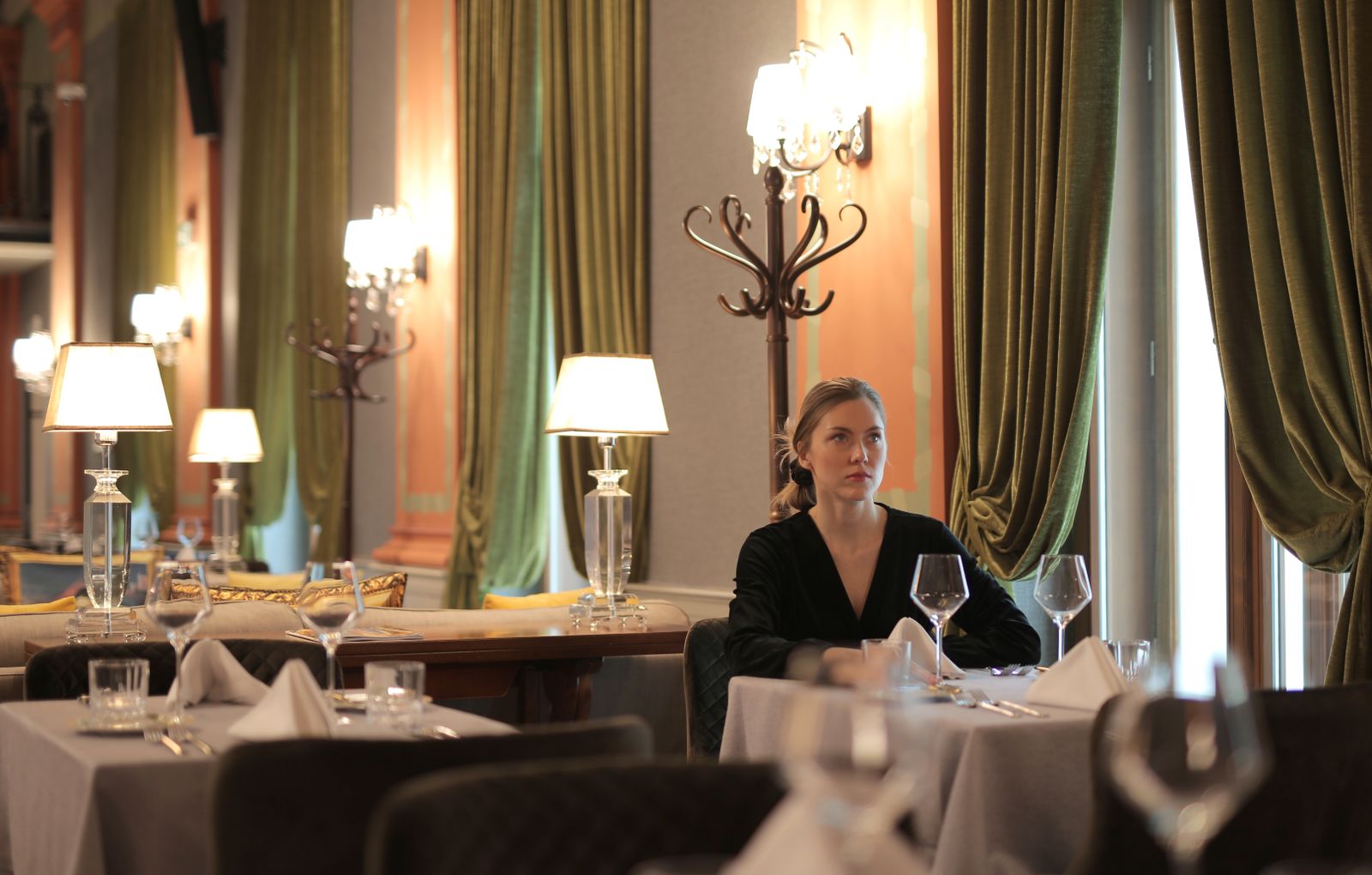 photo credit: unsplash
She’s careful to separate her actual criticism from a dismissal of the effort involved. The servers, she says, were trying hard, and the projection technology is legitimately cute to watch. Her issue is specifically the value: $380 for a novelty that, however charming, doesn’t deliver a meal or an experience that matches the price. “I would pay $35 for this,” she says. “Tops.” She also flags something worth knowing before booking based on social media alone: “Out there on social media, you’re gonna see a lot of videos from this place, and they make it look fun.” Her closing line doubles as her actual recommendation: for $380, Portland has dozens of better dinner options.
Reading Past a Novelty Dinner’s Social Media Hype
Lizzy’s account carries a particular kind of credibility: she’s a professional journalist who explicitly avoids negative reviews unless something feels worth flagging for readers. This piece relays her firsthand experience and published reporting, and it’s worth noting that concept restaurants like Le Petit Chef can vary by location and night, even as her core critique — mismatched audience, mismatched price — tends to be one that travels.
- Viral-looking concepts don’t always translate to a satisfying meal. Video content is built to showcase the most visually interesting five seconds of an experience, which can obscure a mediocre menu or unclear audience underneath.
- Ask who a dining experience is actually designed for before booking. A concept that looks kid-friendly on camera but runs late into the evening, as Lizzy points out, may not work for the audience it appears to target.
- Price-to-value math matters more than novelty. A memorable gimmick is worth something, but professional reviewers generally weigh it against what a comparable dinner elsewhere would cost — exactly the comparison Lizzy makes explicit.
- A credible negative review is specific, not just critical. Lizzy’s review works because she names exact dishes, exact prices and exact timing rather than offering a vague complaint — useful information for anyone weighing the same reservation.
Novelty dining experiences are increasingly common, and increasingly built for social sharing first. Lizzy’s review is a useful reminder that a projection gimmick, however charming, is still measured against the same basic questions any dinner has to answer: was the food good, was the value fair, and did it actually deliver what the marketing promised.
You can watch the full video and follow @lizzyacker on TikTok for more, or read her full review at OregonLive.com.

As a mom of three busy boys, I know how chaotic life can get — but I’ve learned that it’s possible to create a beautiful, cozy home even with kids running around. That’s why I started Cultivated Comfort — to share practical tips, simple systems, and a little encouragement for parents like me who want to make their home feel warm, inviting, and effortlessly stylish. Whether it’s managing toy chaos, streamlining everyday routines, or finding little moments of calm, I’m here to help you simplify your space and create a sense of comfort.
But home is just part of the story. I’m also passionate about seeing the world and creating beautiful meals to share with the people I love. Through Cultivated Comfort, I share my journey of balancing motherhood with building a home that feels rich and peaceful — and finding joy in exploring new places and flavors along the way.