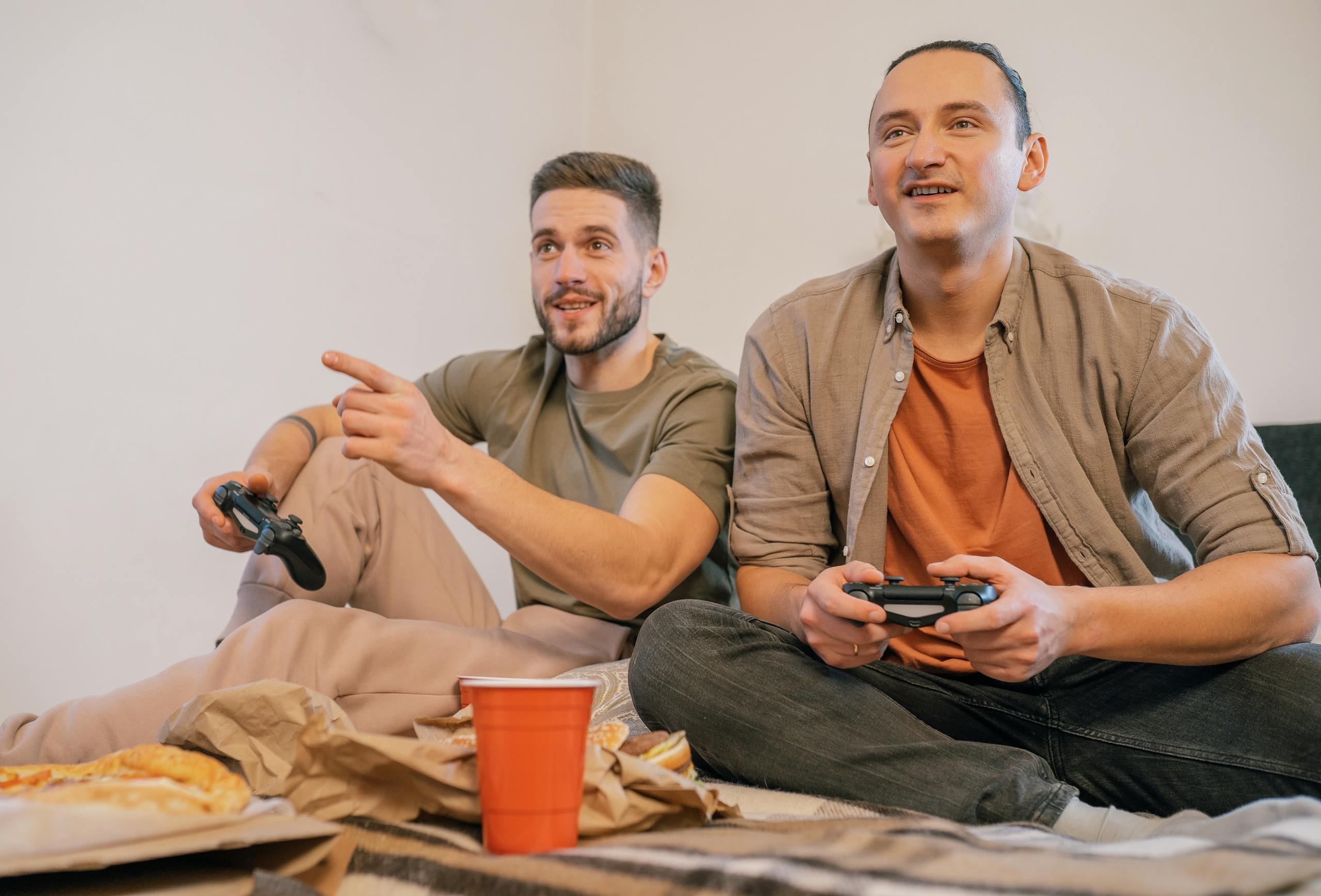
Couples who play video games together at least once a week report double the relationship satisfaction score of couples who rarely or never do — a net satisfaction rating of +47.3 versus +24.0 — according to a 2026 survey of more than 1,500 adults conducted by the research firm Antenna Insights on behalf of Logitech G, reported by GamesHub. Those same weekly-gaming couples also spent roughly 17 hours a week in shared quality time — nearly four hours more than couples who game only occasionally. For a hobby still stereotyped as something that pulls couples apart, the number researchers didn’t expect is how directly it seems to pull some of them together.

The mechanism isn’t just “more time together”
More hours in the same room doesn’t automatically explain better relationships — plenty of shared screen time correlates with nothing at all. A study from the University of Washington, led by researchers Emilia Russo-Giometti, Nisha Devasia, and Alexis Hiniker, interviewed 13 romantic couples and analyzed their gaming habits through psychologist John Gottman’s “Sound Relationship House” framework — the model built around friendship, conflict management, and shared meaning as the load-bearing walls of a stable relationship. The researchers found that shared gaming strengthened relationships primarily by building the friendship and shared-meaning layers: couples described learning their partner’s real-time problem-solving instincts, building what Gottman calls “love maps” of how the other person thinks under pressure, and developing inside-joke rituals unique to their relationship. That’s a very different mechanism than simply logging hours on a couch.
Couples don’t just play games — they redesign them
The same University of Washington research found something researchers hadn’t specifically gone looking for: couples spontaneously invented their own play strategies to fit their relationship, adapting games not built for two people into shared rituals — what the researchers categorized into distinct roles like “Collaborators,” “Hero-Sidekick” dynamics, and “Mission Control,” where one partner directs while the other executes. Game design mattered, too. High-pressure, fast-twitch games sometimes disrupted couples’ ability to manage conflict mid-session, while slower, self-paced games let partners work through small disagreements constructively in real time — meaning the benefit isn’t automatic, it depends on what you’re actually playing.
A second study found benefits research hadn’t been looking for either
A March 2025 study in Contemporary Family Therapy, led by Kaitlyn Swecker of Texas Tech University alongside seven co-authors, took a different approach: in-depth interviews with couples who all identified as gamers, in a sample the researchers noted was majority polyamorous and LGBTQIA+ — a population largely absent from earlier gaming-and-relationships research, which had focused heavily on heterosexual couples with one male gamer. That earlier research skewed toward documenting gaming’s costs to relationships. Swecker’s team instead identified specific benefits when both partners were equally invested in the hobby, offering clinical implications for therapists who work with gaming couples rather than treating gaming itself as the problem to be managed.
Why the “gaming ruins relationships” narrative missed this
Most of the cultural alarm about gaming and relationships has focused on solo, compulsive play — one partner disappearing into a headset while the other waits outside the door. That’s a real dynamic, and it’s a different one from what these newer studies measured. The Logitech-commissioned survey, the University of Washington interviews, and the Texas Tech research all specifically looked at shared, cooperative gaming — both partners in the activity together, not one partner gaming at the other’s expense. The unexpected finding isn’t that gaming is good for relationships. It’s that gaming done together functions less like a solo escape and more like a structured version of the collaborative, side-by-side activities therapists already recommend to couples — building shared meaning through a joint project, just with a controller in hand instead of a puzzle or a hiking trail.
What actually seems to transfer off-screen
Put the research together and a specific, less obvious benefit takes shape: it isn’t the games themselves that strengthen relationships, it’s the real-time collaboration they force — reading a partner’s next move, adjusting to their pace, building a shared language for problems only the two of you have solved together. Couples already know time together matters. What this research adds is that the type of shared activity can matter just as much as the amount of it, and for a specific kind of couple, the controller turns out to be doing more relational work than anyone had bothered to measure.