Some recipes function less like instructions and more like inheritances, passed down not for convenience but as a way of keeping someone present at the table long after they’re gone.
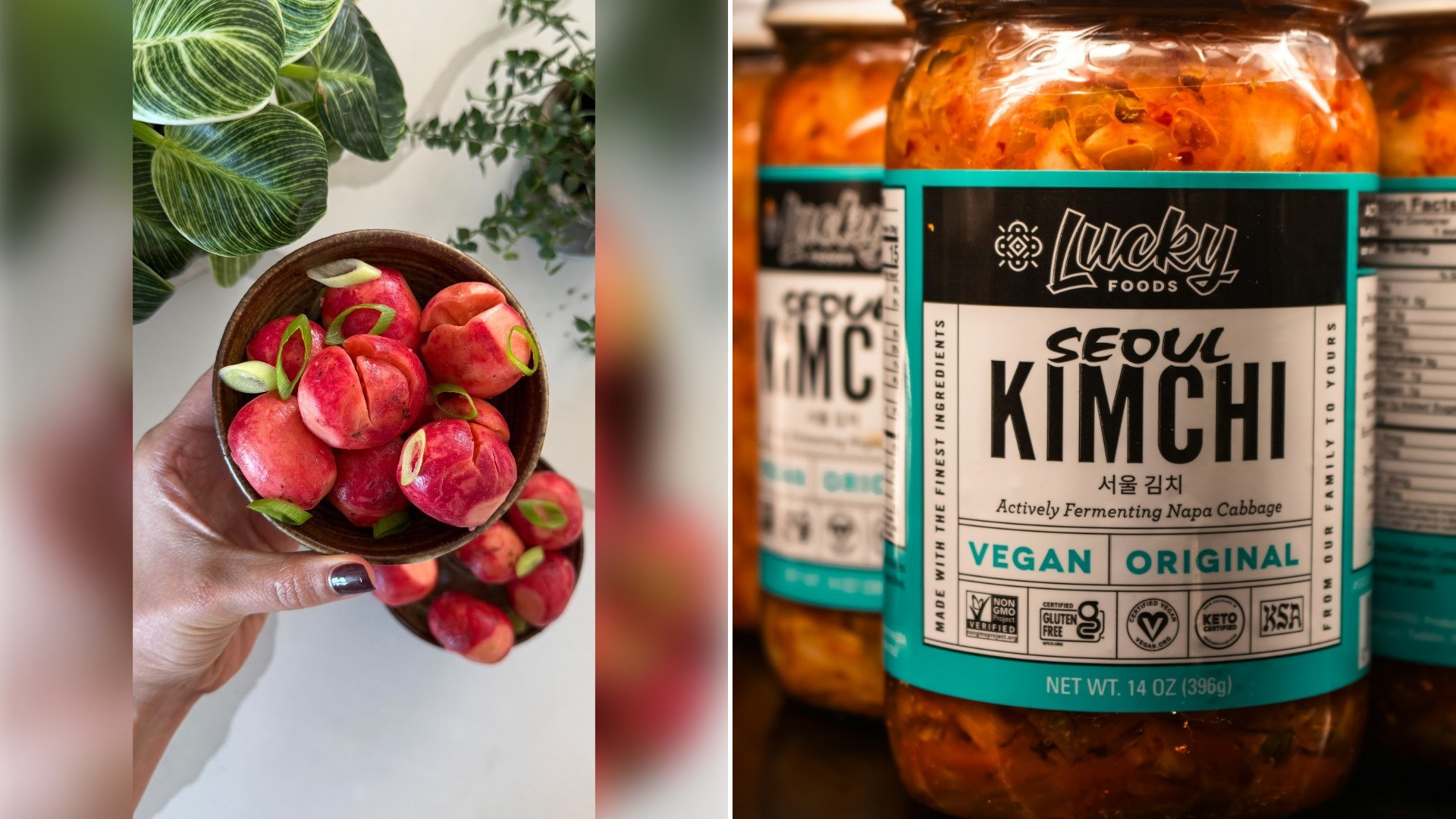
The creator, @maxiskitchen, prepares and taste-tests a family recipe for Korean marinated pickled radishes alongside her mother, a dish that originated with the creator’s late grandfather. She describes it as a simple delicacy passed down through the family, and the video pairs the hands-on recipe demonstration with quiet reflections on where the dish actually came from.
View this post on Instagram
Recipes tied to a specific person who has passed away tend to carry a particular kind of care in how they’re made, a reluctance to alter proportions or shortcuts too significantly, since the dish’s value comes as much from its exactness as from its taste. Making it alongside a parent, rather than alone, adds another layer, turning the cooking session into a shared act of remembering rather than a solitary one.
It’s worth naming exactly what makes a two-person cooking session like this one different from cooking the same recipe solo. When the creator and her mother stand in the kitchen together making the radishes, each of them is drawing on a slightly different relationship to the man who originated the dish, one a daughter’s memory, the other a granddaughter’s, and those two versions of the same memory inevitably color how each of them approaches the recipe. A daughter might remember watching her father make it dozens of times over decades, absorbing small technique adjustments along the way that never got written down. A granddaughter’s memory is likely thinner, built from fewer occasions, filtered partly through what her mother has told her rather than what she personally witnessed. Cooking it together lets those two layers of memory reinforce and correct each other in real time, the older generation supplying detail the younger one never had access to firsthand.
Pickling and fermentation-adjacent dishes like marinated radish carry a particular kind of generational weight in a lot of families, precisely because they tend to rely on ratios and timing that were rarely measured precisely in the first place. A grandfather making this dish likely wasn’t working from a written recipe with exact measurements; he was working from years of feel, a sense of how much salt, how much time, how much vinegar looked and tasted right based on experience rather than a recipe card. That makes the act of recreating it now considerably harder than following a standard recipe, and considerably more meaningful when it comes out right, since getting it close to correct means successfully reverse-engineering someone’s intuition rather than simply following their instructions.
There’s something worth noting, too, about the specific choice to taste-test the dish on camera rather than simply showing it being made. That moment of tasting is really the entire point of the exercise, the instant where the two of them find out whether the flavor matches memory closely enough to feel like a genuine connection to him, or whether something in the translation from memory to recipe came out slightly off. A viewer watching that reaction is watching something quietly high-stakes unfold in real time, a small test of whether a piece of someone’s legacy has actually survived intact.
Family food traditions passed down across generations often survive precisely because someone eventually decides to document them before the knowledge risks being lost, translating what may have once existed only as memory and instinct into something that can be taught, shared, and repeated by people who never got to learn directly from the person who started it. That act of documentation matters enormously, since family recipes that live only in one person’s memory disappear entirely the moment that person is no longer around to pass them on. By filming the process and sharing it publicly, the creator isn’t just preserving the recipe for her own family; she’s ensuring a version of it exists permanently, outside of memory alone, accessible to anyone in the family who might otherwise have lost access to it.
There’s also a broader cultural pattern worth acknowledging in how food functions as a vessel for grief and memory across many families and cultures. A specific dish tied to a specific person becomes something closer to a ritual object than an ordinary meal, a way of marking an anniversary, a holiday, or simply an ordinary afternoon with a deliberate act of remembrance that doesn’t require anyone to say his name out loud. The radishes do that work quietly, letting taste and smell carry the memory in a way conversation alone often can’t.
Videos like this one also resonate widely because so many viewers carry a version of the same unfinished task, a family recipe they meant to learn before it was too late, a dish they can still remember the taste of but never learned to make themselves. Watching someone else successfully recreate that exact scenario, closing the gap between memory and recipe before it closes permanently, offers a kind of vicarious relief, and occasionally a prompt to go finally ask a living relative for the recipe before that option disappears too.
Long after the meal is finished, the recipe remains, a small, tangible piece of a grandfather’s legacy that his family can keep making, and keep tasting, for as long as they choose to pass it on, one jar of marinated radish at a time, carried forward now by a daughter and a granddaughter standing side by side in the same kitchen.