Few transformations tell a more satisfying story than a small business built from nothing growing into something permanent, and one food business owner has documented exactly that arc using both archival and current footage. The video traces the journey of a food business that began as a modest roadside cart and has since grown into a full, established restaurant location, a transformation that clearly took years of sustained effort to achieve.
By pairing older footage of the original cart with present-day shots of the finished storefront, @thee.benne lets the growth speak for itself rather than relying on narration to explain it. The caption behind the clip credits sustained hard work for the transformation, a simple but pointed framing that resists the temptation to attribute the success to a single lucky break or viral moment, and the video closes on the current, fully built-out restaurant, standing as visible proof of everything that came before it.
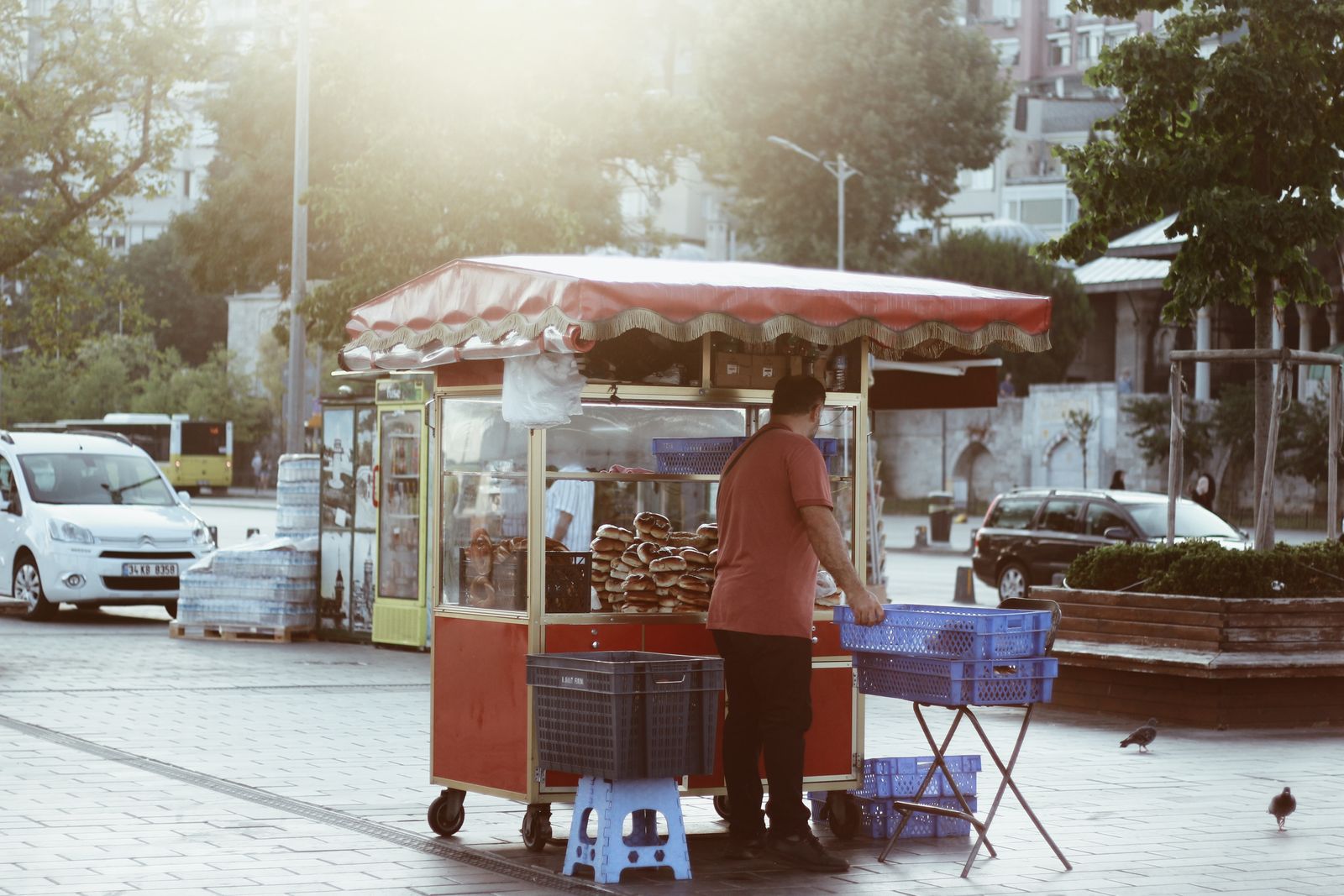
image: A red vintage street food cart parked by an old stone wall on a sunny day. photo credit: unsplash
View this post on Instagram
Roadside food carts represent one of the lowest-barrier entry points into food entrepreneurship, requiring far less startup capital than a traditional restaurant while still demanding the same core skills: consistent quality, smart pricing, and the ability to build a loyal customer base from scratch. For a cart to eventually grow into a brick-and-mortar restaurant is a meaningful milestone in that world, representing years of reinvested profits, growing demand, and the kind of reputation that convinces a business owner it’s finally worth taking on the increased risk and overhead of a permanent location.
That transition from cart to storefront rarely happens quickly, and it almost never happens by accident. It typically requires a business owner to have proven, over a sustained period, that demand for their food is consistent and strong enough to justify the leap, alongside enough saved capital or investor confidence to cover the substantially higher costs that come with a permanent space: rent, equipment, staffing, and all the overhead a mobile cart simply doesn’t carry. Documenting that entire arc, from the original cart to the finished restaurant, gives viewers a rare, complete picture of just how much groundwork sits behind what looks, from the outside, like a single triumphant milestone.
For anyone dreaming of starting their own food business, this kind of before-and-after story offers something more useful than simple inspiration: a realistic sense of scale and timeline. Growth like this doesn’t happen over a single viral season; it happens over years of consistent execution, reinvestment, and patient reputation-building, one satisfied customer and one saved dollar at a time. Seeing the humble starting point alongside the finished result is a useful reminder that most successful food businesses, however polished they eventually look, started out looking a lot more modest and uncertain than their current storefront would suggest.
There’s also real value in the decision to preserve and share that early footage at all, rather than letting the humble beginnings quietly disappear from the business’s public story. Plenty of growing businesses eventually distance themselves from their more modest origins, but revisiting and celebrating that starting point does the opposite: it honors the actual work that built the business and gives credit to a version of the enterprise that most successful ventures would rather forget. That choice alone says something meaningful about the values behind the business now occupying its permanent home.
It’s worth thinking, too, about what it means for a business to hold onto that archival footage in the first place. Documenting a roadside cart in its earliest, most uncertain days isn’t something most first-time entrepreneurs think to do, since there’s rarely any expectation at that stage that the business will grow into anything worth looking back on later. The fact that this footage exists at all suggests either a habit of documentation that predates any confidence in the outcome, or a deliberate effort to go back and gather whatever record could be found once the growth became undeniable, either of which points to a business owner who understood early on that the story of the struggle would eventually matter as much as the success itself.
For anyone in the early, uncertain stage of their own small business right now, this video is a useful nudge to document the present moment even when it doesn’t feel like anything worth remembering yet. A blurry photo of a folding table and an improvised sign can look, years later, like the first chapter of something much bigger, but only if someone thought to take the photo in the first place. Growth like this doesn’t announce itself in advance; it only becomes visible in hindsight, which is exactly why it’s worth capturing the beginning before it’s too late to go back for it.
There’s also a lesson here about patience as a business strategy in its own right, one that runs counter to a lot of modern advice about rapid scaling and quick wins. The gap between a roadside cart and an established restaurant is rarely bridged in a single dramatic season; it’s built through years of showing up, reinvesting whatever profit is available, and slowly earning the kind of reputation that eventually justifies a bigger, riskier investment. That’s a much less exciting story than an overnight viral success, but it’s a far more common, and far more replicable, one for anyone actually trying to build something that lasts.