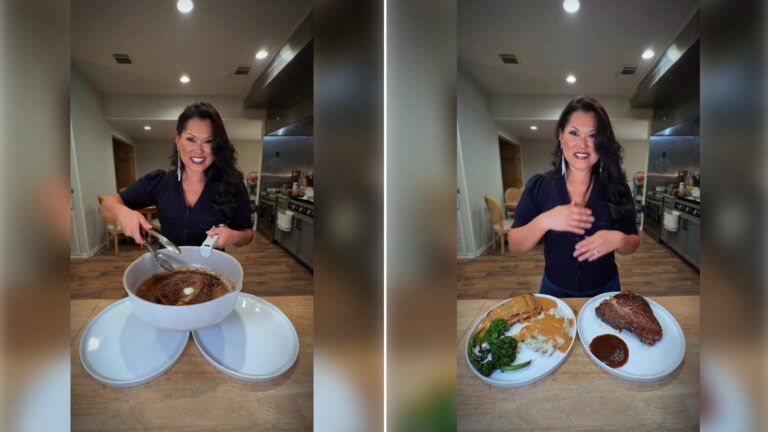
There is a special kind of nerve in cooking a beloved relative’s signature dish and then handing it back to her. The creator behind @zionhousetv did exactly that. He says he spent the past year working in secret on his 97 year old grandmother’s flaky, juicy Jamaican beef patty, using her old recipe book as his guide, and then he baked a batch and went to find out whether she would approve.
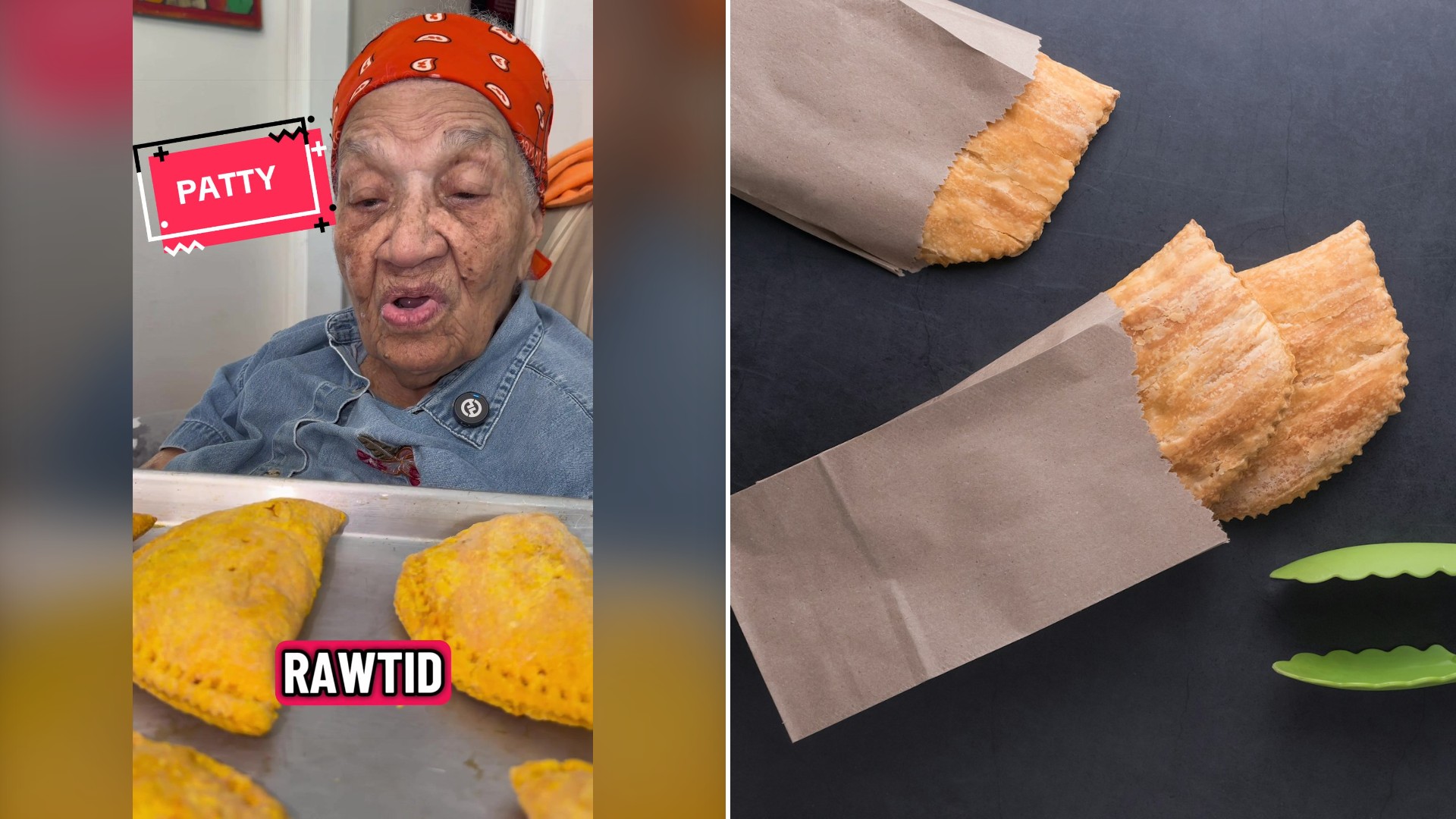
@zionhousetv
He opens with a warm, playful greeting in Jamaican patois, asking whether anyone else would love a patty too. He then explains what the project has been. The recipe, he says, is his grandmother’s one of a kind patty, and he has been working on it quietly for a full year. In his caption he describes the result as flaky and says it comes from her old recipe book. Then he puts the question that drives the whole story: let us see if grandma approves. In his words, her reaction after taking her first bite is all he needs to know.
The method he lists is straightforward. For the filling, he combines ground beef with salt, pepper, garlic, onion, ginger, butter, water, flour and soy sauce. He places the mixture in a container, covers it and chills it in a bowl. For the pastry, he mixes flour, salt, sugar, an egg and butter, then adds water. He says the dough should feel slick. Next, he rolls the dough to a quarter inch thickness, adds the filling, folds it over, cuts the shape and bakes it at 350 degrees Fahrenheit for 30 minutes. At the end, he presents what he calls his grandma’s signature Jamaican beef patty.
What happens when she tastes it is not laid out in the words he shares. The final moments are brief, with a few short lines of conversation and some laughter, and he never says how she judged the patty. That leaves the ending open, and in a way that suits a story about a recipe so old and so personal. What the creator does make clear is the effort: a year of quiet testing, an old book as the only guide and a hope that a 97 year old cook would recognize her own work.
About The Jamaican Beef Patty
The Jamaican patty is a beloved handheld pastry across the Caribbean and in Caribbean communities around the world. It is a half moon of tender, flaky dough wrapped around a seasoned filling, most often spiced ground beef, though chicken, vegetable and other versions are common. Many cooks add hot pepper, thyme and allspice, and many bakers tint or season the crust so it has a golden color. Patties are eaten as a snack, a quick lunch or a street food treat, and some people tuck them inside a soft bread called coco bread for a heartier meal.
Because recipes like this one are often handed down by example, reconstructing a patty from an old book is a real challenge. Handwritten family cookbooks tend to use shorthand, skip steps the author considered obvious and rely on judgment instead of exact measures. Recreating a dish from those notes takes patience and plenty of test batches, which helps explain why this cook needed a year.
Tips For Making Flaky Patties At Home
If you would like to try something similar, start with the dough, because that is where flakiness comes from. Cold butter is the secret in most pastry. Small pieces of butter melt in the oven and release steam, which creates thin layers. Keep the butter cold, work quickly and add water a little at a time. The creator says his dough should feel slick, which suggests a smooth, pliable texture instead of a sticky or crumbly one. If the dough warms up while you handle it, rest it in the refrigerator for twenty minutes before rolling.
Rolling to about a quarter inch is a good guide for a sturdy but tender crust. Dust the counter lightly with flour so the dough does not stick, and turn it a quarter turn as you roll so the thickness stays even. Cut circles or rounds with a bowl or a wide cutter, which gives you uniform patties that bake at the same pace.
Next comes the filling. Chilling it, as the creator does, makes assembly far easier, since a cool filling will not melt the butter in the dough and will not leak while you fold. Cook the beef thoroughly, since food safety guidance calls for ground beef to reach an internal temperature of 160 degrees Fahrenheit, and let it cool before you fill the pastry. A thick filling that is not too wet keeps the crust from turning soggy. If your mixture seems loose, let it simmer a little longer or stir in a small spoonful of flour, the way this recipe uses it, to bind the juices.
When you fill the dough, place a modest spoonful in the center, leaving a clean border around the edge. Fold the dough over, press the edges together and crimp them with a fork so nothing escapes. Brushing the tops with a beaten egg before baking gives a glossy finish, and a few small vents let steam out. Bake until the pastry is golden, and let the patties rest a few minutes before biting in, since the filling will be very hot.
Patties also store and reheat well. Cool them completely, wrap them tightly and freeze them for a future snack. To reheat, warm them in a moderate oven until the crust crisps again, because a microwave tends to soften the pastry. They are a smart make ahead recipe for a gathering, a school lunch box or a quiet afternoon when you want something warm.
Why Family Recipes Are Worth The Effort
The most touching part of this story is the secrecy. Working on a gift for a whole year, in the hope of earning a smile from someone who has been cooking for decades, shows respect for the person and for the craft. If you have an older relative with a signature dish, consider asking about it before the details are lost. Sit in the kitchen with her, take notes, ask why she does each step and bake a batch together. Even if your first attempt is not perfect, the time you spend together is part of the recipe.