Once a month, a church parking lot turns into a grocery pickup spot, and nobody pushes a cart. According to Instagram creator littlefindpvd, the whole thing runs on a truck, a schedule and a crowd of neighbors who pitch in.
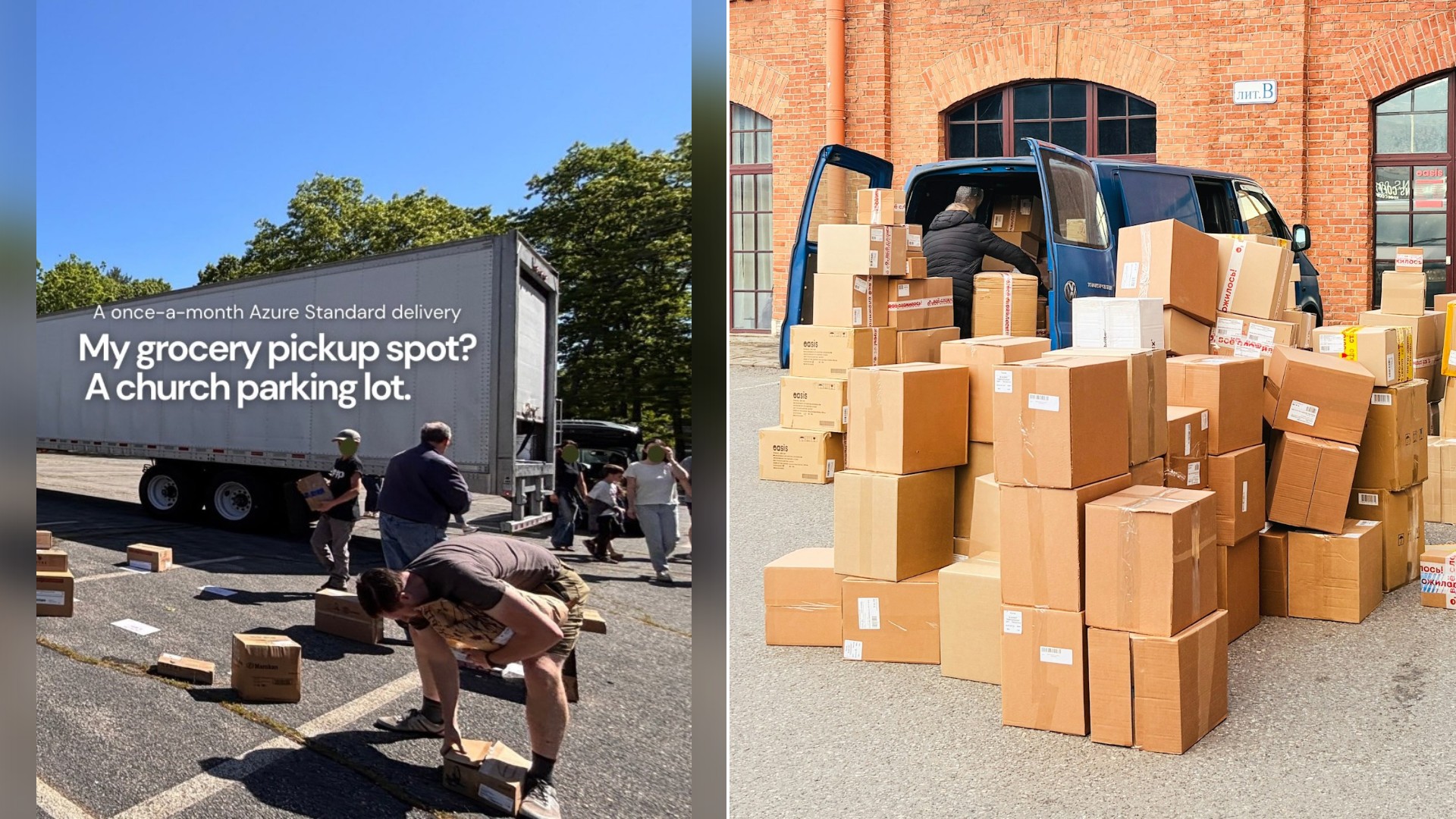
“Grocery pickup… in a church parking lot?” she asks. It is a fair question, and the answer is a system more people are curious about every year.
View this post on Instagram
Groceries Skip The Front Door And Land In A “Drop” Instead
She says she occasionally orders from Azure Standard, where groceries and household goods are delivered to local Drops instead of individual homes. A Drop is simply a meeting spot where a delivery truck stops and customers collect their orders.
No box lands on your porch. You go to the truck, and for her family, that means a trip to the church lot.
The Pickup Time Is Announced About A Week Ahead
Her local Drop happens once a month, and the pickup time is announced about a week in advance. That gives everyone a few days to clear the calendar and make sure someone is free to meet the truck.
It is a very different rhythm from the same-day delivery apps most shoppers know. Instead of ordering at the last minute, you plan around the truck.
When The Truck Arrives, “Everyone Who Ordered Helps Unload”
Here is the part that makes the video stand out. She says that when the truck arrives, everyone who ordered helps unload the boxes together.
So the parking lot becomes a small working crowd, with neighbors passing boxes down and calling out names until each order finds its owner. It is part grocery run, part block party, and it is easy to see why she thought it was worth showing.
How Azure Standard Describes The Process
Azure Standard says members create an account, find a drop location using the Drop Pickup Location Finder Map on its site, and place an order through the website cart. Joining a drop is optional, since members can also have orders shipped directly by parcel carrier, such as UPS or USPS.
The company says its warehouse team in Moro, Oregon pulls the items from the shelves and packs them in recycled boxes under the customer’s name. Those boxes go onto a truck that delivers to the drop, and on delivery day customers “meet the truck” and take their individually boxed orders home.
The company says there is no fee to join. It lists organic produce, dry bulk foods, grass-fed dairy, frozen meats, raw honey, non-GMO oils, packaged foods, supplements and beauty products among what it sells.
Why A Monthly Truck Changes How You Shop
Shopping once a month, with a truck as your deadline, forces a different kind of planning. You think in stocks and pantry quantities, not in “what is for dinner tonight.”
Anyone who has ever run out of flour on a Sunday afternoon knows the appeal of a full pantry. A monthly drop encourages buying staples in larger amounts and rotating them as you go.
What To Think About Before You Join A Drop
If a story like this has you curious, a few general questions are worth asking before the first order.
- Where is the nearest drop, and what day and time does the truck usually arrive?
- Do you have room at home for bulk items, including freezer space for frozen foods?
- Can you get to the pickup spot at the announced time, or can a neighbor collect for you?
- Do you have a cooler or insulated bags for anything that needs to stay cold on the drive home?
Checking the label on each item when it arrives is also smart, as with any grocery delivery. Look over your boxes while you are still at the truck so any mix-up can be sorted out right there.
Storing A Month Of Groceries Without Waste
Buying in larger amounts only pays off if the food stays good. Airtight containers, a cool and dry cupboard, and a marker for dating each bag go a long way with dry goods like flour, oats, rice and beans.
Put the newest purchases behind the older ones so the oldest food gets used first. A simple shelf habit like that keeps a monthly haul from turning into forgotten clutter at the back of the pantry.
The Small-Town Charm Behind The Cardboard
For all the talk of logistics, the lasting image in her post is people carrying boxes side by side in a parking lot. In an age of self-checkout lanes and delivery drivers who leave a package and drive off, a shared unloading is almost old-fashioned.
Whether it is a smart way to stock the pantry or just a good excuse to see the neighbors once a month, her Drop shows grocery shopping can still be a team effort. She says she only orders occasionally, which suggests the system works fine as a supplement to the regular store run.
Some shoppers love the routine, and some prefer the freedom of a store aisle. Either way, a church parking lot full of neighbors unloading one truck makes for a scene that is hard to forget.
More Stories You May Like
- Starbucks Customer Opens A Bacon And Gouda Sandwich, Finds Three Small Rashers Nothing Like The Menu Photo, Gets A Refund And Says The Picture Looked Worth $6
- Woman From The Amish Community Refuses To Tip On A $6.99 Black Coffee, Tells The Cashier City Culture Is Entitled, And Says Smile A Little Bit
- Restaurant Host Cancels An Unsigned Birthday Booking, Rebooks The Party For 15, Then 25 Show Up With Pans Of Collard Greens And Cornbread And The Whole Table Gets Shut Down