Some recipes get made once, photographed, and moved on from. Others become something closer to a ritual, repeated so many times that posting them again almost feels unnecessary, except that each version still carries something new. That’s the territory one home cook has settled into with her mother-in-law’s chicken and dumplings recipe, a dish she’s shared online so many times that, by her own account, it has practically become a family institution in its own right.
In her latest video, @saltsugarandstories walks through the process once more, demonstrating each step of the recipe while narrating her thoughts on the dish’s significance to her. She acknowledges openly in her caption that this is far from the first time she’s posted this exact meal, framing the repetition not as a lack of new content but as a testament to how meaningful the recipe has become. Rather than treating that repetition as a liability, she leans into it, using the video as an opportunity to reflect on what it means to inherit a recipe from family.
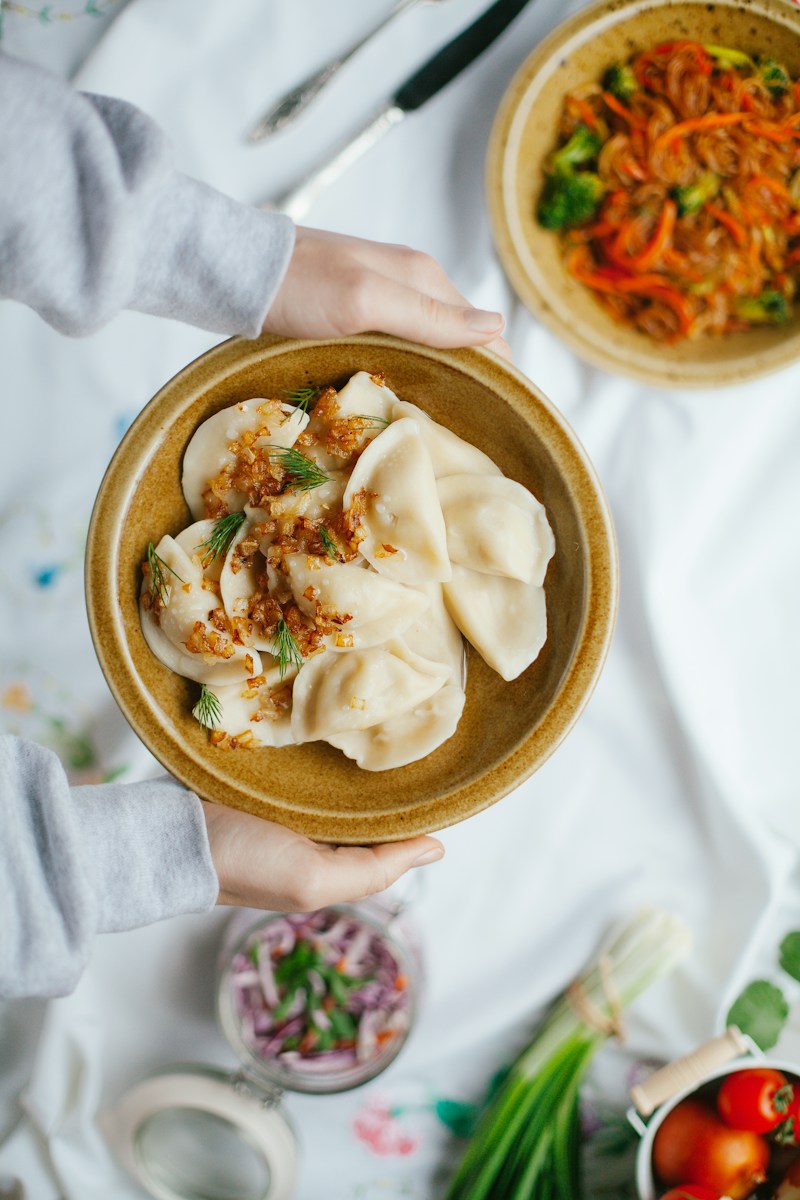
image: cooked food on plate. photo credit: unsplash
@saltsugarandstories
Chicken and dumplings occupies a particular place in American comfort food, a dish built on slow-simmered broth and tender, doughy dumplings that soak up flavor as they cook. It’s the kind of recipe that rarely comes from a cookbook in households where it’s a staple; instead, it gets passed down through direct instruction, watched and learned in someone else’s kitchen long before it’s ever written down. That’s precisely the origin story here, a mother-in-law’s recipe absorbed and carried forward by the next generation, made with enough reverence that the creator clearly sees it as something closer to an heirloom than a meal.
Inherited recipes carry a particular kind of weight that even the most well-reviewed original creation can’t quite match. When a dish comes from someone specific, a parent, a grandparent, an in-law, making it becomes a way of keeping that person’s presence active in daily life, long after the original teaching moment has passed. That’s likely why the creator doesn’t seem concerned about repeating herself online. The value of the video was never really about novelty; it was about preserving and re-demonstrating something that matters to her every time she makes it, regardless of how many times viewers have already seen the process.
For anyone building their own collection of family recipes, this video is a useful reminder that the dishes worth returning to again and again are rarely the most complicated ones. Chicken and dumplings requires patience more than technical skill: a properly built broth, dumplings that are neither too dense nor falling apart, and the willingness to let the whole thing simmer long enough for the flavors to settle into each other. Those are lessons that get taught hands-on, in a real kitchen, which is exactly why so many people treasure the specific version of a dish that came from one particular relative rather than any interchangeable recipe online.
There’s also something worth noting in her willingness to keep posting the same dish. In a content landscape that often prizes novelty over repetition, choosing to return to the same recipe again and again is its own quiet statement about what actually matters. Some traditions are worth repeating not because they’re new, but precisely because they aren’t, and that steady, familiar continuity is often what turns a family recipe into something that outlives the person who first taught it.
There’s a practical takeaway in this for anyone who has ever felt a little embarrassed about making the same handful of meals on repeat, worried that repetition signals a lack of imagination in the kitchen rather than a sign of what actually works. Rotating through a small set of trusted, well-loved recipes isn’t a lack of creativity in the kitchen; it’s often exactly how the strongest food traditions are built. The dishes that end up defining a family’s sense of home rarely get there through constant reinvention. They get there through repetition, through a recipe being made carefully and lovingly enough times that it stops being just a set of instructions and starts being a fixture, something everyone in the family can picture and crave even when it isn’t on the table. That’s the quiet argument this video is really making, one pot of chicken and dumplings at a time.
There’s also something worth saying about the specific choice to preserve an in-law’s recipe rather than a recipe from one’s own side of the family. Marrying into a family often means marrying into an entirely new set of food traditions, and choosing to adopt one of those recipes as a signature dish is its own quiet act of connection. It signals a kind of respect and affection that goes beyond politeness, treating a mother-in-law’s cooking not as something to be tolerated but as something worth learning, mastering, and carrying forward. That may be part of why this particular video keeps finding a new audience each time it’s posted: it’s not just about dumplings, it’s about what it looks like to fully embrace the family you marry into, recipe card and all.
There’s a broader takeaway here for anyone navigating the sometimes tricky dynamic of in-law relationships. Food has a well-documented way of bridging gaps that conversation alone sometimes can’t, and choosing to learn, master, and repeat a mother-in-law’s signature recipe is a tangible, low-pressure way of building that connection over time. It’s a small gesture that communicates something conversation can struggle to convey directly: that the family someone marries into is treated not as an obligation, but as a genuine source of tradition worth carrying forward.