Most of us learned one rule about tipping: take the bill, move the decimal, double it, and call it a day. Instagram creator @princeevano says that habit has a flaw, and he laid two restaurant receipts side by side to show it. One was $16.66. The other was $113. A standard 20% tip on each, he argues, pays two servers wildly different amounts for what is basically the same job.
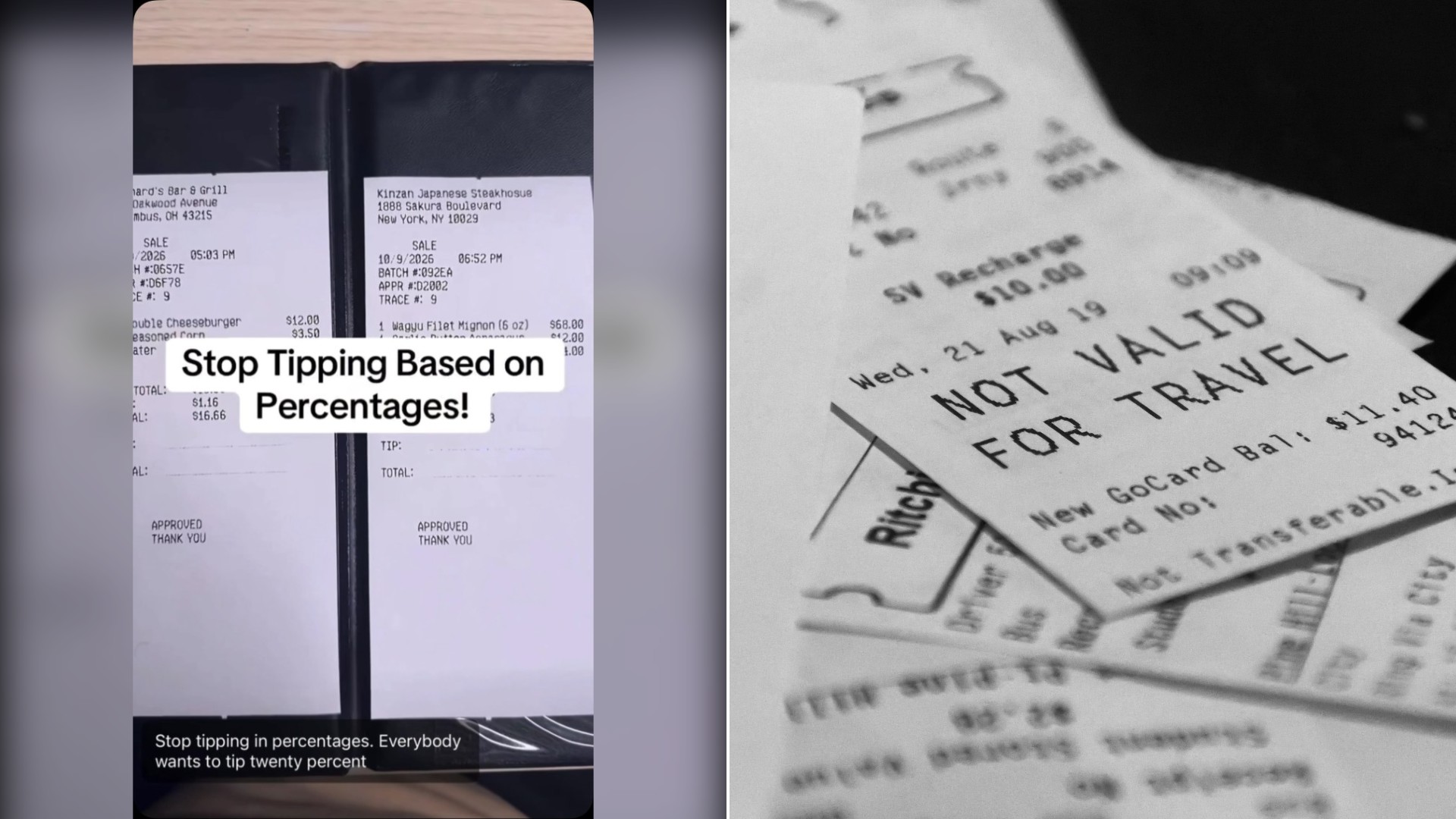
His opening line is a direct challenge: stop tipping in percentages. Everybody wants to tip 20%, he says, because 20% is apparently the standard, and he wants people to look at what that standard actually does when the check gets bigger.
View this post on Instagram
Receipt One, the Bar and Grill
The first receipt came from a bar and grill. On it was a double cheeseburger at $12.00, seasoned corn at $3.50, and a water that was free. With tax, the total came to $16.66. The food and drink added up to $15.50 before tax.
He walks through the work behind that order. The burger usually comes with fries, so that is one plate. The corn is one plate. The water is one cup. That, he says, is the amount of effort the server put in, with a couple of refills of the water if they were attentive.
Receipt Two, the Japanese Steakhouse
The second receipt was from a Japanese steakhouse. It listed a wagyu filet mignon at $68, garlic butter asparagus at $12, and a glass of cabernet sauvignon at $24. The subtotal was $104, and the full total was $113.
Here the plates match up almost one to one with the first receipt. One plate for the filet mignon, one plate for the asparagus, and one glass for the wine. In his view, that is the same amount of physical effort for the server, because carrying a $68 steak to a table takes no more steps than carrying a $12 burger.
The Math That Bothers Him
This is where the argument turns. Tipping 20% of the $15.50 subtotal on the first receipt comes to $3.10. Tipping 20% of the $104 subtotal on the second receipt comes to $20.80. So one server collects $3.10 and the other collects $20.80 for doing, as he puts it, the same work.
He adds a point about pay. If a server in a tipped job earns roughly $2 an hour in base wages, that $3 tip lifts the hourly figure to about $5, while the server with the steakhouse table walks away with several times as much. His conclusion is to stop basing the tip on the percentage and start tipping based on what the server has earned.
The Other Side of the Table
He includes a response from someone who disagrees, and it is worth hearing. That person says he likes the idea but respectfully disagrees. His reasoning is that prices differ from place to place, much like water costs different amounts in different places. When you go to a fancy restaurant, he says, you tip fancy. The pricier room comes with pricier service, a bigger setting and higher expectations, and the tip scales with that.
The two sides actually agree on something. Both accept that the tip is tied to the restaurant and the bill in some way, and both grant the other a fair point. The question is whether a flat dollar amount for effort, or a percentage of the check, is the better yardstick.
The post clearly struck a nerve. Its caption describes a man breaking down his tipping strategy, and it drew more than 1,600 comments.
What This Means at Your Own Table
Whichever side you land on, his two receipts offer a useful way to think about the check in front of you. A few things are worth keeping in mind.
- Tipped workers often start from a very low base wage. The federal minimum cash wage for tipped employees is $2.13 an hour, though many states set higher figures, so tips are a major part of a server’s pay.
- Percentages exist because they are easy. A flat dollar floor, such as a few dollars on a very small check, is a simple way to avoid under tipping a short order.
- Think about the actual work. Did the server refill drinks, bring extras, check in, and fix a mistake? Those are the things a tip is meant to reward.
- Tip on the subtotal before tax when you can. Most etiquette guides suggest the pre-tax amount as the base.
- If you are tipping on a high priced bottle of wine or a pricey cut of meat, decide in advance whether you want the percentage to apply to the whole bill or just to the food and service.
The debate is not going away, and honest people come down in different places. What his receipts do well is turn an abstract argument into numbers anyone can check: $3.10 on one side, $20.80 on the other, and a server carrying the same number of plates in both cases.
The next time the check arrives, it may be worth pausing on the number at the bottom before the pen goes down. A tip is a way of saying thank you for work done. Deciding what that work was worth is up to you.
More Stories You May Like
- Shopper Shows Doritos Dropped From 9.75 To 9.25 Ounces At The Same Price While Cereal Boxes Shrank Ten Percent And Great Value Toilet Paper Fell From 168 Sheets To 120
- Diner Pays $150 For A Seven Course Michelin Starred Tasting Menu At Jua But Supplements Tax And Tip Push The Bill To Almost $286
- Beef Jerky Recalled in 7 Midwest States Because It Was Made Without Federal Inspection and Carries Another Plant’s USDA Mark on the Package