A fast food counter can teach you a lot about the next generation. A McDonald’s employee who posts as @krazeyjakey works at a restaurant right next to a school, so he sees a steady stream of students come through every afternoon. One recent order left him shaking his head. A teen with a bill of about $7 or $8 handed him $35, then asked if that was enough. “You want to know what I’m really worried about the future?” he asks at the start of his video. This, apparently, is it.
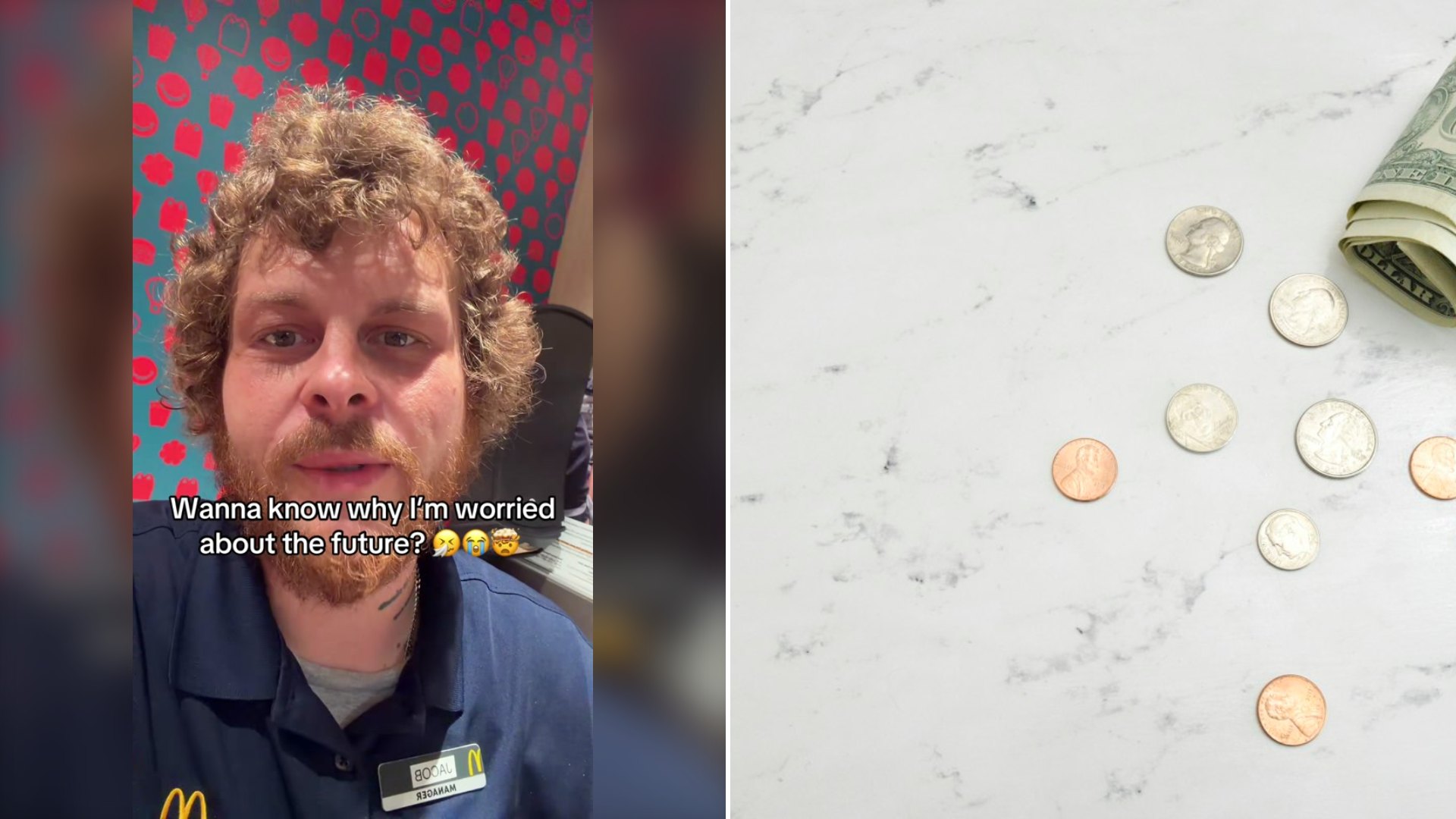
He sets the scene. “I work at McDonald’s and we’re like right by a school,” he explains. “The younger generation comes in here every day.” On a recent Monday, the kids came in after school as usual and placed their orders. One student’s total came to around seven or eight dollars.
He read off the total like he always does. The student handed over $35. And then came the question. “They give me $35 and ask if that’s enough,” he says, still sounding stunned.
He answered right away and told the student yes, it was only about seven or eight dollars. That should have been the end of it. Instead, he says, the student “looked at me confused” and asked again whether it was enough.
@krazeyjakey
Where Are the Fundamentals
For him, the moment points to something bigger than one confused teen. “I don’t know what they’re teaching them in school now, but they ain’t teaching them the same stuff I grew up on,” he says. “Where’s the fundamentals? Basic math.”
He also hints that some of what he sees from the after-school crowd goes beyond math. He chooses his words carefully, noting that he cannot say everything he would like to on the app. “It’s not all of them,” he stresses, but some of the ways the kids act, he says, “is very disturbing.”
Rather than simply complaining, though, he lands on a thoughtful note. “All I can do is be an example,” he says. “I can’t do any more than that. I just gotta pray for them.” It is a surprisingly gentle ending from someone who clearly has his frustrations, and a reminder that the folks behind the counter often care more than customers realize.
Why Some Kids Struggle With Cash
To be fair to the student, there could be several reasons for the mix-up. Nerves, distraction or simply not hearing the total over a busy after-school rush can trip anyone up. But many adults have noticed the same thing this worker did, and there is a real reason it may be happening more often.
Plenty of children today grow up in a world of tap-to-pay cards, phone wallets and online orders. They may rarely see their parents count out bills, wait for change or check a receipt. When money is mostly invisible, the everyday skill of looking at a price and knowing whether you have enough can get less practice than it did when everyone paid in cash.
The good news is that this is an easy skill to build at home, and grandparents are often the perfect teachers.
Simple Ways to Teach Kids Money Math
Let them pay. The next time you take a grandchild out for a treat, hand them the cash and let them handle the purchase. Ask them before you get to the counter how much they think it will cost and how much change they should get back.
Play store at home. For younger children, a pretend shop with price tags and real coins is a fun way to practice counting, adding and making change. It is the same game generations of kids have played, and it still works.
Use the grocery store. Give an older child a small budget and a short list. Have them keep a running total in their head or on paper as they shop, and see how close they come at the register.
Teach rounding. One of the most useful real-world math tricks is rounding prices up to the nearest dollar to estimate a total quickly. A $7.49 meal is about $8. That one habit would have answered this student’s question instantly.
Show them how to count up change. Many older adults learned to make change the way cashiers once did, by counting up from the price to the amount paid. If something costs $7.50 and you hand over $10, you count fifty cents to reach $8, then two dollars to reach $10. It is a simple method kids can pick up in minutes, and it makes mental math feel far less intimidating.
Give an allowance in cash. Paying kids for chores in actual bills and coins helps them see and feel money in a way a digital balance cannot. Encourage them to save some, spend some and track how much they have.
Talk about money openly. Share how you budget, why you compare prices and how you decide what is worth buying. Kids learn far more from watching and listening than many adults realize.
The worker in this video says all he can do is set an example. Families can do the same. A few minutes of practice with real money, whether it is at the kitchen table or at a fast food counter, can make sure the next time a teen hands over cash, they already know the answer to the question.
More From Cultivated Comfort
- 7 Red Flags People Notice Only After Moving in Together
- Couples Married for Decades Get Assumed to Have Long Ago Mastered Every Single Thing About Money and Love, but Most of Them Actually Confess to One Big Regret They Never Fixed in Time
- Premarital Counseling Still Gets Dismissed by a Lot of Couples as a Pointless, Old Fashioned Box to Check Before the Wedding, but Couples Who Actually Sit Through It Get Divorced Far Less Often Later