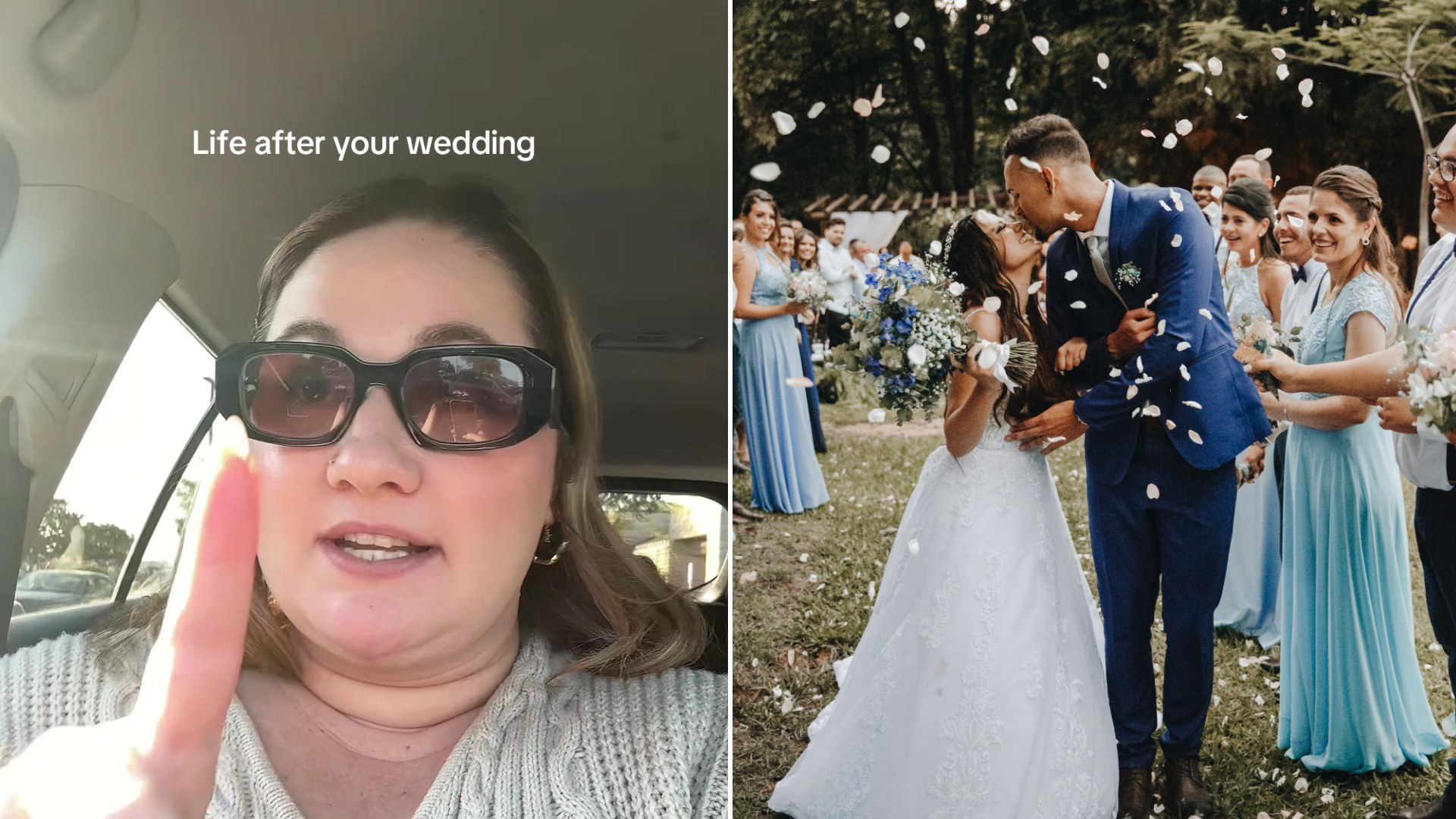
A newlywed TikTok creator who posts as @amber.guttilla has shared a candid, relatable take on a subject rarely discussed openly among engaged couples, explaining in a video watched more than 1.3 million times that she was blindsided after her wedding by a reality nobody had warned her about: the adjustment period commonly known as the “post-wedding blues.”
Her caption speaks directly to the surprise of the experience: “Nobody warned me so just want to warn all of you,” tagged with hashtags including #newlywed, #newlywedlife, #weddingplanning, #2025bride, and #justmarried, positioning the video as a public service message aimed squarely at other brides and grooms who might be headed toward a similar, unexpected emotional dip after their own weddings.
According to the creator, the months and sometimes years spent planning a wedding tend to build toward a singular, all-consuming event, one that dominates conversation, decision-making, and emotional energy for an extended stretch of time leading up to the big day itself. What she says caught her off guard was what came after: once the wedding itself concludes, the sudden absence of that planning process, the excitement, the countdown, the flurry of decisions and vendor coordination, can leave a newlywed feeling unexpectedly deflated, even as they’re objectively happier than ever in their new marriage.
This phenomenon, often referred to informally as post-wedding blues, isn’t a reflection of any dissatisfaction with the marriage itself, but rather an adjustment reaction to the sudden loss of a major, long-anticipated life event that had structured so much of a couple’s time and identity leading up to it. The creator’s decision to speak openly about this experience helps normalize a feeling that many newlyweds may quietly grapple with but rarely voice, particularly given the cultural expectation that the period immediately following a wedding should be uniformly joyful and free of any emotional complexity.
Wedding planning content has traditionally focused heavily on the buildup and the event itself, leaving a relative gap in conversation around what comes next. By addressing that gap directly, the creator offers a service to her audience that goes beyond typical wedding content, preparing future brides and grooms for an emotional reality that planning guides and bridal magazines rarely, if ever, mention.
The video’s substantial reach suggests many viewers, whether recently married themselves or currently in the midst of wedding planning, found genuine value in hearing this particular truth spoken aloud.
The Takeaway
Mental health professionals who work with couples note that post-wedding blues is a recognized and fairly common experience, often tied to the abrupt loss of a structured goal and the accompanying excitement that wedding planning provides for months or years at a time. Setting a few smaller, shared goals or experiences to look forward to after the wedding, whether a honeymoon, a home project, or simply regular date nights, can help ease the transition by giving the relationship something new to anticipate together. It’s also worth remembering that feeling a dip in excitement after the wedding says nothing negative about the marriage itself; it’s simply a natural adjustment after a major life event concludes, and it typically passes with time.