If you grew up eating in Texas, you probably remember the flag. It was a small plastic Mexican tricolor in a little holder on every table at Pancho’s Mexican Buffet, and raising it brought a server running with more of whatever you wanted. In 1994, the chain had 77 restaurants across five states and annual revenue approaching $81 million. By February of 2012, every corporate-owned location was locked.
There was no press release, no farewell and no explanation. The phones were disconnected and the website vanished. A chain that had fed millions of Texas families for more than 50 years was simply gone.
Raise The Flag And The Enchiladas Keep Coming
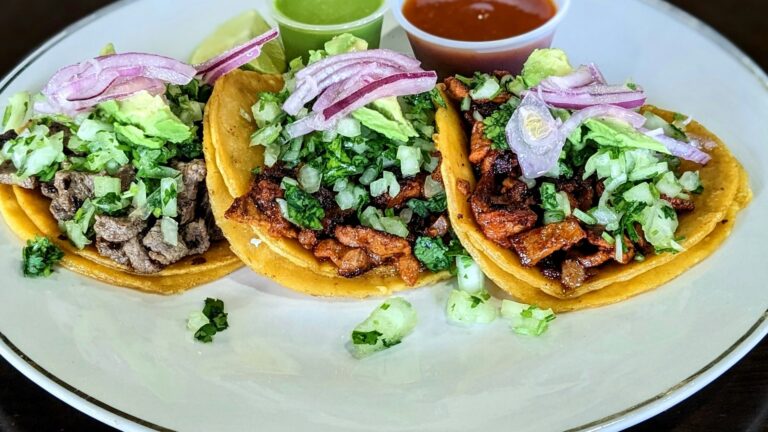
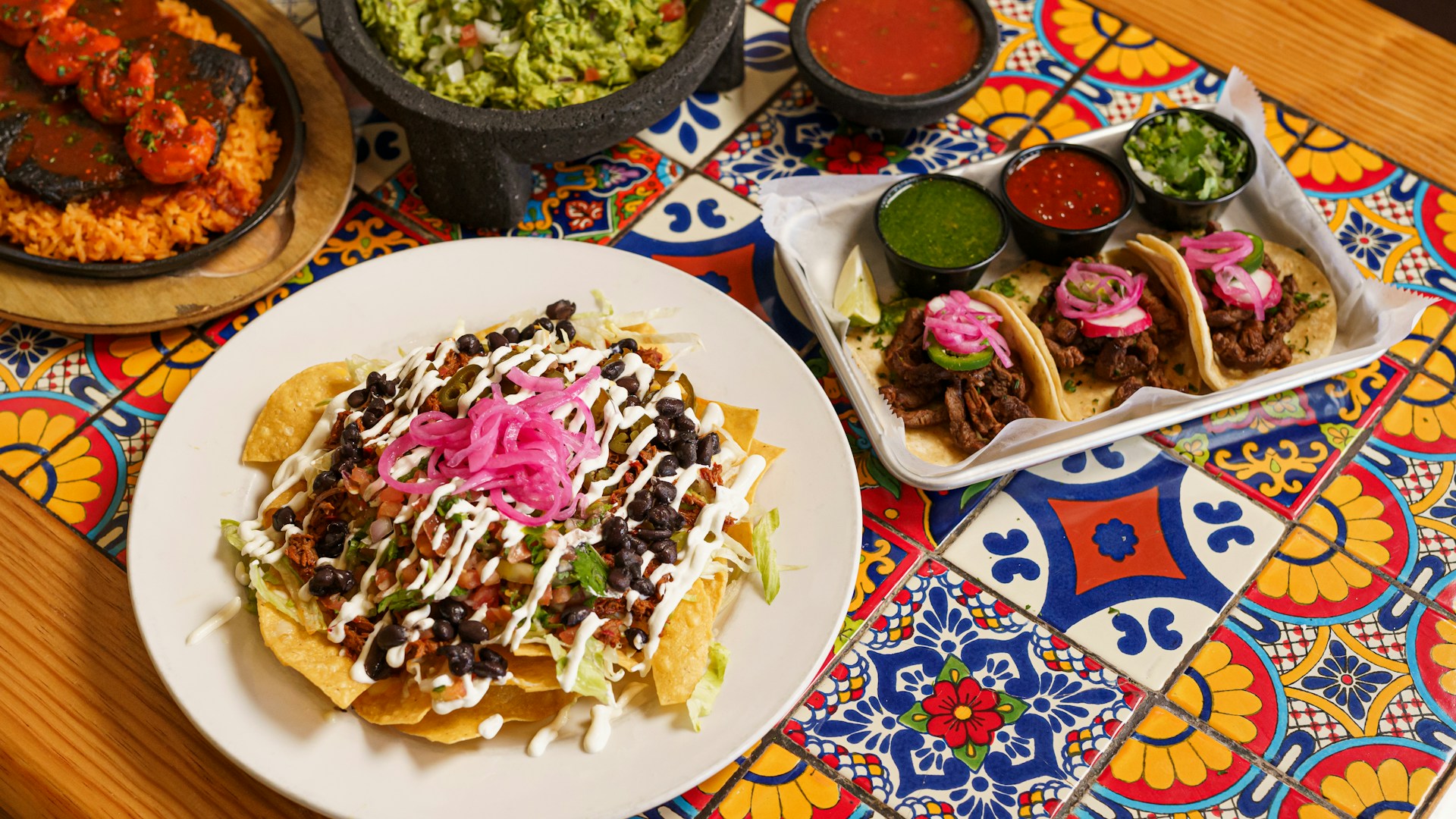
The system was beautifully simple. You went through the cafeteria line and loaded your tray with enchiladas, tamales, flautas, rice and beans, then sat down and ate. When you wanted another taco, more queso or a chile relleno, you raised the flag, and a server brought it at no extra charge and with no limit.
In 1987, the all-you-can-eat dinner cost $4.50, and kids under six ate free. In the mid-1980s the buffet was still $3.99. Families remember fighting over whose turn it was to raise the flag, and parents bargained with it too: eat your beans, then you can call for sopapillas. The puffy fried pastries, dusted with powdered sugar and drizzled with honey, were the grand finale of nearly every meal.
Paul McAllister traces the whole story in a video history of the chain, and it starts in a bar.
A Navy Cook Turned His Mother’s Recipes Into A Buffet Empire
Founder Jesse Adam Jr. grew up in El Paso, in a family that ran a neighborhood bar. His mother taught him to make tamales, enchiladas and tacos. Then came World War II, and he joined the Navy and ended up cooking on a troop ship, where one galley fed thousands of men three times a day.
That experience taught him how to run a food line that never stopped. In 1958, he added a small cafeteria-style buffet of Mexican dishes to the family bar. The food was cheap, plentiful and consistent, and before long people were coming for the buffet more than for the drinks. Within a few years, the experiment had swallowed the bar.
The company incorporated in Delaware in 1968 as Pamex Foods and later moved its headquarters from El Paso to Fort Worth. By 1982, there were 28 locations, and the name was changed to Pancho’s Mexican Buffet, Inc.
The Oil Bust That Made Pancho’s Stronger
Here is the twist. When the Texas oil industry collapsed in the mid-1980s, Pancho’s got stronger. A family could still eat for under $20, so the buffet looked less like a budget choice and more like a lifeline.
Sales went from $36 million in 1985 to $43.1 million in 1986, and net profit hit $2.5 million. The company was adding roughly a dozen new restaurants a year, and by 1988 there were 55 of them in Texas, Louisiana, New Mexico, Arizona and Oklahoma.
77 Restaurants Became The Peak, Then The Losses Piled Up
By 1994, Pancho’s hit its peak with 77 locations. Then the cracks showed. Three units in Colorado failed, a planned restaurant in Guadalajara, Mexico, never opened, and the chain started closing unprofitable stores. In fiscal 1998, Pancho’s lost $12.5 million in a single year, and the stock was bumped to the NASDAQ small cap market.
The company tried two new ideas at once: a stripped-down Express Buffet with self-service, and an upscale Buffet and Grill. Both did well in test locations. Neither got the time or money to prove itself.
In September 2000, restaurant veteran Steven Oyster offered $5 a share, about $7.35 million in total, for a chain that had peaked near $81 million in revenue. The deal closed in 2001 and the company went private.
Then Came The Silence And The Padlocks
After the sale, the public filings stopped. The Fort Worth headquarters was sold, and by 2010 the chain was down to roughly 40 locations. In January 2012, the Baton Rouge location closed, and then in February 2012 every corporate-owned restaurant shut at once.
Employees reportedly showed up to find the doors chained. Managers described little or no warning. Some franchise and licensed locations kept going, and by September 2014, 14 of them were still serving customers in Texas, Oklahoma and Louisiana.
Why The Buffet Model Fell Apart Everywhere
The story is bigger than one company. Buffets Incorporated, parent of Old Country Buffet, Hometown Buffet and Ryan’s, filed for Chapter 11 in January 2012. Food costs kept rising, labor costs climbed, and customers moved toward fast-casual spots like Chipotle.
How To Hold On To The Restaurants You Love
Pancho’s fans can take a few lessons from the story. Beloved places can vanish quickly, and affection alone does not pay the bills.
- Visit your favorites while they are open. Loyalty only helps if it shows up at the register.
- Choose independent and franchise locations when you can, since several Pancho’s franchise restaurants outlasted the corporate chain.
- Save the memories. Photos of menus, matchbooks and family dinners are the real keepsakes.
- Pass the recipes down. Jesse Adam Jr. built an empire on his mother’s recipes, and your family favorites deserve to be written down.
The restaurant may be gone, but the flag lives on in the memories of everyone who ever raised it for one more sopapilla.
More Stories You May Like
- Mom Learns Planet Fitness Let Her 16 Year Old Open A Gym Membership With No Parent Or ID, Then Finds Two Accounts And A Bill Of $350 On One And $450 On The Other
- Military Member Who Is 6 Foot 4 Asks An Alaska Airlines Gate Agent At PDX For A Free Legroom Upgrade On A Flight With About 30 Empty Seats, Is Told That Is Against Policy For Military, Then Gets Offered Four Rows Forward For $150
- Woman Hires A Service For Seven People At A Party Expecting About $700, Then The Receipt Shows $1,430 With A $1,000 Service Charge, $80 Tax And A $350 Tip Nobody Mentioned