One receipt, one number, and a whole lot of feelings. @caseyrockstarflipper shared a post about a steakhouse bill that came to $158 and the tip that came with it: two dollars. His caption calls it a look at the reality of tip culture, and the comment section filled up fast.
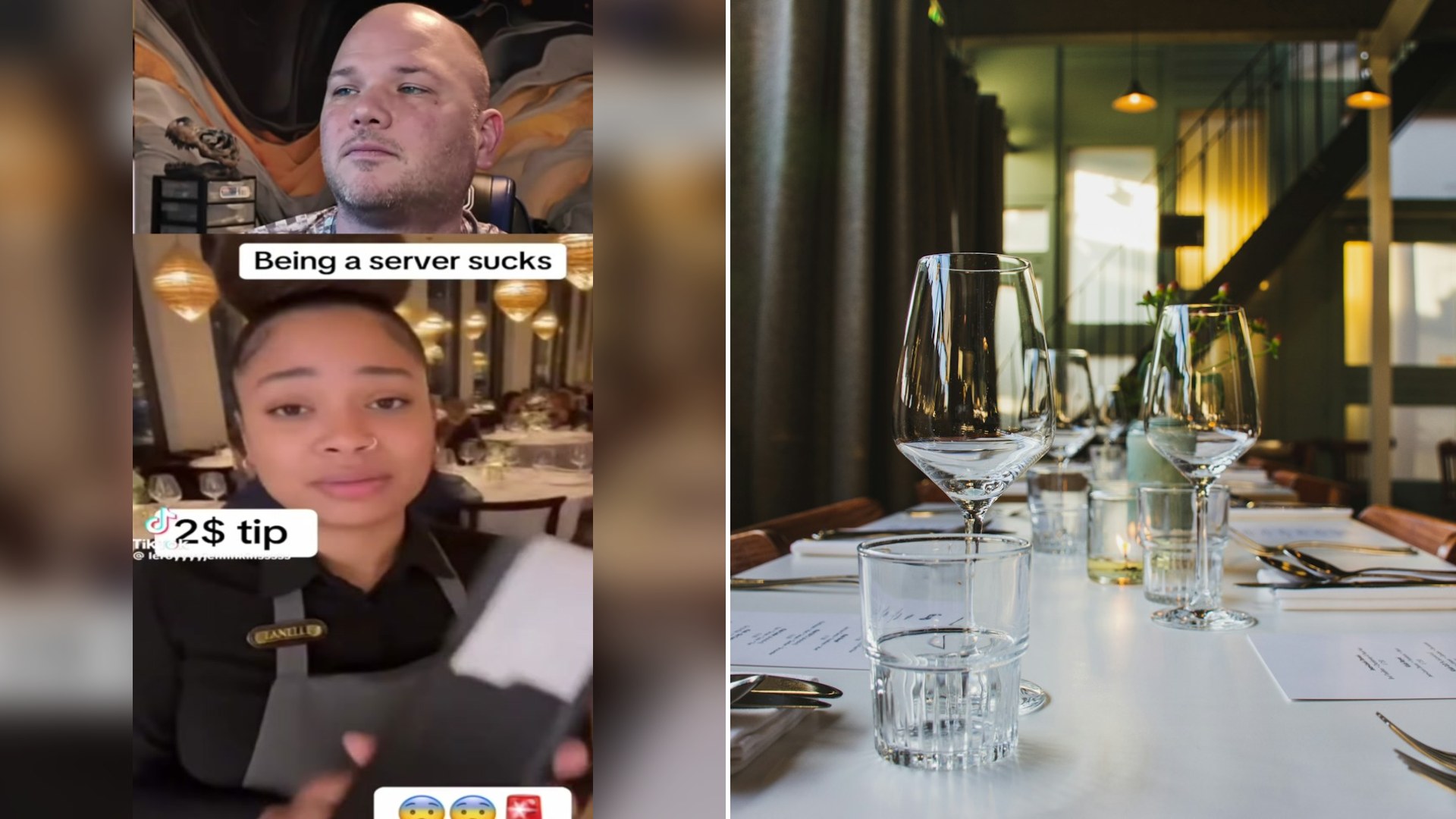
The story is told from the server’s side. In a few short lines, the voice in the post lists what went into the meal, and it is a long list.
@caseyrockstarflipper
What went into a $158 steakhouse meal
The creator holds up the receipt and says, “You see that? A hundred and fifty eight dollar bill. Two, as in one, two. End of story.” He then runs through what the server did for the table. According to the post, she walked the guests through every wine flight, handled their tomahawk steak at the table, and folded four napkins.
A tomahawk is a large, bone-in ribeye, typically a showpiece cut that is shared among several people, and a wine flight is a set of small pours meant to be tasted side by side. Both usually involve a server explaining what is in front of the guests, which means extra time and attention at the table. A steakhouse dinner like this one is also, by its nature, a slower, more service-heavy meal than a quick lunch.
The creator sums up the sting with some quick math. One percent of $158 is $1.58, so a $2 tip lands at a little over one percent. He puts it close to the one and a half percent mark, and either way, it is far below the fifteen to twenty percent range many diners treat as the standard for good service in a sit-down restaurant.
A story with only one voice
It is fair to be careful here. The post is voiced from the server’s perspective, and we hear nothing from the table. We do not know whether the guests were unhappy with something, whether they misread the bill, or whether they come from a place where tipping is not customary. A very small tip can be a deliberate statement, but it can also be a simple misunderstanding, especially for visitors from countries where service is included in the price.
The creator also does not say how many people were at the table or how the service actually went from their point of view. That is the nature of a short post. It gives a vivid snapshot and leaves the rest to the audience, who have filled in the blanks with their own experiences.
Why a tip like this hurts
For a server in much of the United States, a tip is not a bonus. The federal minimum cash wage for tipped employees is $2.13 an hour, with tips expected to make up the difference, although some states require more. A table that spends $158 and leaves $2 has not just disappointed the server. It has also meant that she spent a long stretch of her shift on a table that returned very little.
Servers also often “tip out” a share of their earnings to other staff, such as bussers and bartenders, based on sales. Policies differ by restaurant, but in some places that share is calculated from the total bill, not the tip. In a case like this one, that could leave a server with almost nothing for the work. It is one reason a tiny tip on a big check can feel worse than the number suggests.
There is also a human side that numbers cannot capture. Anyone who has carried plates through a busy dining room knows that a server often decides how a table feels about the whole restaurant. A kind word, a clear explanation of the wine list, or a steak carried out at the right moment can turn a pricey dinner into a memorable one. When that effort is met with a tip that does not seem to notice, it can make a long shift feel even longer, and that is part of why so many people responded so strongly to the post.
Helpful habits for diners
Whether you are the guest or the server, a few simple ideas can make steakhouse nights smoother:
- Tip on the full bill. Many people calculate fifteen to twenty percent of the total, including wine and appetizers, and adjust up for exceptional service.
- Know the custom where you are. If you are traveling from a country where service is included, ask what is expected in the United States. Servers tend to appreciate the question.
- Speak up if service falls short. A polite word to the server or manager during the meal is more useful than a silent low tip.
- Check for automatic gratuity. Larger groups are often charged automatically, and it is usually printed on the check.
- Remember the extras. Wine service and tableside carving take skill and time, and they are part of what you are paying for.
The bigger conversation
Stories like this keep landing because they point at something many people feel. Dining out is expensive, wages for servers are tied to tips, and nobody likes feeling unappreciated or overcharged. Servers see a handful of dollars after hours of work. Guests see a total that climbs higher every year. Somewhere between those two views is a reasonable middle.
The simplest answer may be the one the server’s post quietly suggests. A good dinner is the work of many hands, and a tip is the way most of us say thank you. When we do not know the whole story of a table, a little grace is in order. When we do, a fair tip is a small price for a good evening.