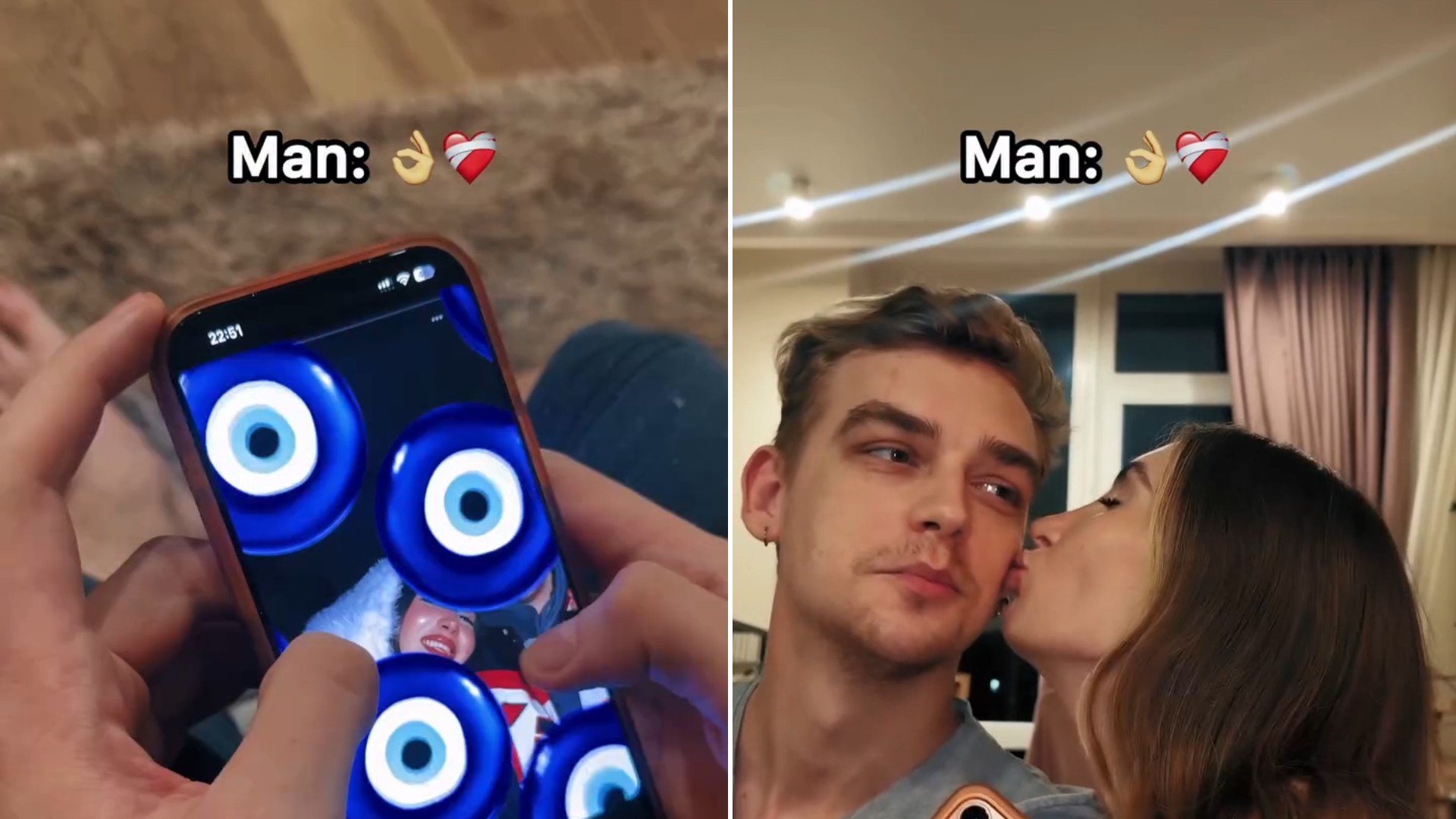
Couple2latte has built an audience of 438,000 followers largely by turning ordinary relationship friction into sketch comedy, and their latest bit does something most dating content skips over: it puts texting habits under the same microscope usually reserved for body language and first-date red flags. The caption on their reel frames it simply: “Boy vs Man texting styles reveal.” No slow-motion eye contact, no analysis of crossed arms. Just two contrasting versions of how a message gets sent, and the gap between them is doing all the work. It is a format built for a screen-first kind of dating culture, where the first real signal of maturity often arrives as a text bubble, not a gesture.
Why Texting Became the New Body Language
Dating advice has spent decades cataloguing physical tells: eye contact, posture, who leans in first. Almost none of that applies anymore during the stretch of a relationship that now happens entirely over text, sometimes for weeks before two people are ever in the same room. Couple2latte’s “boy vs man” framing fills that gap by treating texting patterns as the new tell. How someone types under mild uncertainty, whether they let a message sit or answer it in a way that closes the loop, has quietly become one of the clearest windows into emotional maturity that daters actually get before meeting in person.

The Anxious Double Text
One of the clearest markers separating immature and mature texting styles is what happens after a message goes unanswered for a few hours. The less mature version spirals: a follow-up message that reads as fine on its face but is really checking for reassurance, sometimes a second follow-up walking that back with a joke. The more grounded version simply waits, trusting that silence is logistics rather than rejection. That patience is not indifference. It is usually the product of someone who has learned, often the hard way, that a delayed reply is rarely a verdict on the relationship.
Leaving People on Read
Few texting behaviors generate more anxiety than the read receipt that sits there unanswered. Immature texting treats it as a power move, a way to signal disinterest or control the emotional temperature of a budding relationship. Mature texting treats a delayed response as exactly what it usually is: someone was driving, working, or simply not near their phone. The difference shows up in how quickly someone circles back once they do respond, whether they acknowledge the gap or just barrel forward like nothing happened.
Vague Plans Versus Real Ones
A “wyd” text sent late at night with no follow-through is one of the most recognizable signatures of immature texting, precisely because it asks the other person to do the work of proposing an actual plan. The more mature version names a place, a time, or at minimum a clear intention. It is a small linguistic difference, a few extra words, but it changes who is carrying the emotional labor of making something happen. Daters who have been burned by the vague version tend to notice the specific version almost immediately, because it removes the guesswork entirely.
Conflict, Compressed Into a Text Thread
How someone handles disagreement over text separates immature and mature styles just as sharply as anything about response speed. The less mature approach leans on passive-aggressive one-liners, unfinished thoughts, or going quiet mid-argument. The mature approach tends to name the issue directly, even briefly, rather than letting a thread go cold and leaving the other person to guess what happened. Given how much relationship conflict now plays out over text before it ever reaches a phone call, that instinct to communicate plainly rather than withdraw carries real weight.
Why This Format Resonates
Part of why couple2latte’s comparison spread as fast as it did is that texting is one of the few dating behaviors almost everyone has direct, personal experience decoding in real time. A skit built around exaggerated versions of familiar messages does not require explanation. Viewers recognize the anxious double text or the vague late-night message because they have sent it, received it, or both. That recognition is what turns a comedy bit into something closer to a mirror, and it is likely why texting habits are starting to get the same scrutiny that body language has commanded in dating conversations for years.