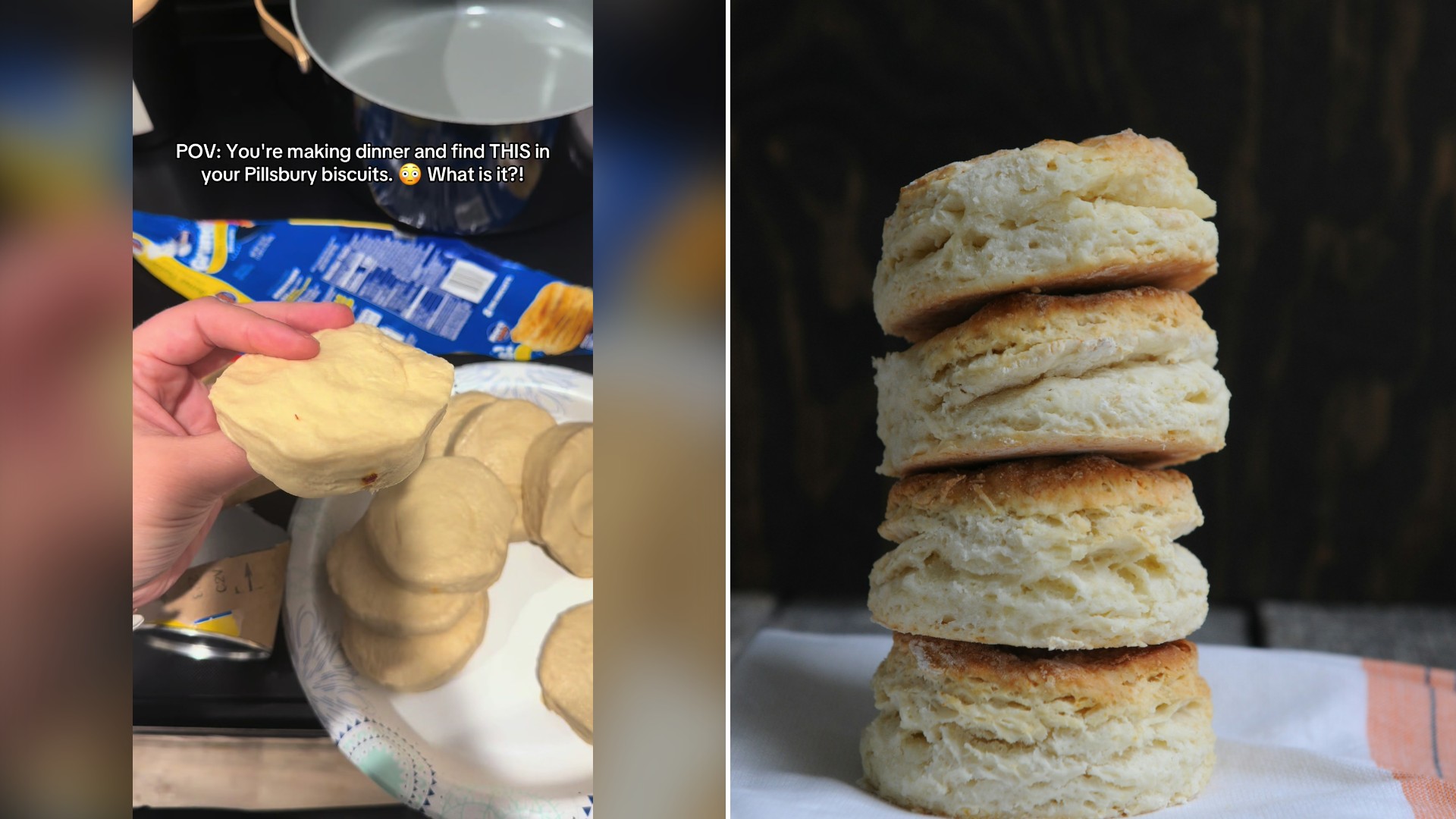
Few things feel as ordinary as popping open a can of biscuit dough on a busy evening. Creator @where.kim.goes shared a story that turned that routine step into a surprise. While making biscuits and gravy, she found red and orange spots inside her Pillsbury biscuit dough.
The story struck a chord because so many households keep refrigerated dough on hand for quick dinners. Here is what the creator shared, and, more importantly, a practical guide to what any home cook should do when food from the store does not look right.
@where.kim.goes
What the Creator Shared
According to the creator, she was making biscuits and gravy when she noticed red and orange spots in the dough from a Pillsbury package. That is the extent of the details provided, and the cause of the spots was not identified in the story. Because nothing is confirmed, it would be unfair to guess what the spots were or to blame anyone for them.
What the story does offer is a familiar kitchen scenario. A cook is halfway through a meal, the food looks different than expected, and a decision has to be made on the spot. Knowing the safe answer ahead of time makes that decision much easier.
Why Unusual Spots Are Worth Taking Seriously
Food can look odd for many reasons. Some are harmless, such as a spice, a bit of flavoring or a pocket of an ingredient that did not blend in. Others are not harmless, including mold, bacterial growth or a foreign material that got in during production or storage. From the outside, a home cook usually cannot tell which is which.
Food safety experts generally give the same advice for that reason. If a food has discoloration you cannot explain, the safest move is not to eat it, and not to serve it to anyone else. That goes double for children, older relatives and anyone who is pregnant or has a weakened immune system, since they face a higher risk from foodborne illness.
What to Do If Your Dough Looks Wrong
Stop cooking and set the package aside. Keep the original wrapper or can, because it carries the lot code and best by date, and those details are what a manufacturer needs to investigate. Take clear photos of the dough and the packaging in good light before you throw anything away.
Hold on to the product if you can, sealed in a bag and kept in the refrigerator, until you have contacted the company. Many brands list a consumer phone number or web form on the package, and customer service teams generally ask for the lot number, the store where you bought it and a description of the problem. Pillsbury is a long established brand with a consumer contact line, so reporting a concern is simple.
You can also contact the store where you bought it. Retailers can check whether other shoppers have reported similar problems, and many will offer a refund or exchange with a receipt. In the United States, food problems can also be reported to the Food and Drug Administration, which has consumer complaint coordinators for this purpose.
If you realize after the fact that you ate something questionable, stay calm. Most people will be fine, but it is smart to keep an eye out for stomach pain, vomiting, diarrhea or fever over the next day or two. Call a doctor or a poison control line if symptoms appear, and mention the product so the advice can be specific. Having the package and lot code handy makes that conversation faster and more useful for everyone involved.
A Reminder About Raw Dough
Even when everything looks perfect, raw dough is not meant to be eaten. Flour is a raw agricultural product, and it can carry germs that are only eliminated by baking. Cooking biscuits fully until they are golden and cooked through is the right way to enjoy them. It is also a good reason to wash hands, bowls and counters after handling any dough.
Tips for Buying and Using Refrigerated Dough
- Check the best by date before you buy, and pick packages that are cold and undamaged.
- Skip cans that are bulging, leaking or badly dented.
- Keep dough in the refrigerator until you are ready to bake.
- Look at the dough as soon as you open the package, before it goes on the pan.
- Save the package and note the lot code if anything seems off.
- Take photos and report the problem to the manufacturer and the store.
Good habits in the kitchen help as well. Read labels, store dough at the temperature printed on the package, and keep raw ingredients away from foods that will not be cooked. These small routines take seconds, and they are the same ones professional cooks follow every shift.
The Takeaway
A pan of warm biscuits and gravy is meant to be comfort food, not a source of worry. If something looks unusual, trust your instincts, set the food aside and document it. Reporting a problem protects your own family, and it helps companies and stores spot trouble before it reaches someone else. A calm, well documented report is also far more likely to get a useful answer from a company than a vague complaint made weeks later.
Thanks to @where.kim.goes for sharing the story.