Serving tables looks simple from the customer side of it: bring the food, refill the water, smile through the small talk. From the other side, it’s a constant balancing act across six tables at once, each with its own mood, timeline, and tolerance for waiting. Most diners are perfectly easy to serve. A reliable handful of habits, though, show up night after night, and servers tend to remember exactly who does them.
None of these habits are usually meant as unkindness. They’re just small blind spots that most people never think about, because they’ve never had to stand on the other side of the tray. Dropping them costs nothing and tends to make the whole experience run smoother for everyone at the table, including the person bringing the food.
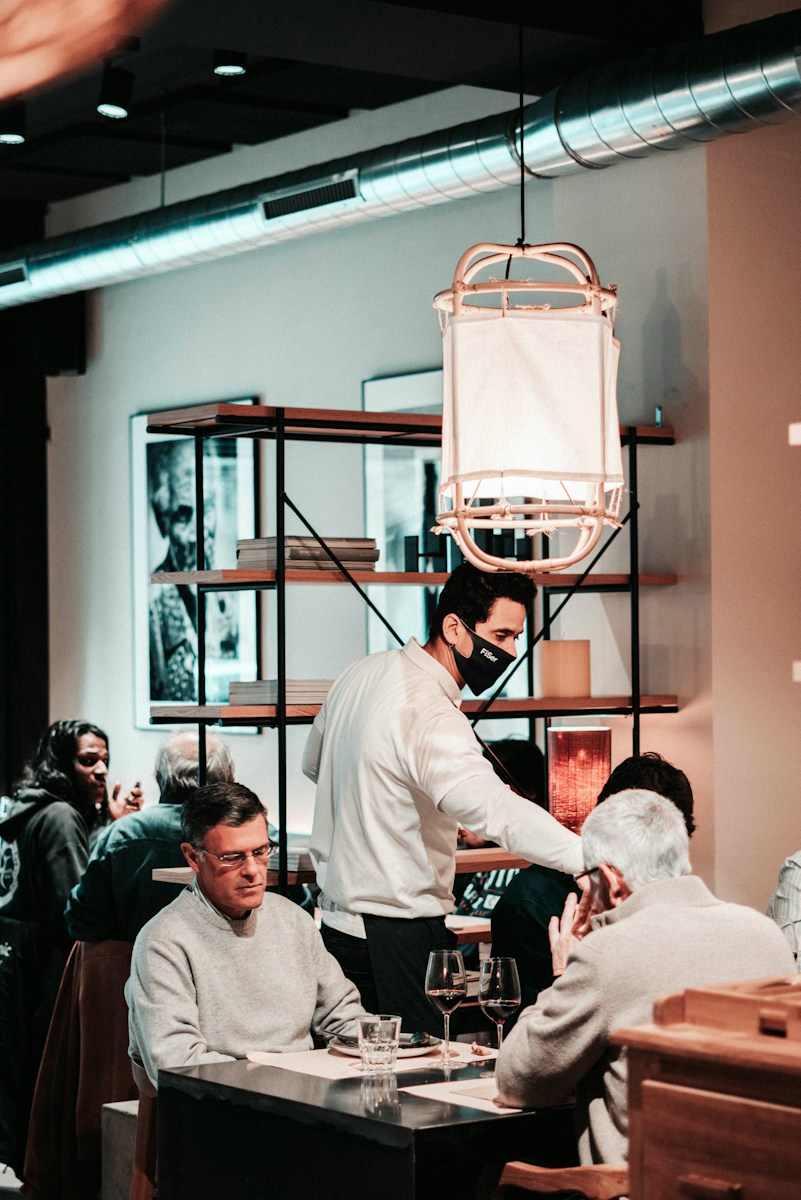
Snapping fingers or waving to get attention
A raised hand and a bit of eye contact will get a server’s attention just as fast as a snap or a loud “excuse me” across the room, without making the interaction feel like a command issued to staff. Servers are almost always tracking several tables at once and genuinely trying to get to everyone in a reasonable order; a dramatic summons doesn’t actually speed that up, it just signals how the rest of the interaction is likely to go. The diners who get the warmest, most attentive service over repeat visits tend to be the ones who treat getting a server’s attention as a small, polite ask rather than a demand for immediate compliance.
Staying on a phone call through the entire ordering process
Continuing a phone conversation while a server stands at the table waiting to take an order puts everyone in an awkward holding pattern: the server can’t walk away without seeming rude, and can’t interrupt without seeming pushy, so they just wait, sometimes for several minutes, while other tables also need attention. A simple “one second” and a brief pause in the call solves the entire problem and takes about as long as the call would have been interrupted anyway. Servers notice, and remember, the tables that treat their time as worth acknowledging, even in small ways like this one.
Lingering long after paying during a wait for tables
Nobody should feel rushed through a meal, and a slow, relaxed dinner is one of the real pleasures of eating out. But once the check is paid and there’s a visible line of people waiting for a table, continuing to occupy that table for another half hour puts a server in the position of either awkwardly hovering or losing tip potential on a table that could have turned over twice. Most servers would rather a table linger over dessert and coffee than rush, but reading the room during a known rush, and wrapping up when it’s clearly busy, is a small courtesy that doesn’t go unnoticed.
Sending a dish back after eating most of it
Genuine issues with food, wrong orders, uncooked meat, allergens, deserve to be raised immediately and corrected without hesitation. Sending back a dish after it’s mostly eaten, however, puts the server in an impossible position with the kitchen and often reads as an attempt to get a free meal rather than an actual quality problem. It also creates real friction between the server and kitchen staff, who now have to reconcile a complaint about food that’s clearly already been enjoyed. Raising an issue with the first bite, rather than the last one, gives everyone the chance to actually fix it.
Undertipping on group checks or after using a discount
Tipping culture has become a genuinely fraught topic, with plenty of diners reporting some degree of “tipping fatigue,” but servers in most of the country still rely on tips as a core part of their income, and industry data from Toast has tracked average tip percentages sitting in the high teens across full-service restaurants, a baseline that doesn’t disappear just because a coupon or promotion lowered the bill. Tipping on the pre-discount total, rather than the discounted price, reflects that the work performed didn’t shrink along with the bill. Large groups skipping or shorting an automatically applied gratuity creates a similar problem, since the labor of managing a big table is often heavier than the per-person tip ends up reflecting.
Treating the interaction as beneath basic courtesy
A curt tone, no eye contact, and orders delivered like commands to a machine rather than requests to a person are more common than most diners probably realize, and servers remember exactly which tables treat them this way. It doesn’t need to be dramatic rudeness to register; simply never saying please, thank you, or acknowledging the person bringing food and drinks repeatedly over the course of a meal adds up. The diners who get remembered fondly, and often get the little extras, a recommendation, a complimentary taste of something, are the ones who treat the interaction as one between two people rather than a service being extracted.
Mentioning a serious allergy only after the food arrives
Allergies and dietary restrictions need to be flagged the moment an order is placed, not discovered by the kitchen after a dish has already been fired, plated, and delivered. Waiting until the food is on the table to mention a nut allergy or a gluten sensitivity puts the server in a scramble to fix something that should have been handled from the start, and in serious cases, it’s a genuine safety issue rather than an inconvenience. Servers generally want to get this right and will ask thoughtful questions if given the chance; the only real requirement is being told early enough for the kitchen to actually respond.
Turning the bill into a prolonged negotiation
Splitting a check eight different ways, recalculating who had the extra appetizer, and debating a shared dessert can turn what should be a two-minute close into a fifteen-minute production, especially at a busy restaurant where that table is needed for the next reservation. Most restaurants can split checks a few reasonable ways if asked at the start of the meal, which avoids the scramble entirely. Working it out largely among the group before flagging the server down, rather than turning them into an accountant mid-negotiation, keeps the end of the meal as pleasant as the rest of it.

As a mom of three busy boys, I know how chaotic life can get — but I’ve learned that it’s possible to create a beautiful, cozy home even with kids running around. That’s why I started Cultivated Comfort — to share practical tips, simple systems, and a little encouragement for parents like me who want to make their home feel warm, inviting, and effortlessly stylish. Whether it’s managing toy chaos, streamlining everyday routines, or finding little moments of calm, I’m here to help you simplify your space and create a sense of comfort.
But home is just part of the story. I’m also passionate about seeing the world and creating beautiful meals to share with the people I love. Through Cultivated Comfort, I share my journey of balancing motherhood with building a home that feels rich and peaceful — and finding joy in exploring new places and flavors along the way.