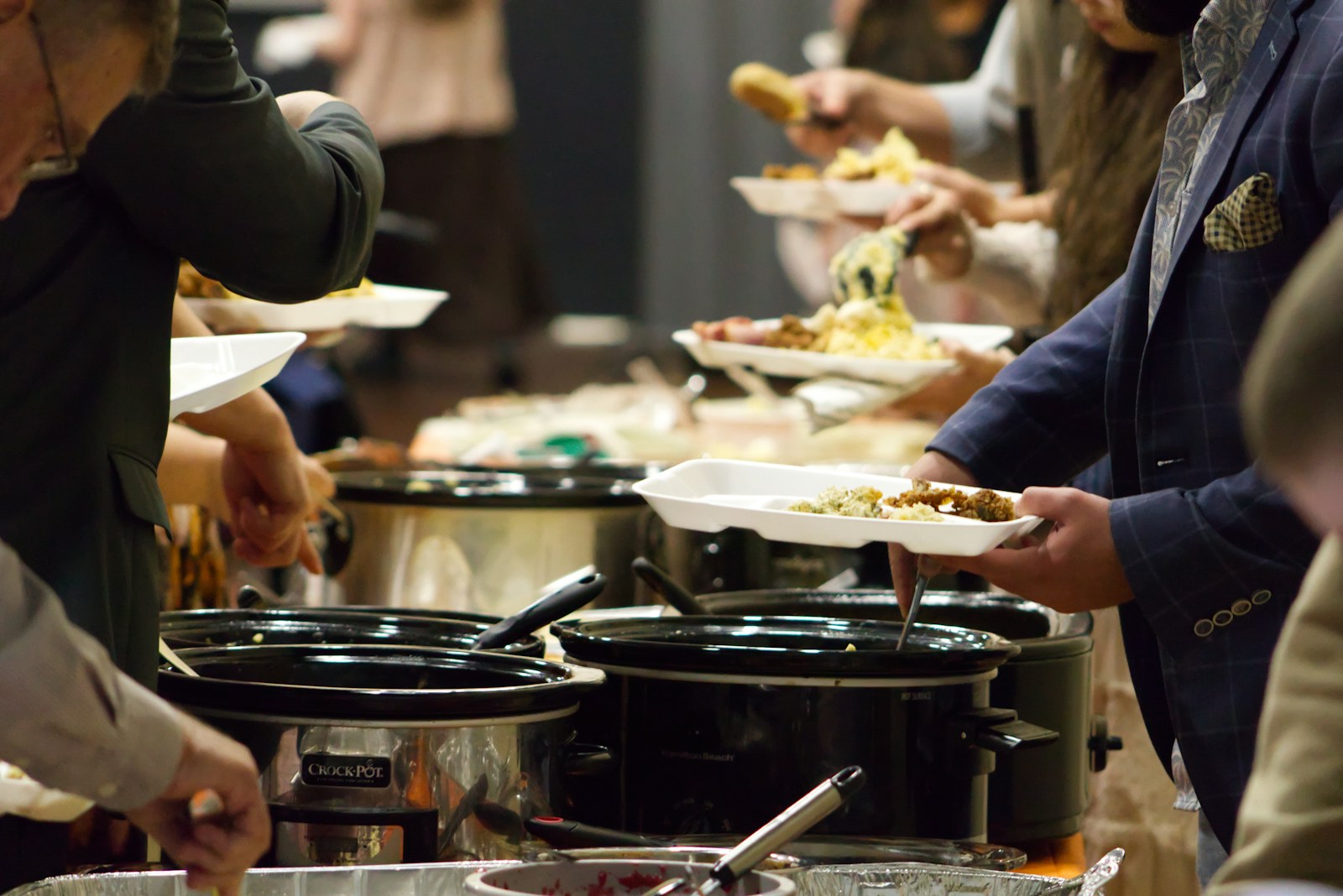
There’s something almost giddy about a buffet: an entire spread laid out, no menu to choose from, no waiting for a plate you didn’t quite picture correctly in your head. That freedom is exactly what makes buffets a little chaotic, too. Everyone is serving themselves, sharing the same serving spoons, and moving through the same narrow lines, which means a handful of bad habits ripple outward much faster than they would at a regular table.
Most buffet etiquette isn’t really about formality. It’s about the basic fact that you’re sharing food, space, and utensils with total strangers, and a little awareness goes a long way toward keeping the whole system pleasant for everyone using it.

Piling a plate higher than you’ll actually eat
The all-you-can-eat model tempts people to load up on everything that looks appealing in one dramatic first trip, and the result is often a plate that ends up half-finished and bound for the trash. Buffet-style dining is already one of the more food-waste-intensive formats in the restaurant industry, in part because the format itself encourages exactly this kind of over-serving, and research on the topic has specifically pointed to buffets as a setting where plate waste tends to run higher than at plated, portion-controlled meals. Taking smaller portions on the first pass, then going back for seconds of what you actually enjoyed, wastes far less food and, in practice, usually leads to a more satisfying meal overall.
Grazing or tasting food with your bare hands
Picking a grape off the fruit display or pinching a piece of bread to test it before it’s on your plate might feel harmless in the moment, but it means every other guest coming through that line afterward is served from a tray someone’s fingers have already been in. It’s one of the fastest ways to make a shared food station feel unappetizing to everyone behind you, and it’s avoidable with essentially zero effort. If a taste is genuinely needed, taking a small amount onto your own plate first, rather than sampling directly from the communal tray, keeps the shared food actually shared.
Using your personal fork or spoon in the serving trays
After using your own utensil to eat a bite at the table, that utensil should never go back into a shared serving dish, even for something as small as scooping a second helping of a sauce or a side. It’s an easy habit to fall into without noticing, especially with foods that don’t come with their own designated serving spoon, but it introduces exactly the kind of cross-contamination buffets are specifically designed to avoid through separate serving utensils for each dish. Getting a fresh plate for seconds, or simply using the tray’s own serving utensil rather than the one you’ve been eating with, keeps the shared food safe for the next person through the line.
Skipping the tongs or serving spoon entirely
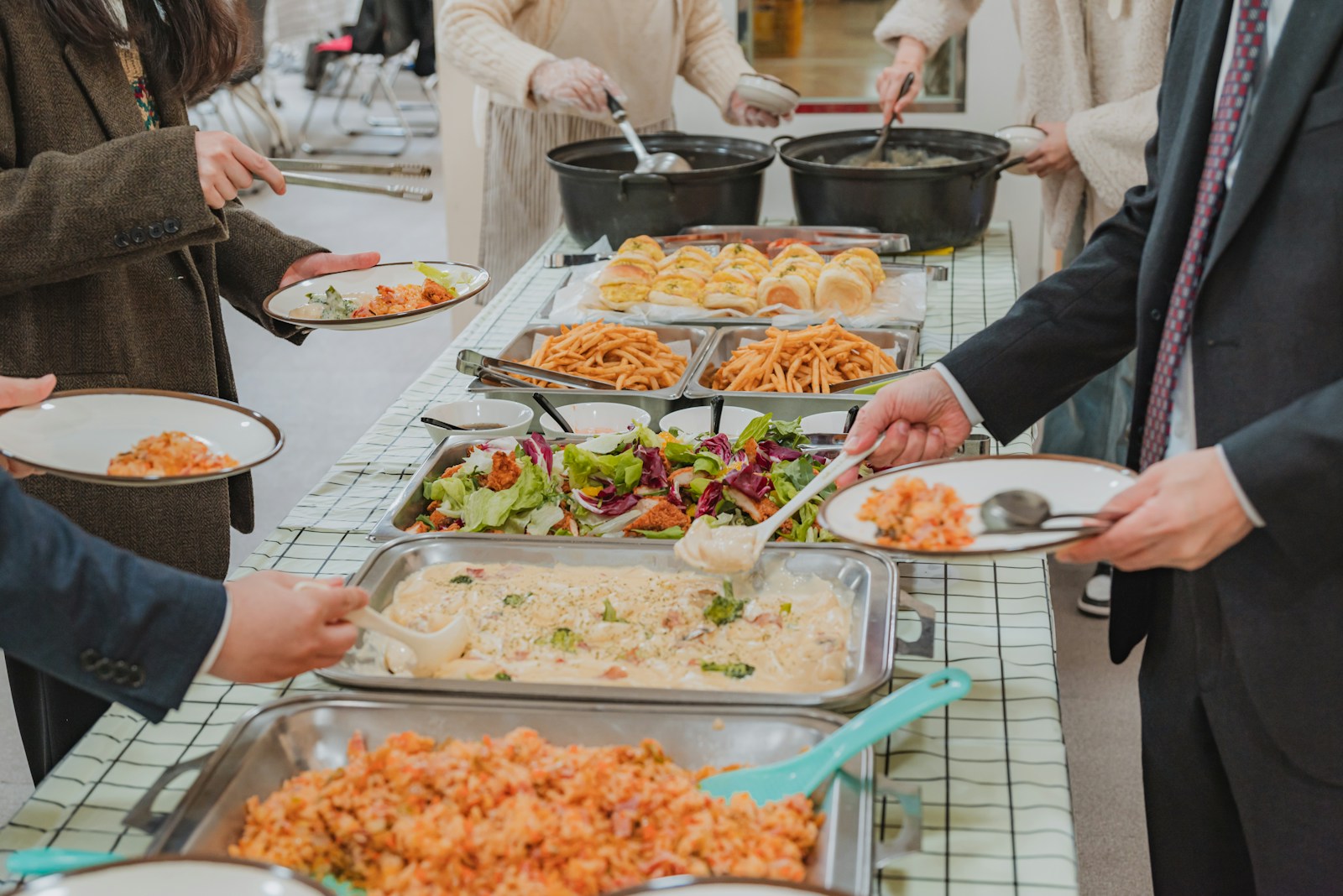
Reaching directly into a bread basket or a bin of rolls with bare hands, rather than using the tongs provided specifically for that purpose, is one of the more common and most avoidable buffet missteps. The serving utensils are placed there deliberately, and using them takes no extra time or effort compared to reaching in by hand. It matters most with items that don’t get cooked again after serving, bread, rolls, whole fruit, since there’s no later step that would neutralize whatever’s transferred by hand contact. A quick glance for the designated utensil before serving yourself solves this one completely.
Taking the last portion without flagging it for staff
Scraping the final spoonfuls out of a tray and walking away leaves an empty pan sitting on the line, which slows things down for the next several guests who arrive expecting that dish to still be there. Most buffet staff are actively watching trays and refilling them regularly, but a quick word, “this one’s almost out,” when you notice you’ve taken the last real portion helps them catch it faster than they might otherwise. It’s a small courtesy that costs a sentence and saves the next few people in line a moment of disappointment.
Leaning over the sneeze guard to reach or look
The clear panel over a buffet line exists for an obvious reason, and leaning over it to get a better look, or worse, to reach for something on the far side of the tray, defeats its entire purpose while you hover directly above food that other guests are about to eat. It’s an easy thing to do without thinking, especially when a desired item is sitting frustratingly out of reach. Asking a staff member to help retrieve something on the far side of a station is a much better solution than leaning your own face and hands into the space the guard is specifically there to protect.
Letting children serve themselves without supervision
A buffet line moving at a child’s pace, with a child’s grip on the serving spoons, tends to create spills, drips, and cross-contaminated trays faster than almost anything else in the room. It’s understandable to want kids to feel independent, and plenty of buffets are genuinely kid-friendly spaces, but an unsupervised child at a shared serving station creates a mess and a food-safety issue that the next several guests through the line then have to navigate. A parent guiding the plate, or serving for a younger child directly, keeps the shared stations usable for everyone else.
Treating one trip as the only trip and building towers of food
Stacking a single plate several layers high, so that sauces run together and delicate items get crushed under heavier ones, is rarely about efficiency and more often just a habit of not trusting that a second trip will actually happen. Buffets are specifically designed around the idea of multiple, smaller visits to the line, which keeps food organized, lets flavors stay distinct, and reduces the amount that inevitably gets wasted when an overloaded plate turns out to be more than anyone can finish. Treating the buffet as a series of manageable courses, rather than one all-encompassing tower, tends to produce a better meal in every sense.