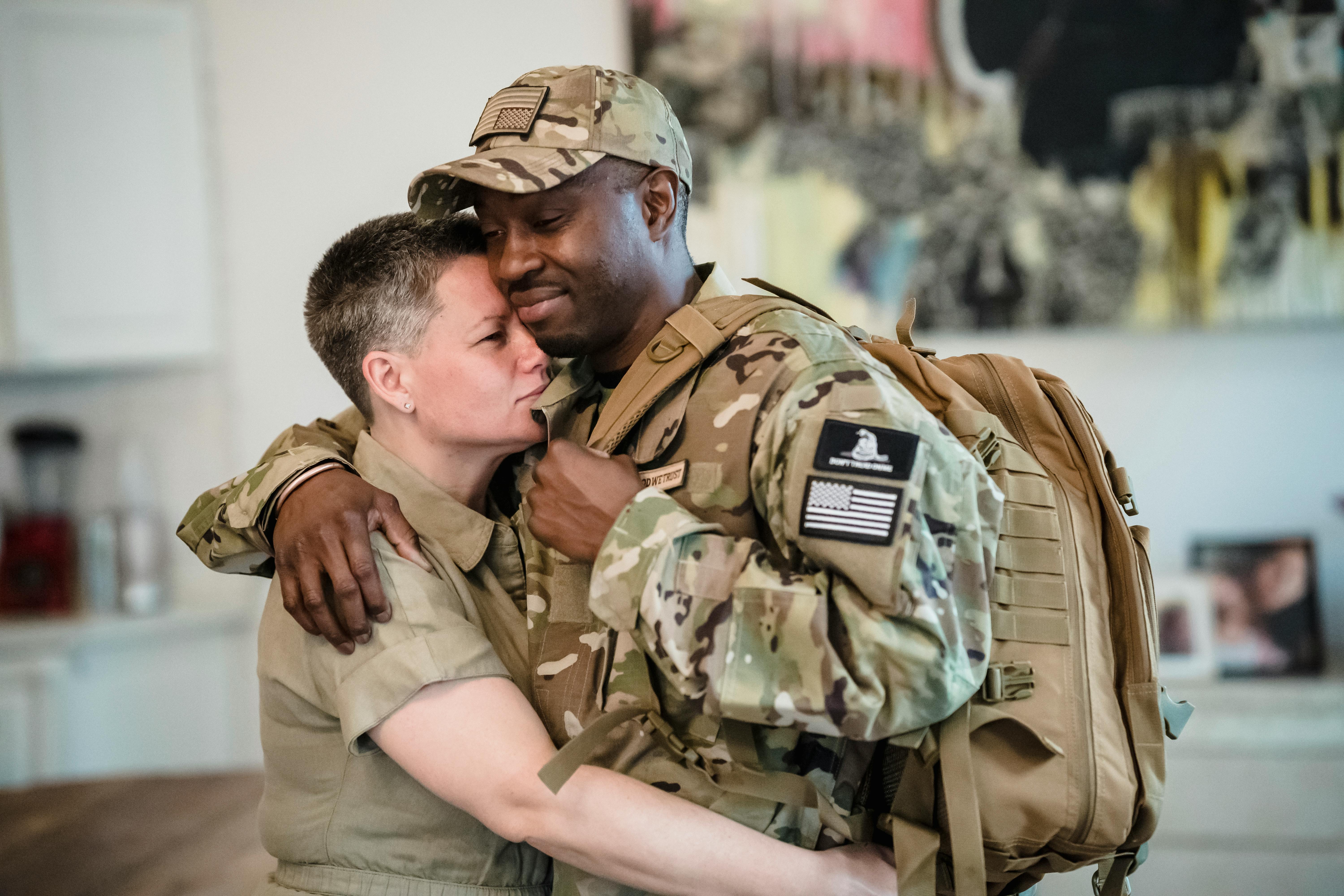
Common sense says a fifth combat deployment should be harder on a marriage than a first one. Each absence stacks trauma on top of trauma, the thinking goes, until a relationship simply can’t hold the weight anymore. Researchers at the RAND Corporation set out to test that assumption using one of the largest datasets ever collected on military couples, and the results ran the opposite direction. The steepest drop in marital satisfaction happened after the very first deployment. After that, satisfaction leveled off, even for couples who went through two, three, or more.
Inside the Deployment Life Study
The finding comes from the RAND Deployment Life Study, which followed 1,358 Army families in a representative sample of deployable service members and their spouses, with data collected from both partners between March 2011 and August 2012. Because researchers surveyed both spouses rather than relying on one person’s account, the results avoid the bias of a single perspective on how the marriage was actually doing. RAND researchers Thomas E. Trail and Ben Karney, who led the analysis, found that couples who had experienced one combat deployment reported significantly lower marital satisfaction than couples with no deployment history at all. That was the sharpest single decline in the entire dataset.
What happened next is the counterintuitive part. Couples who had gone through two or more combat deployments did not report satisfaction any lower than couples who had gone through just one. A related pattern showed up when researchers looked at cumulative months away rather than number of deployments: satisfaction dipped between zero and twelve months of combined deployment time, but it didn’t keep dropping for couples who had accumulated twelve months or more. In both framings, the damage was front-loaded rather than compounding.
What’s Actually Driving the Decline
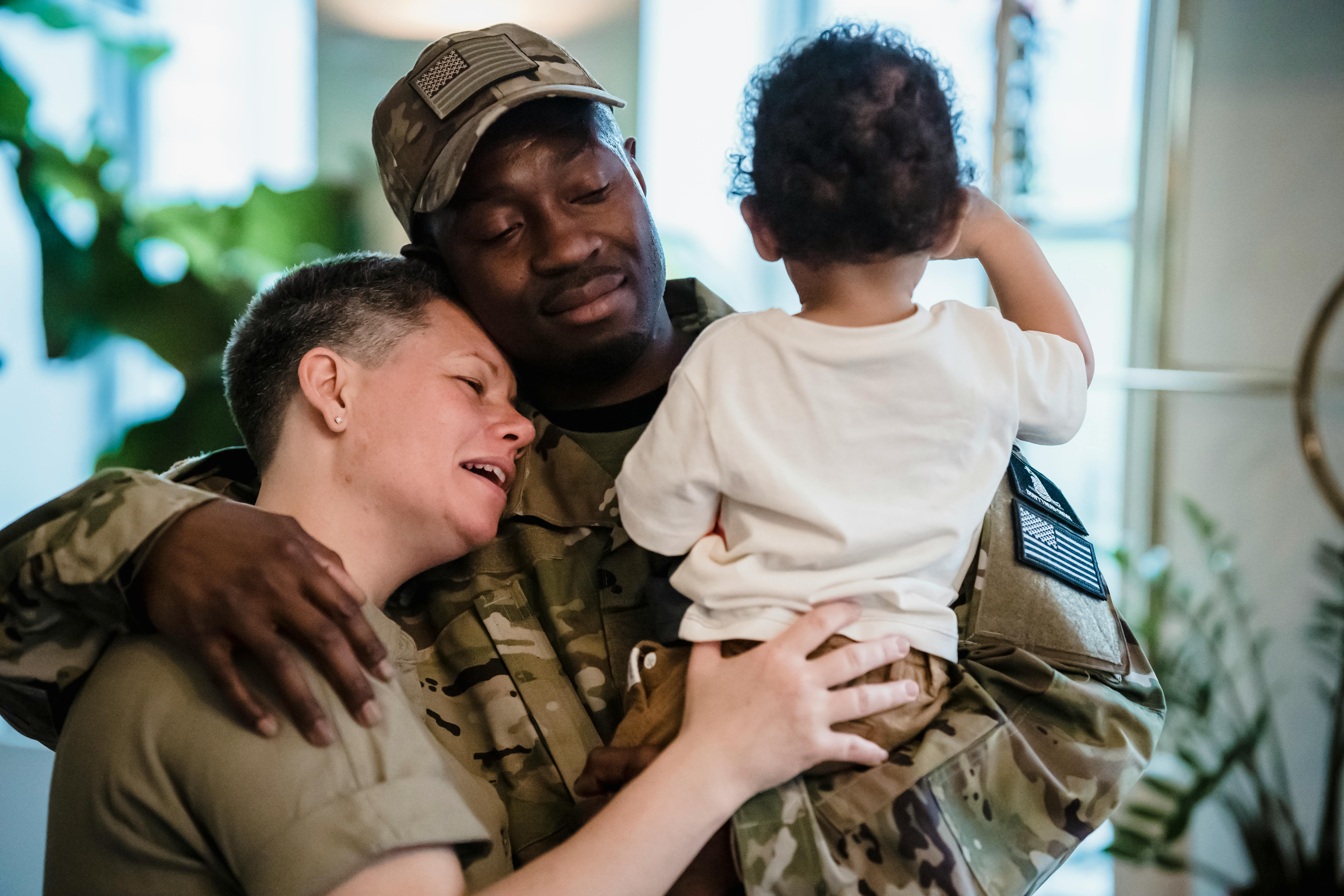
RAND’s analysis, also summarized by the Institute for Family Studies, points to a specific mechanism rather than deployment itself. The drop in marital satisfaction was “mostly accounted for by increased combat trauma experienced during deployment and the associated increase in post-traumatic stress symptoms.” In plain terms, it isn’t the calendar time apart that erodes a marriage most. It’s what a service member brings home from combat exposure, and how that trauma shows up in the relationship afterward. A first deployment often carries the heaviest exposure to that kind of trauma simply because it’s new, unfamiliar, and frequently the most intense introduction to combat conditions a service member will face.
That mechanism helps explain why satisfaction doesn’t keep declining with each additional deployment. If the erosion were purely about time and separation, more deployments should mean more strain, cycle after cycle. Instead, the data suggests something closer to an adjustment: couples who survive that first, hardest deployment intact often develop the coping tools, communication habits, and expectations that carry them through the deployments that follow. RAND’s broader research on military family resilience across the deployment cycle backs this up, finding that families who build strong routines and support networks early tend to weather repeat separations better than families encountering deployment for the first time.
Why the First Deployment Deserves More Support, Not Less
The practical takeaway is almost the reverse of what military families and the people who support them might expect. Resources, counseling, and outreach aimed at reducing divorce and separation among military couples often ramp up as a service member’s deployment count climbs, on the assumption that repeat deployments are the riskiest stretch for a marriage. RAND’s data argues for flipping that emphasis. The authors concluded that “the initial deployment is a critical period for interventions,” meaning the months around a first combat deployment, both before it starts and after the service member returns, are when a marriage is most vulnerable and when support would do the most good.
For military spouses bracing for what they assume will be an increasingly hard road with each new deployment, the research offers a genuinely different way to think about it. The first time apart is often the roughest test a marriage will face, not a preview of worse to come. Couples who get real support through that first deployment, particularly support aimed at addressing the psychological toll of combat exposure rather than just the logistics of separation, appear to build something durable enough to carry them through whatever deployments follow.