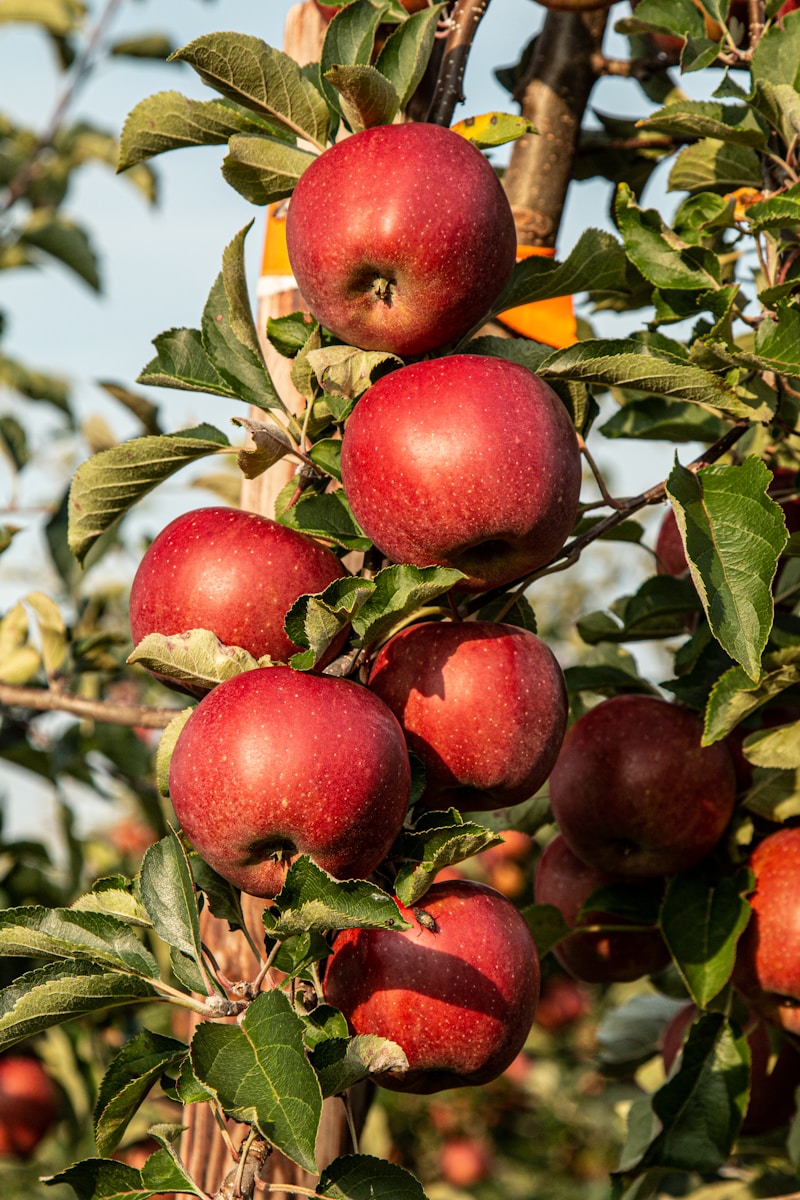
The U.S. apple harvest is coming in noticeably smaller this year, just as the fall baking rush starts. Growers are projecting 263 million bushels for the 2026-27 season, down 7% from last year and 3% below the five-year average, according to the U.S. Apple Association’s own Industry Outlook Report, released August 21. That is the kind of number that shows up on grocery shelves right around the time everyone starts thinking about crisp, crumble, and galette season.
The shortfall is not spread evenly. Washington, which grows more than two-thirds of the nation’s fresh apples, is down a relatively modest 2% to 176 million bushels. New York is down 10% to 32 million bushels. The real damage happened in the mid-Atlantic: a spring freeze cut Pennsylvania’s crop by 58%, to just 5 million bushels, and hit Virginia even harder at a 48% drop. Michigan, the third-largest producer, is essentially flat at 25 million bushels, down just 1%.
A smaller crop, but not a doomed one
“The story this season really varies by region,” said Chris Gerlach, USApple’s vice president of insights and analytics, in the association’s own release. “In areas that struggled with drought last year, growing conditions have improved, and we’re hearing encouraging reports about fruit quality. Other regions, particularly parts of the mid-Atlantic, have faced significant weather-related challenges that will affect production.” Trade coverage of the same report noted the industry is still describing overall fruit quality as encouraging, even with the smaller total volume — this is a supply story, not a quality one, according to The Packer’s reporting on the outlook.
The bigger long-term concern in the report is economic, not meteorological. USApple’s data shows labor now accounts for roughly 60% of production costs, and farm-gate prices for major varieties have sat near or below what it actually costs growers to produce them for extended stretches. A smaller crop this year could actually work in growers’ favor on price, even as it means less fruit moving through the supply chain overall — Perishable News’ coverage of the report frames tightening supply as one of the few levers growers have left after years of thin or negative margins.
None of this makes apples scarce at the grocery store. It does mean fewer of the giant, blemish-free display apples and a better case for buying whatever is actually on sale or slightly imperfect — which, for baking, is arguably an upgrade anyway, since a bruise or odd shape has zero bearing on how an apple performs once it is peeled, cubed, and cooked down.
Recipes that stretch fewer apples further
- Apple crisp for a crowd, only 6 apples: Slice 6 medium apples (a mix of Granny Smith for tartness and Honeycrisp for texture holds up best) and toss with 2 tablespoons sugar, 1 tablespoon flour, and a teaspoon of cinnamon. Top with a crumble of 1 cup flour, 1 cup rolled oats, ¾ cup brown sugar, and 1 stick of cold butter cut in until pebbly. Bake at 350°F for 40-45 minutes. Six apples feeds six to eight people, which is a better yield per apple than most pie recipes.
- Rustic galette, just 3-4 apples: Roll out a single pie crust into a rough circle, fan thinly sliced apples in the center leaving a 2-inch border, sprinkle with ¼ cup sugar and a squeeze of lemon juice, dot with butter, then fold the border over the fruit. Bake at 400°F for 40-45 minutes until the crust is deeply golden. A galette uses roughly half the apples of a full double-crust pie and looks more impressive doing it.
- Stovetop applesauce from the ugly ones: Bruised or oddly shaped apples are perfect here since they get peeled and cooked down anyway. Quarter and core 8 apples, simmer with ¼ cup water, a cinnamon stick, and a tablespoon of brown sugar for 20-25 minutes until soft, then mash to your preferred texture. It freezes well, so a smaller haul of apples still stretches across several weeks.
A 7% smaller crop is real, but it is a supply-chain number, not a reason to panic-buy apples at Costco. The more useful takeaway is the one growers themselves are pointing to: after years of prices sitting below what it costs to grow the fruit, a tighter harvest might finally be the thing that lets the math work in their favor — which, if it holds, is good news for whether there’s still an apple orchard left to visit next fall.