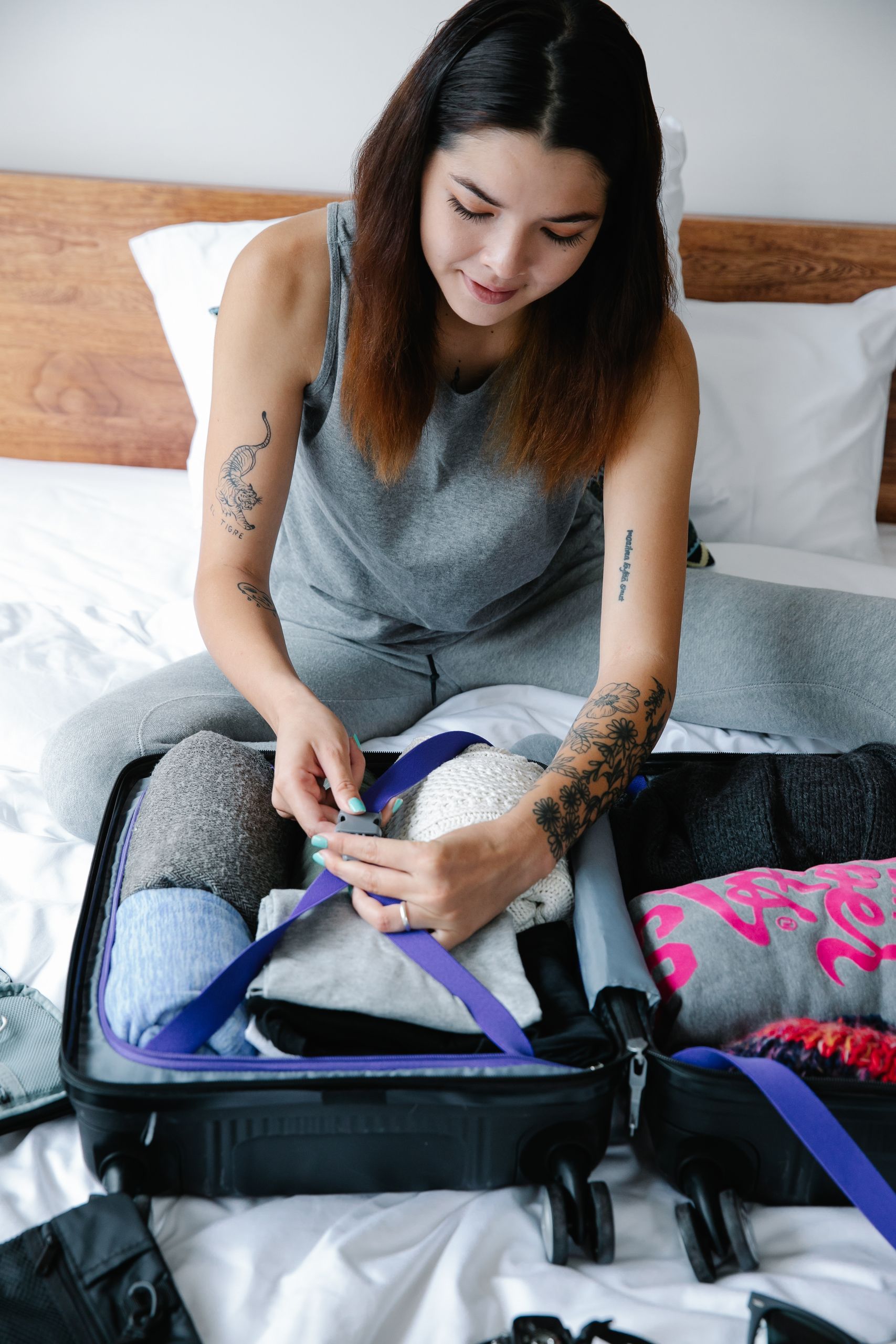
Nearly one in three travelers — 32% — admit to overpacking, according to the Global Rescue Traveler Sentiment and Safety Survey, a figure that has barely budged from the 35% recorded in September 2024, January 2024 and February 2023. It is one of the most consistent mistakes in travel, and it hits hardest on short trips, when there is no real reason to be lugging a bag built for a week. “Travelers often pack for their fears instead of their needs, and that’s why overpacking” persists, said Harding Bush, Global Rescue’s associate director of security operations, in the company’s own analysis. A two-day fall getaway does not need a checked bag. It needs a plan.

1. Start with a base layer, not a sweater. Fall temperatures can swing 20 to 30 degrees between morning and afternoon, so the foundation of a weekend bag should be one or two moisture-wicking base layers, not the bulkiest sweater you own. A base layer packs flat, dries overnight if needed, and works under everything else — which means it replaces two or three heavier items rather than adding to the pile.
2. Pack one pair of shoes that do double duty. A single pair of comfortable, weather-resistant shoes that can handle a hike, a dinner reservation and a walk through a foliage-lined town covers nearly every scenario a fall weekend throws at you. Shoes are the heaviest, most space-consuming item in most bags — packing two or three “just in case” pairs is the single fastest way to blow past a carry-on.
3. Bring a packable rain layer even if the forecast looks clear. Fall weather changes fast, and a jacket that compresses into its own pocket takes up less room than a folded T-shirt. This is the item overpackers skip because “it probably won’t rain” — and the item that saves the trip when it does.
4. Keep toiletries to travel sizes and know the 3-1-1 rule. If you’re flying, the TSA’s own 3-1-1 liquids rule caps carry-on liquids, gels and aerosols at 3.4 ounces (100 ml) per container, all fitting into a single quart-sized bag. Decanting shampoo, sunscreen and skincare into travel bottles ahead of time isn’t just a security-line shortcut — it forces the kind of portion control that keeps a whole toiletry kit under a pound.
5. One charger, one cable, done. A single compact power bank and one multi-device cable is enough for a weekend. Overpackers tend to bring a charger per device plus backups; a two-day trip does not require redundancy, just enough charge to get through a day of photos and directions.
6. Bring a day bag that folds flat. A packable tote or crossbody that compresses to almost nothing in the suitcase becomes the bag you actually carry once you’re there, for a farm stand, a hike or a flea market. It’s a two-ounce item that eliminates the urge to bring a second full-size bag “just in case.”
7. Layer with accessories instead of extra clothing. A scarf, a light knit hat and thin gloves take up a fraction of the space of another jacket or sweater, and they’re what actually make a single outfit work across a 40-degree temperature swing. Accessories are the cheapest square inches in a suitcase.
8. Set a hard cap: one backup outfit, not three. Global Rescue’s guidance for short trips is direct: “For short trips, aim for carry-on only.” One backup outfit — not a backup for every day — covers spills, weather surprises and a change of plans without turning a 48-hour trip into a full wardrobe relocation.

None of this is about packing light for its own sake. It’s about matching the bag to the trip. A two-day fall weekend has a predictable shape — one hike, one nice dinner, unpredictable weather, and not much else — and a bag built around that shape weighs half of what a “just in case” bag does, fits under any airline seat, and never once holds you up at baggage claim while the itinerary is already moving without you.
The habit is worth breaking for reasons beyond convenience, too. Every overpacked bag is extra weight to haul up a farmhouse staircase, wedge into a rental car trunk already full of apple-picking baskets, or drag across a cobblestone downtown between a leaf-peeping walk and a dinner reservation. A genuinely complete fall packing list isn’t the longest one — it’s the one where every item earns its place twice over, once on the drive up and once on the walk back to the car.