The National Restaurant Association surveyed hundreds of professional chefs for its 2026 What’s Hot Culinary Forecast, and comfort food didn’t just make the list this year, it anchored it. Comfort foods ranked second overall. Smashed burgers landed at number four. Global comfort foods, meaning dishes that borrow comfort-food logic from cuisines outside the usual American diner playbook, claimed the seventh spot. For an industry that’s been slow to touch its core menu for years, chefs just told the National Restaurant Association something specific: what people want to eat in 2026 is familiar, filling, and priced like it understands the moment.

A List Led By Comfort, Not Novelty
The forecast, drawn from a survey of chefs conducted in October 2025 and released through the association’s official 2026 press release, ranks local sourcing first, comfort foods second, and value menus and options third. Smashed burgers sit fourth, ahead of clear menu labeling in fifth and allergen-friendly menus in sixth. Global comfort foods take seventh, followed by “cleaner” recipes with fewer additives and dyes in eighth, proteins positioned as add-ons in ninth, and compostable or reusable packaging closing out the list at tenth. Reading the order matters here: this isn’t a forecast built around a single flashy dish. It’s an entire menu philosophy organized around comfort and cost control at the same time. Moutray expanded on that framing in the same release, noting that “the 2026 forecast highlights a restaurant industry that continues to adapt to changing tastes and economic realities,” which is a more candid admission than most trend reports offer. Chefs aren’t chasing comfort food because it’s suddenly exciting. They’re chasing it because it’s the one category reliably selling in an environment where diners are watching every check.
Where Local Sourcing and Labeling Fit Into the Picture
The top of the list isn’t about food at all in the traditional sense. Local sourcing claiming the number-one spot reflects supply chains and marketing as much as menus, while clear menu labeling in fifth and allergen-friendly menus in sixth point toward an industry responding to regulatory pressure and a more health-cautious diner base at the same time. None of those three trends photograph well on a social feed the way a smashed burger does, but together they explain why this year’s forecast reads less like a list of exciting new dishes and more like an operations memo that happens to include a few of them.
Why Chefs Keep Reaching For the Griddle
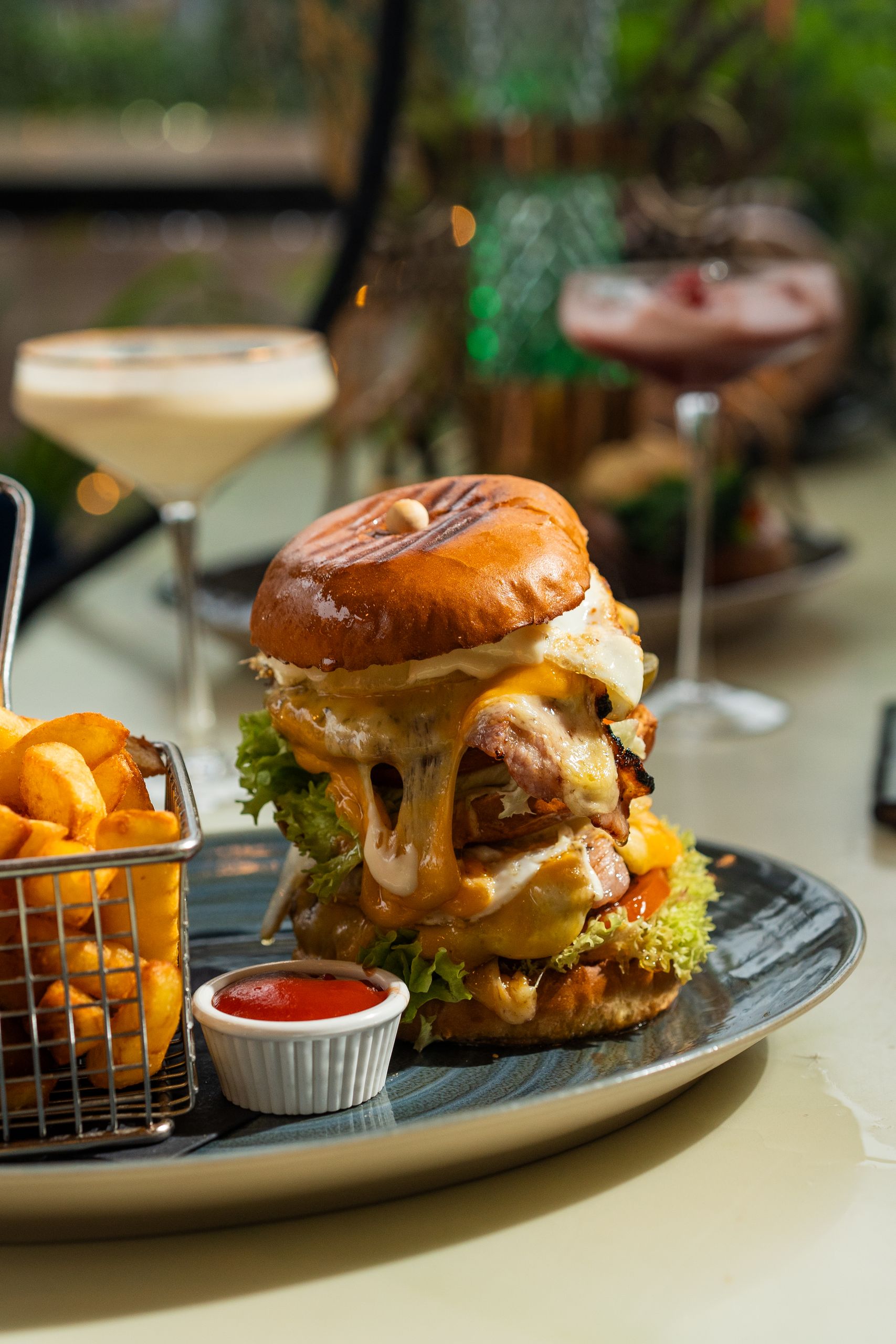
Smashed burgers work because the technique itself does most of the persuading. Pressing a loose ball of ground beef flat against a screaming-hot griddle creates a lacy, caramelized crust across more surface area than a traditional thick patty ever gets, and it costs a kitchen almost nothing extra to execute. Dr. Chad Moutray, the National Restaurant Association’s chief economist, put the broader logic plainly in the forecast: “Comfort and value are the twin pillars shaping America’s menus right now.” A smashed burger delivers both without asking a kitchen to learn anything unfamiliar, which explains why it beat out flashier, harder-to-execute trends for a top-five slot.
Comfort Without the Sameness
Global comfort foods landing in the top ten signals something slightly different from nostalgia alone. Operators are taking dishes people already find soothing, whether that’s a bowl of noodles, a braised stew, or a cheese-heavy casserole, and rebuilding them with ingredients and techniques borrowed from cuisines outside the traditional American diner canon. The forecast frames the overall mood as “flavor escapism,” and it’s not hard to see why that phrase fits: diners want a menu that feels like an experience without asking them to pay experience-level prices, and operators are responding by layering global technique onto dishes that already read as safe.
What It Means For the Next Menu You Order
None of this suggests restaurants are getting more adventurous in the way food media usually means it. Quite the opposite. Chefs are betting that most people, most nights, want a version of something they already trust, made a little better and priced a little more carefully than it was last year. A smashed burger on a menu next to a globally inspired stew isn’t a contradiction; it’s the same bet placed twice. The next time a menu looks suspiciously similar to the one from last fall but somehow more appealing, that’s not an accident. Hundreds of chefs told the National Restaurant Association exactly why it happened.