More than 1.76 million people have gotten themselves ordained through American Marriage Ministries alone, according to the organization’s own reported ordination count, almost entirely so they could legally marry a friend or family member. That number isn’t static. AMM ordained its 700,000th minister in May 2020, crossed one million by October 2022, and has grown by more than 750,000 additional ordinations since, a pace that shows no sign of slowing as more couples decide the person marrying them should be someone who actually knows them.
The shift shows up just as clearly on the receiving end of the ceremony. Sixty-seven percent of couples are now married by a friend, according to data from The Knot reported by NPR, up from just 27% in 2009. In less than two decades, having a loved one officiate went from a fringe choice to the default one, and getting ordained online, once treated as a punchline reserved for the one friend who insisted on doing it “as a bit,” became the practical first step most couples now expect someone in their circle to take.
Why a Stranger With Credentials Stopped Being the Draw
Part of what’s driving the shift is a decline in the institution that used to supply officiants automatically. As fewer Americans belong to a church, synagogue, or other religious community, fewer couples have a longtime clergy member on hand who already knows their story. AMM’s own site frames the trend directly, noting that “as the role of mainstream churches dwindles in the modern era, couples are turning to those that they know and trust to bless their marriage.” When there’s no default religious officiant already in the picture, couples are left choosing between hiring a stranger for a few hundred dollars or asking someone who actually loves them to spend twenty minutes online getting the legal authority to do it instead.
photo credit: unsplash
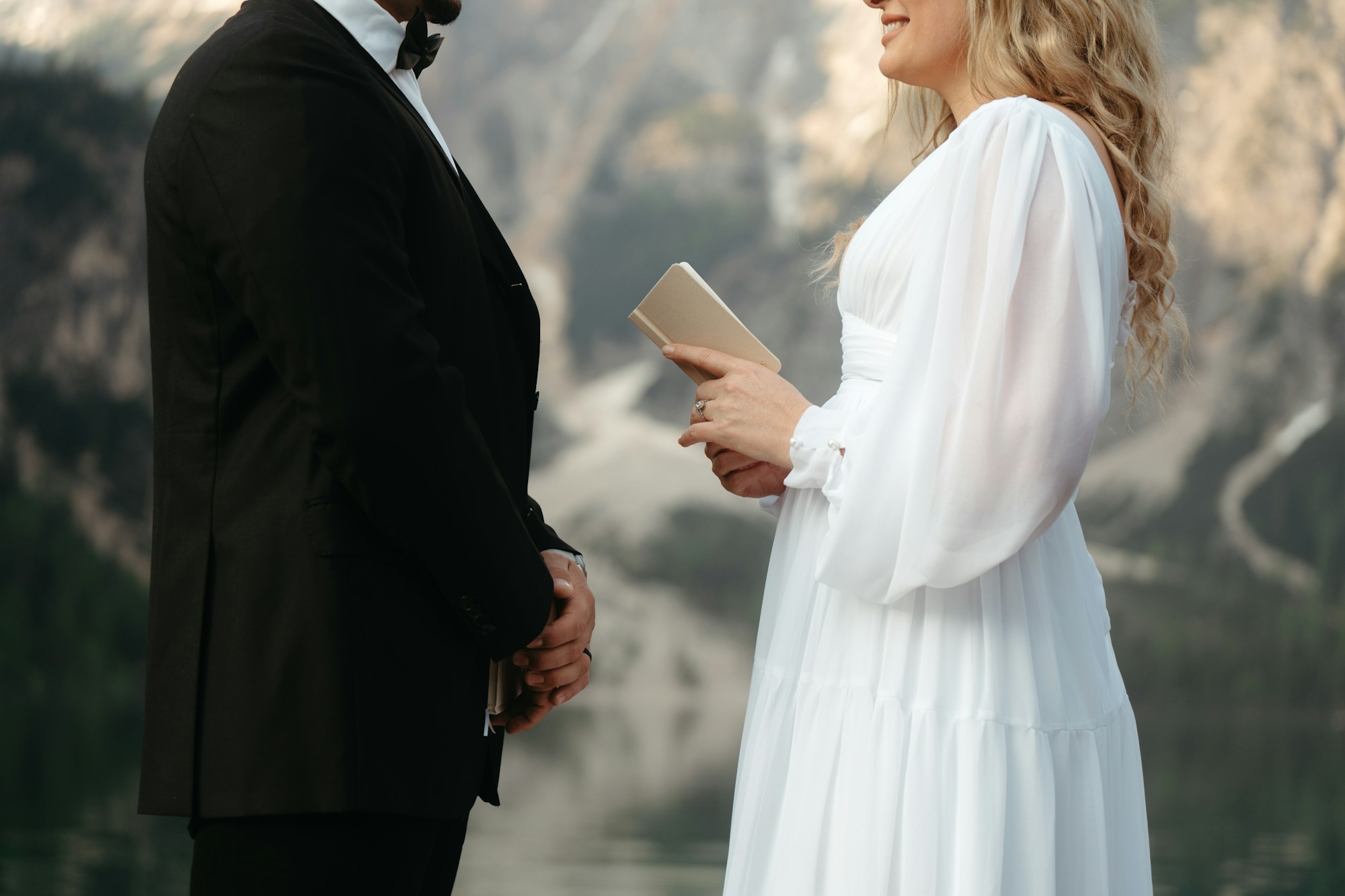
That choice carries real relational weight beyond convenience. A hired officiant can be warm and professional, but they’re reciting words about two people they met a few months earlier at most. A sibling, a best friend, or a parent who gets ordained specifically for the occasion is standing up in front of a room delivering a story only they could tell, built on years of actually knowing the couple. Couples increasingly describe wanting a ceremony that reflects their real relationships rather than a polished script from someone with no stake in the outcome, and asking a loved one to officiate is a direct way to put the people who matter most literally at the center of the ceremony instead of in the audience.
The Ripple Effect on the Person Who Says Yes
Getting ordained to officiate someone’s wedding also changes the role that person plays in the relationship going forward. It’s a genuine responsibility, not a novelty errand: officiants have to research their state’s marriage laws, write a ceremony that represents two people accurately, and perform legally under real scrutiny if paperwork gets challenged later. Friends who take it on often describe feeling more invested in the marriage itself afterward, having been handed a piece of legal and emotional responsibility for the day rather than just an invitation to attend it. That’s a meaningfully different kind of closeness than showing up as a guest, and it’s part of why so many people say yes even though the ask is bigger than it sounds.
None of this means professional officiants are disappearing, and plenty of couples still prefer someone experienced running the ceremony logistics on a day with a lot of moving parts. What’s changed is the assumption baked into who gets asked first. A generation ago, getting ordained online to officiate a wedding was the kind of thing one particular friend did as a joke, then quietly followed through on. Now it’s closer to an expected favor, one more couples are asking of the people already closest to them, and one more people are saying yes to because it means being trusted with something that actually matters.
The math on that growth is worth sitting with. If roughly two-thirds of American weddings are now led by a friend rather than a professional or clergy member, that’s millions of people every year taking on a role that used to belong almost exclusively to someone outside the friend group. Multiply that by the number of couples who ask more than one loved one to share officiating duties, or the parents and siblings who get ordained just to say a few words with legal standing attached, and the actual number of Americans who’ve gone through the process for someone they love likely runs well past AMM’s own tally, since it’s only one of several organizations offering the same free credential. What started as a workaround for one eccentric friend has become infrastructure for how an entire generation marries the people they love.