Family recipes rarely come with scientific guarantees, but that has never stopped generations from swearing by the ones passed down through their own kitchens, and one grandmother-granddaughter duo recently shared a dish their family has long credited with something even bigger than good flavor: a long life.
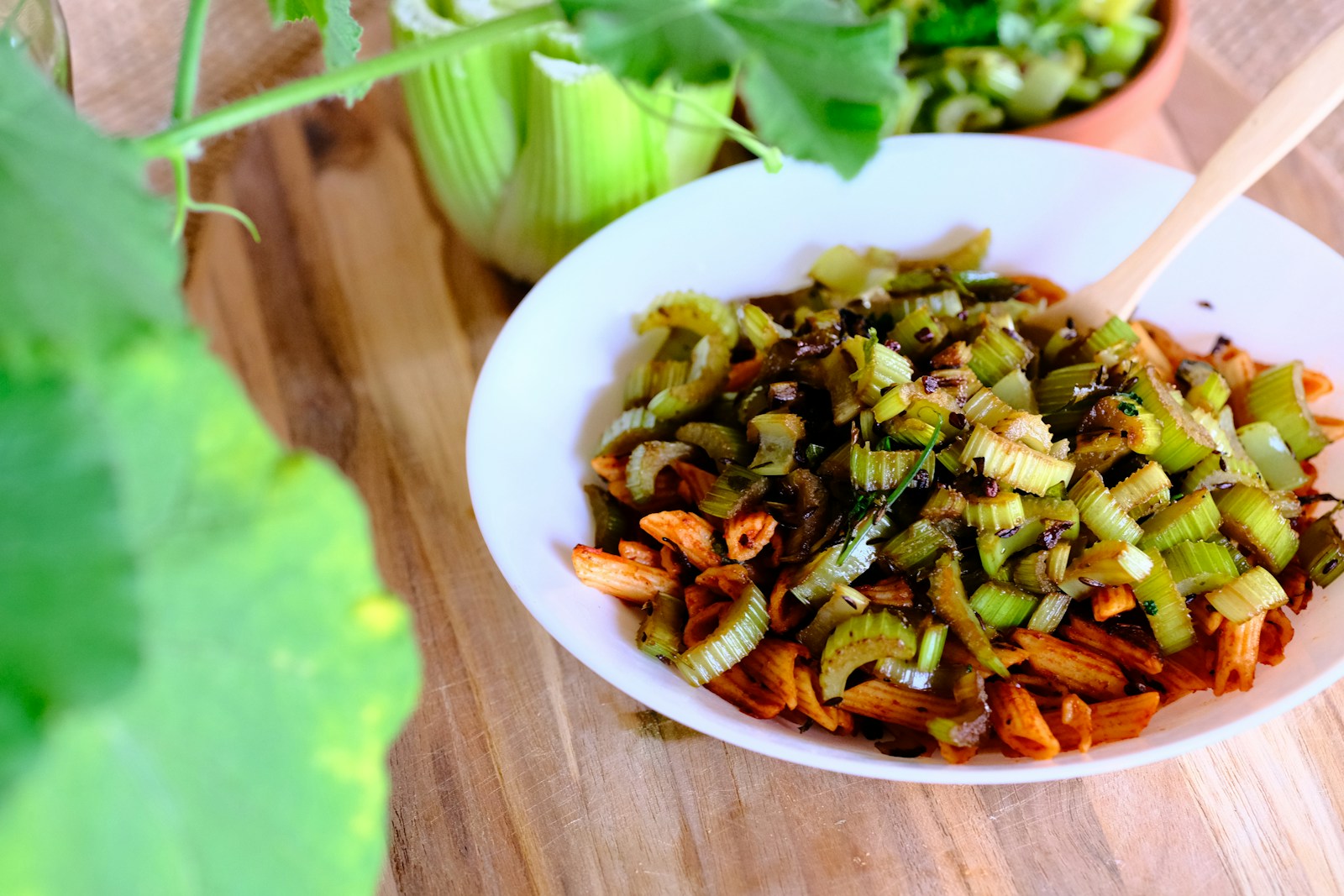
The video from @lainiecooks_ shows the creator cooking directly alongside her grandmother to prepare a celery salad the family has attributed to longevity for generations. The two work through the recipe together on camera, with the creator narrating the ingredients and technique while her grandmother actively participates in the preparation rather than simply supervising from the side. The video closes with both of them tasting the finished salad together, a quiet, shared moment that caps off the recipe demonstration.
View this post on Instagram
There is an immediate warmth to seeing a recipe made across two generations in the same frame, rather than one generation simply recounting a dish the other used to make. The grandmother’s active involvement in the actual cooking, rather than a passive role reduced to storytelling, gives the video a sense of continuity that a narrated-only version could not fully capture. This is not a granddaughter reconstructing a memory from scratch. It is a living recipe, still being made the same way, by the same hands that presumably taught it in the first place.
The longevity claim attached to the dish is, of course, impossible to verify in any scientific sense, and it is worth being clear-eyed about that. No single recipe, however beloved, can be reasonably credited as the actual cause of a long life, which depends on an enormous range of genetic, environmental, and lifestyle factors far beyond any one dish a family happens to eat regularly. But the durability of a belief like this one, passed down and repeated across generations regardless of whether it can be scientifically proven, says something meaningful in its own right about how families build meaning and identity around food.
Celery itself does carry genuine nutritional properties worth noting, including hydration content and various vitamins and antioxidants commonly associated with general health benefits, which likely helped a family legend like this one take root and persist across generations in the first place. A dish built around a genuinely healthy core ingredient has an easier time accumulating a reputation for wellness over time, even without any formal study ever actually testing the specific claim. The story becomes self-reinforcing: the dish feels virtuous because celery is broadly considered healthy, and that feeling gets passed down right alongside the actual recipe itself.
What is arguably more interesting than the longevity claim itself is what the tradition reveals about how families use food to encode values and beliefs that go well beyond nutrition alone. A recipe attached to a story about long life is rarely just about the ingredients. It is also a vehicle for connection between generations, a reason for a grandmother and granddaughter to stand in a kitchen together, cook side by side, and pass down not just a set of instructions but an entire family narrative about health, tradition, and care. The celery salad is the excuse. The real substance being passed down is the relationship itself, reinforced through the ritual of making the dish together.
Food and family researchers who study intergenerational traditions often point out that these kinds of dishes, ones with an attached story or belief that may not hold up to strict scientific scrutiny, tend to survive precisely because the belief adds emotional weight to what might otherwise be an unremarkable recipe. A plain celery salad with no story attached might get made occasionally and eventually forgotten. A celery salad tied explicitly to family longevity, repeated across generations with a specific narrative attached, becomes something closer to a ritual, actively maintained and taught forward rather than left to fade.
Whatever role the celery salad has actually played in the family’s health over the years, the video captures something worth valuing regardless: a grandmother and granddaughter, standing together in a kitchen, keeping a shared tradition alive through the simple act of making and tasting it together, one more time.
There is also a useful distinction to draw between believing a family food tradition literally and valuing it anyway, since most people who repeat a claim like this one are not actually making a scientific argument so much as passing along an inherited piece of family lore. Treating the celery salad as a genuine key to longevity is less important, in practice, than what the belief actually produces: a reason to keep cooking together, a story that gets retold at every preparation, and a recipe that stays alive specifically because it carries meaning beyond nutrition alone. Families that maintain traditions like this one over generations are not necessarily making health claims they expect to hold up to scrutiny. They are preserving a ritual, and the belief attached to it is simply the reason the ritual never stopped being worth repeating.
Science aside, there is a version of longevity that has nothing to do with years lived and everything to do with moments like this one, repeated across generations, still worth filming, still worth tasting together.
What also stands out is how specific the celery salad itself is as a vehicle for this story, rather than a more universally recognized comfort dish. Celery salad rarely gets the spotlight in food content built around nostalgia, which makes its starring role here feel less like a curated choice for views and more like an honest reflection of what this particular family actually keeps making, generation after generation, regardless of whether it would ever trend on its own merits.