

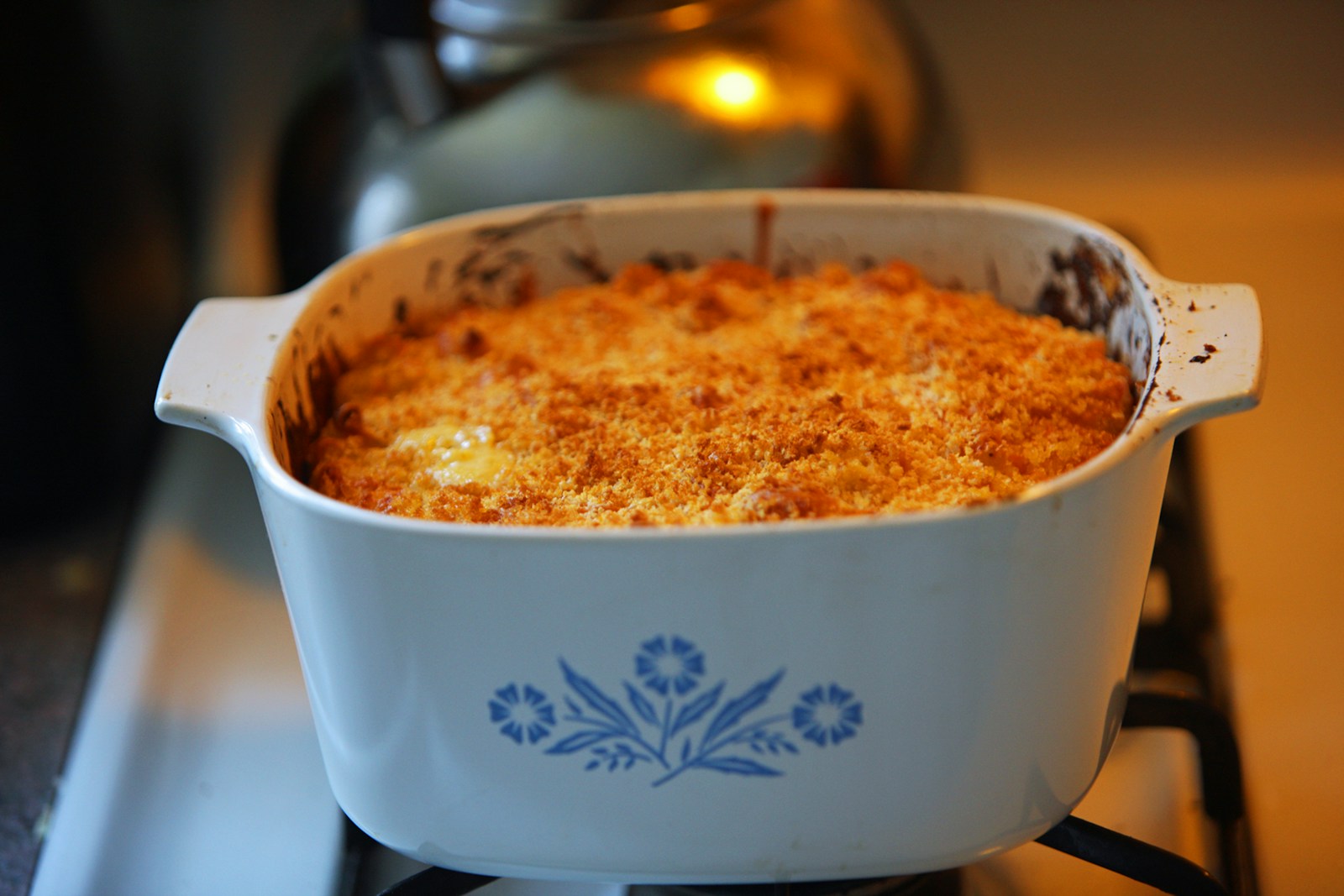
Few dishes carry as much emotional weight in American households as macaroni and cheese, and few ingredients spark as much kitchen debate as the processed cheese block that shows up in countless family recipes. One grandmother has leaned directly into that tension, sharing her family’s mac and cheese recipe on camera while openly acknowledging that the very ingredient at the center of it is considered controversial by plenty of home cooks and self-described purists.
Rather than shying away from the criticism that processed cheese sometimes draws online, she addresses it head-on, narrating the personal history behind the dish as she prepares it in her own kitchen. The video walks through her process while she reflects on where the recipe came from and why it has held on in her family for so long, despite, or perhaps because of, the very ingredient choice that raises eyebrows elsewhere. It’s a candid, unfiltered approach that treats the audience like they can handle a little culinary disagreement.
image: a bowl of pasta and a plate of pizza on a table. photo credit: unsplash
@glamaw22
As @glamaw22 explains on camera, that candor is a big part of what makes the video compelling. Processed cheese blocks have earned a reputation in some cooking circles as a shortcut, something to be replaced with sharper, more artisanal cheeses in a properly made mac and cheese. But that criticism often overlooks the reason these blocks became a pantry staple in the first place: they melt with remarkable consistency, producing a smooth, creamy sauce that’s difficult to achieve with many natural cheeses, which can separate or turn grainy under heat. For generations of home cooks working with what was available and affordable, that reliability mattered more than any culinary pedigree.
There’s also a generational layer to the story that gives it more staying power than a simple recipe video. When a dish gets passed down through a family, the recipe itself often becomes inseparable from the person who made it and the memories attached to it. A grandmother’s mac and cheese isn’t just food; it’s a specific taste tied to specific holidays, specific kitchens, and specific people who are no longer around to make it themselves. That’s likely why she frames the ingredient choice not as a flaw to defend, but as a fixed, meaningful part of a tradition that isn’t up for debate.
For readers thinking about their own family recipes, this story is a reminder that the ingredients that get labeled unsophisticated or old-fashioned online often survive in real kitchens for very practical reasons: cost, consistency, and the fact that they simply work. Plenty of professional chefs have quietly admitted to keeping a block of processed cheese on hand for exactly the situations this recipe is built for, whether that’s a weeknight dinner for a family of picky eaters or a holiday side dish that needs to hold up on a buffet table for hours without breaking down.
It’s also worth remembering that food trends move in cycles, and the dishes that get dismissed as unfashionable in one decade often get rediscovered and celebrated as comfort classics in the next. A recipe that has been made the same way for enough years to become a genuine family tradition has already outlasted plenty of passing culinary fads. This grandmother’s decision to keep making her mac and cheese exactly the way she always has, controversial cheese and all, isn’t stubbornness so much as a kind of quiet confidence that comes from watching a dish bring people to the table, generation after generation, regardless of what anyone else thinks the recipe should look like.
There’s a lesson here, too, about who actually gets to define what counts as a good version of a classic dish. Culinary trends online often push toward elevated, restaurant-style interpretations of comfort food, sharper cheeses, fresh breadcrumbs, elaborate baking techniques, and there’s nothing wrong with any of that. But it’s worth remembering that most beloved family recipes weren’t designed to win points with critics; they were designed to feed a specific group of people, reliably and affordably, meal after meal, year after year. A dish that has done that successfully for decades has already proven itself in the only way that actually matters to the people who grew up eating it, and that’s a standard no amount of online debate about ingredient snobbery can really touch. It has quietly outlasted every food trend that has tried to replace it.
For anyone who has ever felt a little self-conscious about a beloved recipe that doesn’t hold up to gourmet scrutiny, this video offers a bit of quiet permission to stop apologizing for it. Food memories are built far more on comfort and consistency than on technique, and a dish someone has eaten their whole life, made the exact same way by the exact same person, carries an emotional resonance no amount of culinary refinement can replicate. That’s ultimately the real story behind this grandmother’s mac and cheese: not a debate about processed cheese at all, but a demonstration of how a recipe becomes a tradition simply by being made, faithfully, again and again, for the people who love it.
There’s a simple, practical takeaway here for anyone hesitant to share their own family recipe because an ingredient in it feels unfashionable by current culinary standards. The recipes that actually endure, the ones requested at every holiday and taught to the next generation, are rarely engineered to impress outside critics. They’re the ones that work, reliably and deliciously, for the specific people eating them, year after year, regardless of what any comment section might have to say about the ingredient list.
