Some of the best food content isn’t really about the food at all, and a recent visit to a one-man Bosnian restaurant, captured by the creator behind ncfoodie, is a clear example of that. The setup was simple: a small operation, a single person running the entire show — cooking, serving, and clearly carrying the personality of the place on his own shoulders — and a customer who came in expecting a meal and left with something closer to a genuine connection.
Rather than centering the video on plating or portion size the way so much food content tends to, the creator spent much of his runtime on the conversation itself, letting the owner’s warmth and hospitality take center stage. It’s a small choice that changes the entire tone of a video: instead of a review, it becomes a portrait of a person, and instead of a transaction, it becomes an interaction worth remembering.
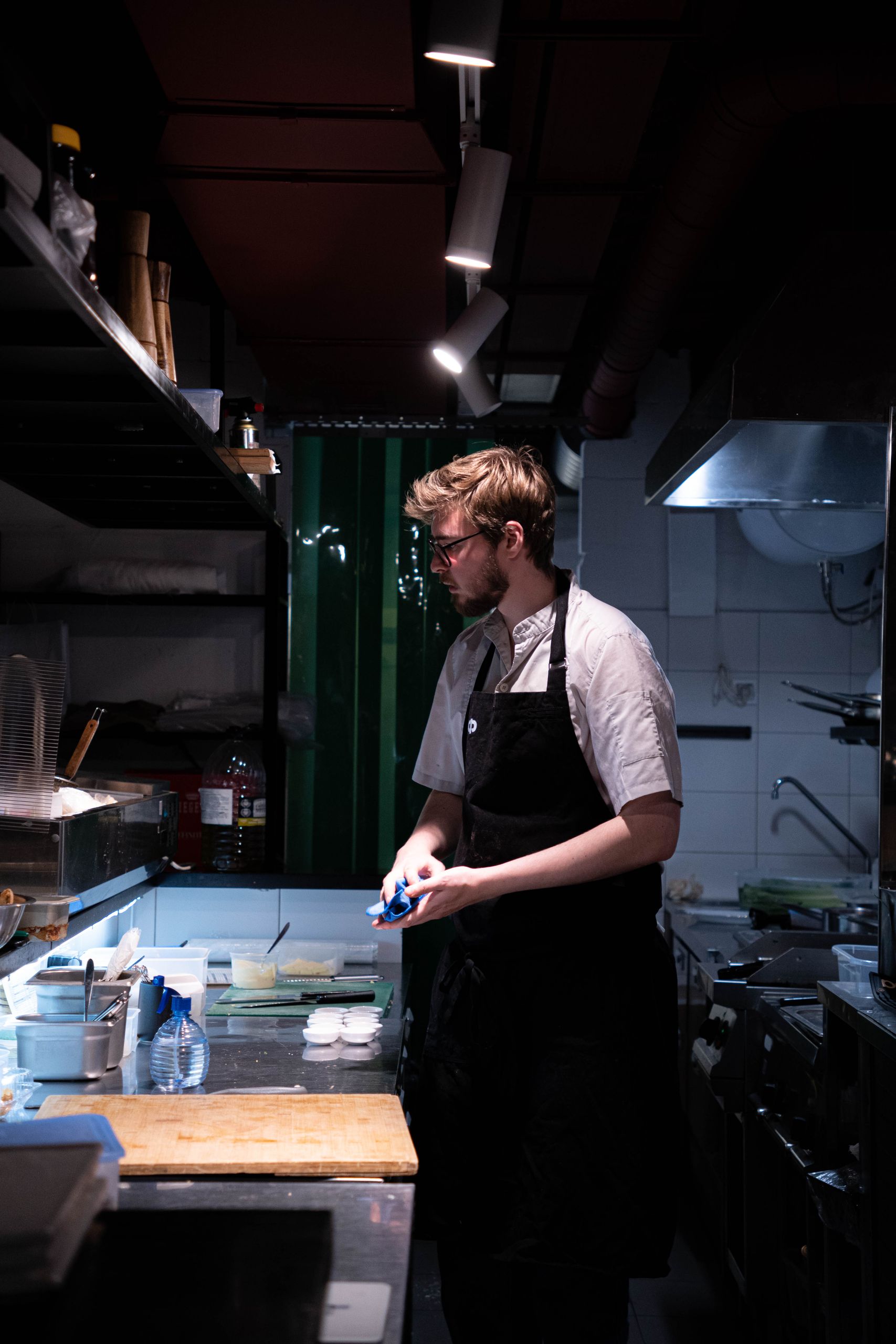
image: shallow focus photography of man in black dress shirt. photo credit: unsplash
@ncfoodie
That emphasis shows up clearly in the caption, where the creator makes a point of highlighting how much he appreciated the owner’s personality during the visit — a detail that suggests the meal itself, however good, was secondary to the experience of being genuinely welcomed by someone clearly proud of what they’d built.
One-person restaurants occupy a strange and often overlooked corner of the food world. Without a host, a full kitchen staff, or a management layer between the customer and the owner, every single interaction is unfiltered. There’s no one else to blame for a slow ticket and no manager to smooth over an awkward moment — it’s just one person, doing everything, and choosing, meal after meal, to do it with care. That kind of setup tends to produce exactly the sort of hospitality that can’t be trained into a large staff: personal, specific, and a little vulnerable, because the owner’s identity and the business’s identity are the same thing.
It’s also a reminder of something food content occasionally loses sight of in the chase for aesthetic plating and viral bites: the meals people remember longest are rarely the ones with the most technically impressive execution. They’re the ones tied to a conversation, a story from the person who made the food, or a moment of unexpected connection with a total stranger who happened to be running the register, the stove, and the dining room all at once.
For anyone looking to replicate that kind of experience, the advice embedded in videos like this one is fairly simple: seek out the small, independently run spots over the polished chains, and treat the person behind the counter as more than a service provider. Ask a question about the menu, about how long they’ve been open, about where a dish comes from. As the creator behind @ncfoodie demonstrated, that small bit of curiosity is often what turns an ordinary meal into the kind of moment worth filming — and worth remembering long after the plate is cleared.
In an era when so much dining content is engineered for maximum visual impact, there’s something quietly refreshing about a video that chooses connection over spectacle. It suggests that the algorithm, for all its obsession with novelty, still has room for the oldest food story there is: two people, a shared table, and a conversation worth having.
There’s also a broader economic story tucked inside videos like this one. Single-operator restaurants run on razor-thin margins and depend heavily on repeat customers and word of mouth, since they rarely have the marketing budget of larger chains. A single viral video from a respected food creator can meaningfully change the trajectory of a small business almost overnight, bringing in exactly the kind of foot traffic that keeps a one-person operation viable for years to come.
That dynamic has quietly reshaped how independent restaurant owners think about hospitality in the social media era. Where a warm interaction with a customer once existed only in that customer’s memory, it can now become a piece of shareable content that introduces the business to thousands of people who might never have found it otherwise. Owners who lean into that authenticity — rather than performing for the camera — tend to be the ones whose videos travel the farthest, precisely because audiences can tell the difference.
For travelers and local diners alike, there’s a simple lesson embedded in the format of this video: some of the richest food experiences are found not by chasing the most-reviewed spot in a city, but by walking into the smallest, least-hyped option and giving the person behind the counter a genuine chance to make an impression.
It’s also worth pointing out how much this kind of content shapes the way younger audiences think about travel and dining more broadly. Where an older generation might have relied on formal reviews or guidebooks to decide where to eat, many viewers now form their impressions of a restaurant, a neighborhood, or even an entire country through exactly this kind of short, personality-driven clip. A one-man Bosnian restaurant, introduced to the world through a single warm interaction, can end up shaping how thousands of people picture an entire cuisine or culture, which puts a surprising amount of weight on small, independent business owners to represent something far larger than their own storefront every time a camera happens to be pointed their way.