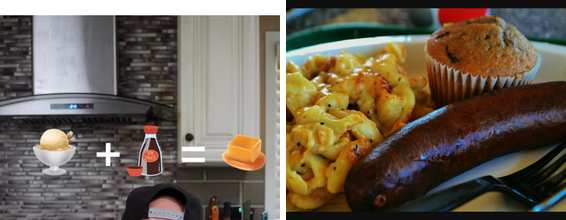
Every corner of food social media has its own running list of combinations that sound objectively wrong on paper, and @thegrumpychef finally decided to stop scrolling past them and start testing them instead. The reel, where he works through a batch of the internet’s strangest crowd-submitted pairings one by one, has pulled in 52,000 views and an unusually high 1,563 shares, a number that tends to signal content people are actively forwarding to friends rather than just watching.
What separates this video from a typical taste-test is the format. Instead of one creator’s personal theory about what tastes good, the combinations came directly from followers, meaning the chef had no say in what landed in front of him. That element of surprise, paired with his genuinely unfiltered reactions, is what turns a simple food trend into something closer to a game show.
Viral food-combination trends tend to follow a predictable arc: someone posts an odd pairing as a joke, enough people try it to confirm it actually works, and then a wave of “professional reacts” videos follows to either validate or debunk it. What makes a trained cook’s reaction more credible than an average home cook’s is palate vocabulary — a chef can usually explain why a combination works, pointing to balance between sweet, salty, fatty, and acidic elements, rather than just saying it’s good or bad.
That balance is actually the science behind most “weird but good” food pairings. Salty and sweet combinations work because salt suppresses bitterness and intensifies sweetness, which is why pretzels dipped in chocolate or bacon on a doughnut consistently test well despite sounding strange. Combinations that fail usually break on texture rather than flavor — pairing two soft, mushy ingredients with nothing crunchy to contrast them, for example, tends to read as unpleasant even when the flavors technically complement each other.
There’s also a cultural blind spot built into most “bizarre” combination content. A lot of pairings that read as shocking to one audience are completely standard elsewhere — fries dipped in a milkshake, for instance, or fruit paired with chili and salt, both standard in different food cultures long before they went viral in the U.S. Part of what makes a chef’s reaction valuable is separating genuinely odd chemistry from pairings that are only unfamiliar to a specific audience.
From a content-performance standpoint, this format works because it’s low-risk for the viewer and high-reward for the creator. Nobody watching has to actually make the combination themselves to get the payoff — the chef’s facial reaction alone delivers it. That’s part of why save and share counts run so high on these videos compared to standard recipe content: people send them to friends specifically to get a reaction, not because they plan to cook anything.
For readers curious about trying any of these pairings at home, the safest approach is to start with the combinations built on the salty-sweet or acid-fat principles mentioned above, since those have the strongest track record of actually working regardless of how they sound. The ones to be more skeptical of are texture mismatches dressed up as flavor pairings — those are far more likely to be viral for the shock value alone rather than because they’re genuinely good.
More from Cultivated Comfort
- Food Vlogger Says His Local Friends Laughed at a Mexico City Stall Selling Hand Made Dinosaur Quesadillas, Then Calls the Chicharron Prensado Filling Absolutely Insane
- Traveler Opens a Video by Calling Serbia Dangerous, Then Admits in the Caption It Is Satire and Shows a $1 Bakery Pastry, a Plate of Cevapi and a Riverside Bike Ride
- Woman Says She Spent 24 Hours in a Luxury Seafood Spa Buffet in China and the Video Shows Red Crustaceans Piled on Ice, a Tablet Menu, a Makeup Counter and a Room With a Minibar