Most of us have glanced at a receipt, seen a total that looked a little off and decided it was not worth the trouble. One customer decided it was. In a recording from @jjsimp_, she walks through a receipt for a very small order and shows how a six dollar purchase turned into a $7.20 charge on her credit card, all while the line for service charge read zero dollars.
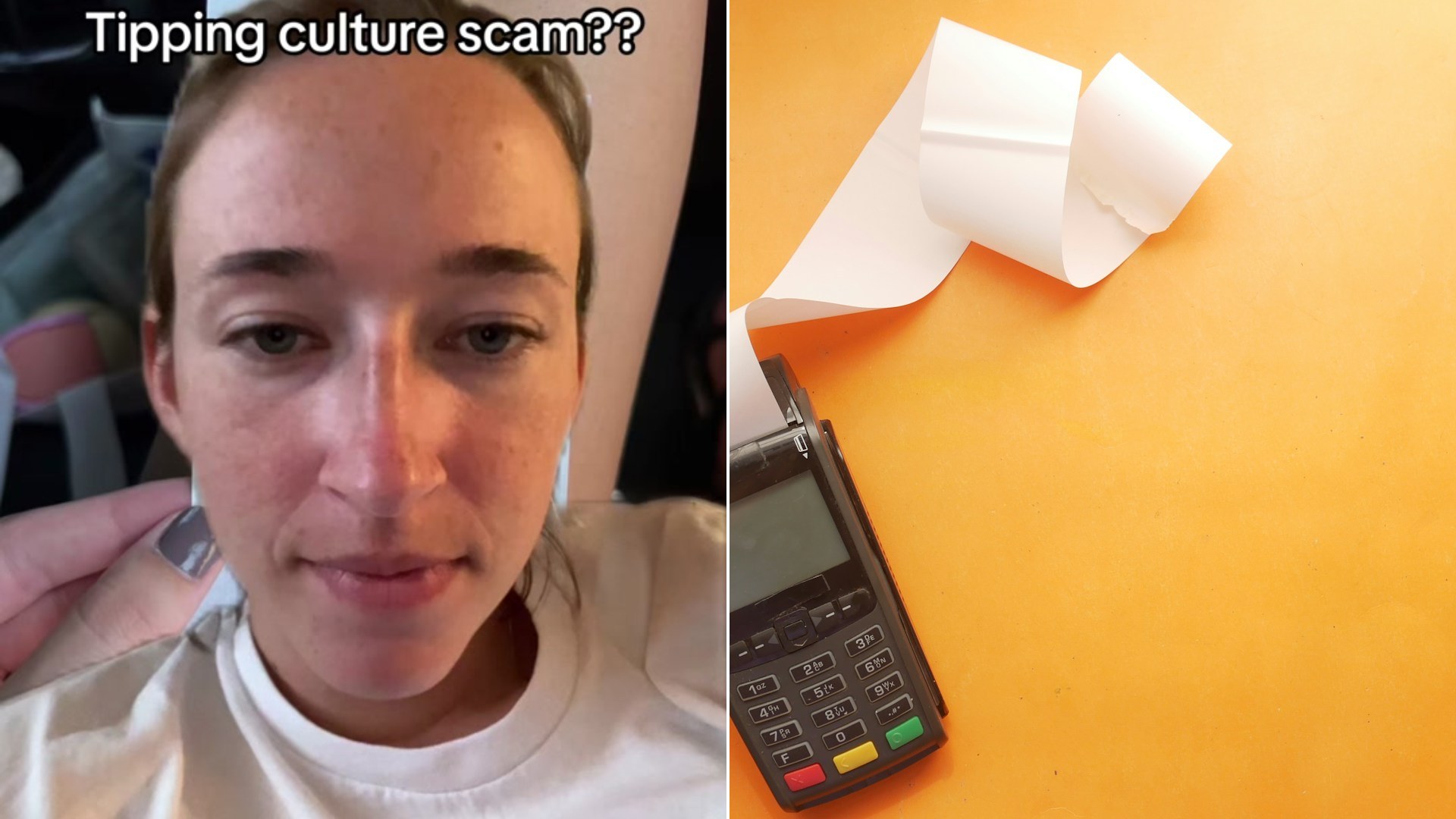
Her caption points to the part that bothers her most: the service fee says zero, yet the amount she was charged extra works out to exactly 20 percent. She adds that she will be checking receipts from now on and will not be tipping unless she sits down to eat.
@jjsimp_
The Receipt Does Not Add Up
She starts by reading the receipt out loud. The items came to $5.66, the service charge was listed as zero, and tax was 34 cents. Together that makes exactly six dollars. Yet the total at the bottom said $7.20. There was no gratuity line and nothing else on the page to explain the difference.
The total she expected was six dollars. When she handed over her credit card, the cashier asked her to swipe it on a small screen off to the side. She could see the screen from where she stood, and it showed $7.20. That seemed like a lot, she thought, even for tax. When the cashier asked whether she wanted a receipt, she said yes.
She took the receipt with her to the bathroom and added up the numbers to make sure she was not the one who was wrong. She was not. The math came to six dollars, and then she noticed that the extra $1.20 was exactly 20 percent of six.
The Explanation at the Counter
She went back to the register and asked whether a tip had been added. According to her telling, the cashier said no, there was a 20 percent service fee on credit cards. The receipt, however, listed the service charge as zero dollars.
She told the cashier that would have been nice to know before she handed over her card, because she would rather have paid in cash and saved the $1.20. The cashier then asked whether she wanted the tip refunded. She pointed out that she had just been told it was not a tip, but she said yes anyway. The cashier opened the drawer and handed her two dollars, because she did not have exact change.
That detail is what bothers her. Two dollars is 80 cents more than the $1.20 she had been overcharged, and in her view, nobody gives back extra money unless they know something is wrong. She wonders whether the cashier accidentally hit a 20 percent tip button on the screen, or whether she tried to slip something past her. She also notes that the card reader was one of those small machines that spin around, that the cashier had stepped aside with it so she could not see what was happening, and that she did not get a receipt to sign until she asked for one.
It is worth saying that this is one customer’s account, and there may be an innocent explanation, such as a mistaken button press or a new policy that was not posted clearly. The recording does not name the business, and the creator does not claim to know what happened behind the counter. What she does know is the math on her own receipt.
What the Rules Say About Card Surcharges
Her situation raises a fair question: can a business really charge extra for paying with a credit card? The answer is yes, in many cases, but with limits. The Michigan Attorney General’s office has a helpful consumer page on credit and debit card surcharges that lays out the basics, and state rules vary, so it is smart to check yours.
- Signs are required. A store with a physical location that adds a credit card surcharge must display a notice at the entrance and at the point of sale.
- The receipt must show it. The exact surcharge amount has to appear as its own line item.
- There are caps. Under card network rules, Visa’s cap is 3 percent and Mastercard’s is 4 percent. A 20 percent surcharge would be far above either number.
- Debit cards are off limits. Debit and prepaid card surcharges are not allowed under the network rules.
- Cash discounts are allowed. A business may offer a lower price for paying in cash.
If you think a surcharge broke the rules, the same page suggests reporting it to Visa or Mastercard through their online support pages, or filing a complaint with your state attorney general’s consumer protection office.
Simple Habits That Save You Money
You do not have to turn every coffee run into an investigation, but a few small habits can protect your wallet.
- Look at the screen before you pay. If the number on the card reader is higher than the total you expected, ask about it before you tap or swipe.
- Ask about card fees on small orders. A quick, friendly question such as whether there is a fee for cards can save you a surprise, and you can switch to cash if there is one.
- Always take the receipt. Compare the subtotal, tax and total. If any line does not add up, speak up while you are still at the counter.
- Watch the tip screen. Tablet checkouts often show preset tip buttons. Make sure the one you pressed is the one you intended, especially on a counter service order.
- Keep a little cash on hand. It avoids card fees where they apply, and it keeps the transaction simple.
Is It Worth Fighting Over $1.20?
Some people will say she is making a fuss over pocket change, and others will say that is exactly how small overcharges add up. The creator herself asks whether she is wrong or just being silly. The answer is probably that both things can be true. A dollar and twenty cents is not a fortune, but the principle of clearly labeled prices is worth defending. If a charge does not match what the receipt says, a polite question is always fair.
In the end, she got her money back, plus a little extra, and she turned a confusing moment into a useful reminder: look before you pay, and read before you sign.