Picture walking into a restaurant and spotting a sign by the counter that reads, in effect: if you cannot tip your server, do not eat out. Would you stay for dinner, or turn around and walk back out?
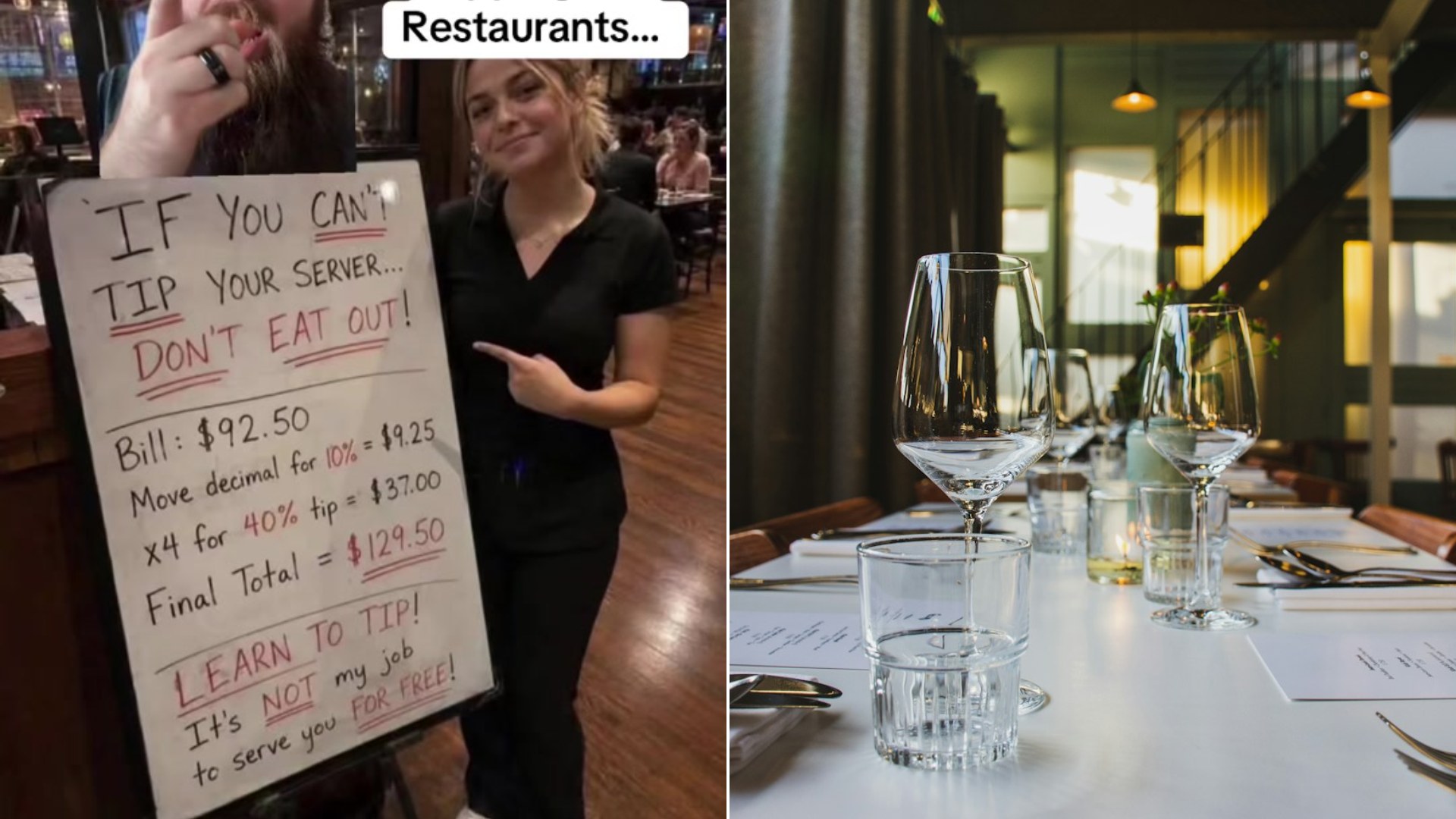
That is the question @chainsawreacts put to the internet after coming across a sign making the rounds online. It laid out a sample bill of $92.50, then added what it called basically a 40 percent tip of $37, for a final total of $129.50. The sign ended with a pointed line: “Learn to tip. It’s not my job to serve you for free.”
@chainsawreacts
A Sign With a Comeback
Someone else then posted a version of the image with a different message, suggesting how the sign should have read. The reworded version said, in short, that if you cannot pay your employees, you should not open a restaurant.
@chainsawreacts was upfront that they are not sure the original image is legitimate, and said it might not be real at all. But the creator thought the discussion it sparked was worth having anyway.
The Question Behind the Sign
The creator’s main point was a simple one: why is the system set up this way? Servers earn an hourly wage that, in many places, is next to nothing, so they have to survive on tips to pay rent and cover their bills. That means customers are expected to pay extra, on top of the bill, to help cover what is essentially a salary. In the creator’s view, the restaurant and the companies behind it are the ones saving money.
At the same time, @chainsawreacts made clear they do tip, and tip better when the server is doing a good job. What bothers them is the growing expectation of a gigantic tip, and the way some places seem to try every angle to pull more money out of customers. Their conclusion: it should not be this way, and honestly, changes should be made.
Why the Tipped Wage Is So Low
Whether or not that particular sign was real, the debate behind it is very real. In the United States, the federal minimum cash wage for tipped workers has been $2.13 an hour for many years. Under federal law, if a worker’s tips do not bring their pay up to the regular minimum wage, the employer is required to make up the difference. Many states set a higher tipped wage, and some require the full minimum wage before tips.
That arrangement is the reason a server’s income can feel so tied to the generosity of strangers. A good night with big tables can mean a strong paycheck. A slow shift or a rude customer can mean a rough one. It also explains why some servers get very protective about tipping, and why some customers feel they are being asked to subsidize wages.
Doing the Math on the Sign
If you look at the numbers on the sign, they are worth a second glance. A $92.50 bill with a $37 tip comes to $129.50, and the sign called that basically 40 percent. In reality, 40 percent of $92.50 is exactly $37, so the math is accurate. The problem is the percentage itself. Most guidance on dining in the United States points to around 15 to 20 percent for good service, not double that.
At 20 percent, the same meal would have come with a tip of $18.50, for a total of $111. At 18 percent, it would be roughly $16.65. A sign that sets the expectation at 40 percent is asking for more than twice the usual amount, which is probably why it hit a nerve with so many readers.
How to Handle Tipping Pressure at the Table
You may never see a sign like this in person, but you will see plenty of subtle versions of it. Here are some ways to stay fair to your server and to your own budget.
- Check for a service charge first. Some restaurants add an automatic gratuity, especially for larger parties. Look at your bill so you do not accidentally tip twice.
- Tip for the service you received. Reward attentive, friendly service on the higher end. If service was poor, a lower tip sends a message, but think twice before leaving nothing. The server may not control kitchen delays.
- Know the number you are comfortable with. Deciding on a range ahead of time, such as 15 to 20 percent, takes the stress out of the moment.
- Do the math on the pre-tax amount. Many people calculate the tip before tax, and that is a perfectly reasonable approach.
- Check a restaurant’s policies before you go. Menus and websites often mention service charges or automatic gratuities.
- Be wary of guilt. A good restaurant earns tips through service and does not demand them with a sign.
In the end, @chainsawreacts asks a question many diners and servers have wondered about for years: should paying the people who serve you be the restaurant’s job, or the customer’s? Whatever your answer, a friendly server and a fair bill make for the best night out.
More Stories You May Like
- Jersey Mike’s Employee Told a Rude Customer to Leave After She Demanded a Half Sandwich and Threatened to Sue the Store
- Restaurant Owner Says an Influencer Praised Her Food to Their Faces and Left a 6 Dollar Tip on 200 Dollars Before Trashing Them Online
- Diner Let His Texas Roadhouse Waitress Choose His Entire Meal, and While the Steak Was a Total Letdown, One Surprise Pick Ended Up Saving the Whole Night