She asked for one thing: a black coffee. The total came to $6.99, and then the screen spun around.
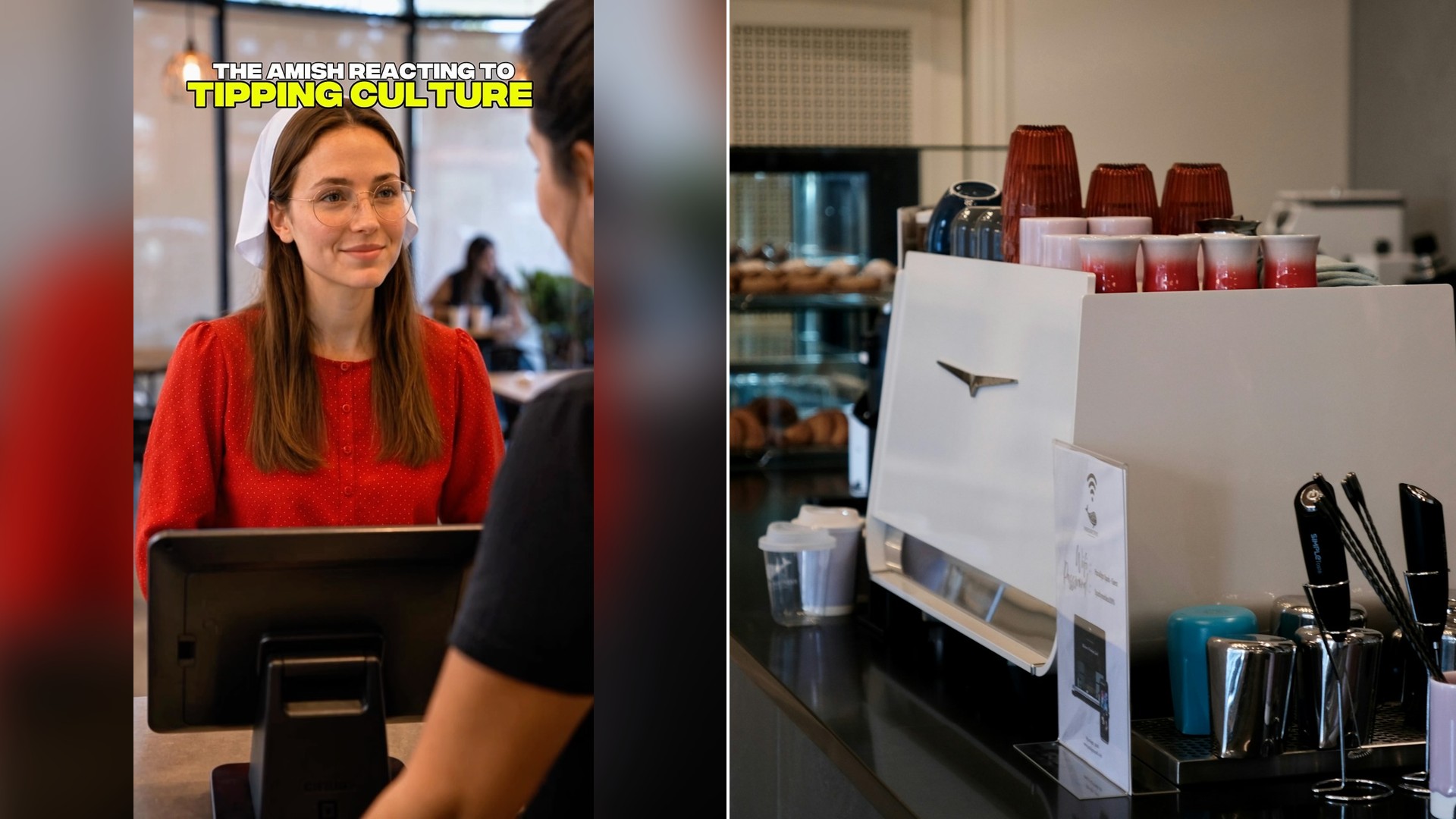
That is the moment a woman who goes by amishabigail on Instagram decided she had seen enough tip screens for one lifetime.
“Let me get a black coffee please,” she tells the cashier. “Of course, that’ll be $6.99,” comes the reply, followed by the question that now greets nearly every customer at nearly every counter: “How would you like to tip?”
View this post on Instagram
“Tip? For What?” The Moment The Coffee Counter Went Quiet
Her answer was short and blunt. “Tip? For what? For taking my order and making a simple cup of coffee, I’m not tipping you.”
The cashier answered with a flat “Wow. OK.” Then the customer kept going, and that is where the exchange turned from a grumble into a lecture.
“Why is it everywhere I go?” she asks. “There’s always these machines you guys turn around asking for a tip.”
She explains where she is coming from. According to her, back in the Amish community everyone works hard and does their job, and nobody expects a tip for it.
“The City Culture Is Really Weird” And Other Parting Shots
Her verdict on city life was just as direct. “The city culture is really weird,” she says, “and you guys act very entitled.”
Then came the polite exit that makes the whole thing sting a little more. “Thank you. Have a nice day.” And one last line over her shoulder: “Smile a little bit.”
Her caption put it in capital letters: “Tipping Culture Is OUT OF CONTROL.”
It is a short clip, but it landed on a nerve. Plenty of folks have stood at a counter, staring at a screen with three buttons and a line of people behind them, wondering whether they just got guilt-tripped over a cup of coffee.
Why So Many Customers Feel Tip Screens Have Gone Too Far
Tipping itself is an old American custom, and it has a clear home in sit-down restaurants. A server walks you through the menu, brings your food, refills your drinks and checks on your table. In many states, servers are paid a lower base wage with the expectation that tips make up the difference. Under federal law the minimum cash wage for tipped workers is $2.13 an hour, though many states set it higher.
The counter is a different story. The person ringing up a coffee is usually paid the regular minimum wage or better, and the service is quick and transactional. That is why a tip prompt at a coffee bar can feel like a request to pay extra for something that is already priced into the cup.
The payment screens have made the question harder to dodge. Instead of a jar by the register that you can pass by quietly, the tablet asks you directly, often with the cashier standing right there watching your finger move.
Customers have a name for the awkward feeling that follows: tip fatigue. When every purchase, from a bagel to a haircut to a takeout order you picked up yourself, comes with a suggested percentage, the whole thing starts to feel less like a thank-you and more like a toll.
Standing Up For The Cashier Is Fair Too
Now, there is another side to this story, and a fair-minded reader should hear it. The cashier in this exchange did not set up that screen. Most counter workers have no say in the payment system the owner bought, and many are simply trying to get through a long shift with a line out the door.
A cashier who turns the screen around is often following the shop’s routine, not personally begging for money. Being on the receiving end of a lecture about entitlement, in front of a line of customers, is a rough moment in anyone’s workday.
And plenty of people in the food and coffee business do rely on tips to make ends meet, especially in places where living costs are high. That is worth remembering when the urge to make a point strikes.
The creator’s own approach shows both sides of this at once. She is polite on the surface, thanks the cashier and wishes her a nice day, but the message underneath is that she does not feel she owes anything extra for a cup of black coffee.
How To Decide When To Tip And When To Skip
Whatever side you land on, you do not have to be caught off guard at the register. Here are some plain, practical ways to handle it.
- Know that you are free to say no. At a counter, a tip is a gift, not a bill, and a tip screen almost always has a “No Tip” or “Custom” button.
- Tip for service that stood out. If someone remembered your order, fixed a mistake with a smile, or went out of their way, a dollar or two is a kind way to say so.
- Keep a few dollar bills on hand. A bit of cash in a jar can feel more personal than tapping a percentage on a screen.
- Do the math before you tap. A suggested 20% on a $6.99 coffee is about $1.40, which is easy to forget when the buttons are bright and the line is long.
- Save the real generosity for the places that depend on it, such as sit-down restaurants, delivery drivers and hair and nail services, where tipping is standard practice.
The Real Takeaway From One Black Coffee
At bottom, this little exchange is about two different ideas of what honest work looks like. One says a job well done is its own reward and a wage should cover it. The other says a tip is how a community says thanks to the people who serve it.
Neither view makes someone a villain. But the woman behind this clip is clearly speaking for a lot of customers who feel nudged, every day, to pay more than the sticker price.
If the tip screen at your favorite coffee spot makes you uneasy, you can decide ahead of time what feels fair to you and tap that button with a clear conscience. And if you are the one holding the tablet, a kind word goes a long way, too. A little smile, on either side of the counter, costs nothing at all.
More Stories You May Like
- Mom At An Outdoor Cafe Tells A Woman Believed To Be In Her 70s To Get Her Coffee And Go Elsewhere After She Complained About The Kids At Quarter Past Seven In The Morning, And Australians Are Split
- Holiday Shopper Searching JFK To Buffalo Sees A Return Flight Priced From $11,400 To $12,203 With A Fort Lauderdale Layover And Says She Will Start Walking Home
- Italian Chef Fired From A Brisbane Restaurant After Refusing To Put Pineapple On Pizza A Third Time Calls It An Insult To His Culture, Then Loses His Unfair Dismissal Claim For Filing Too Late