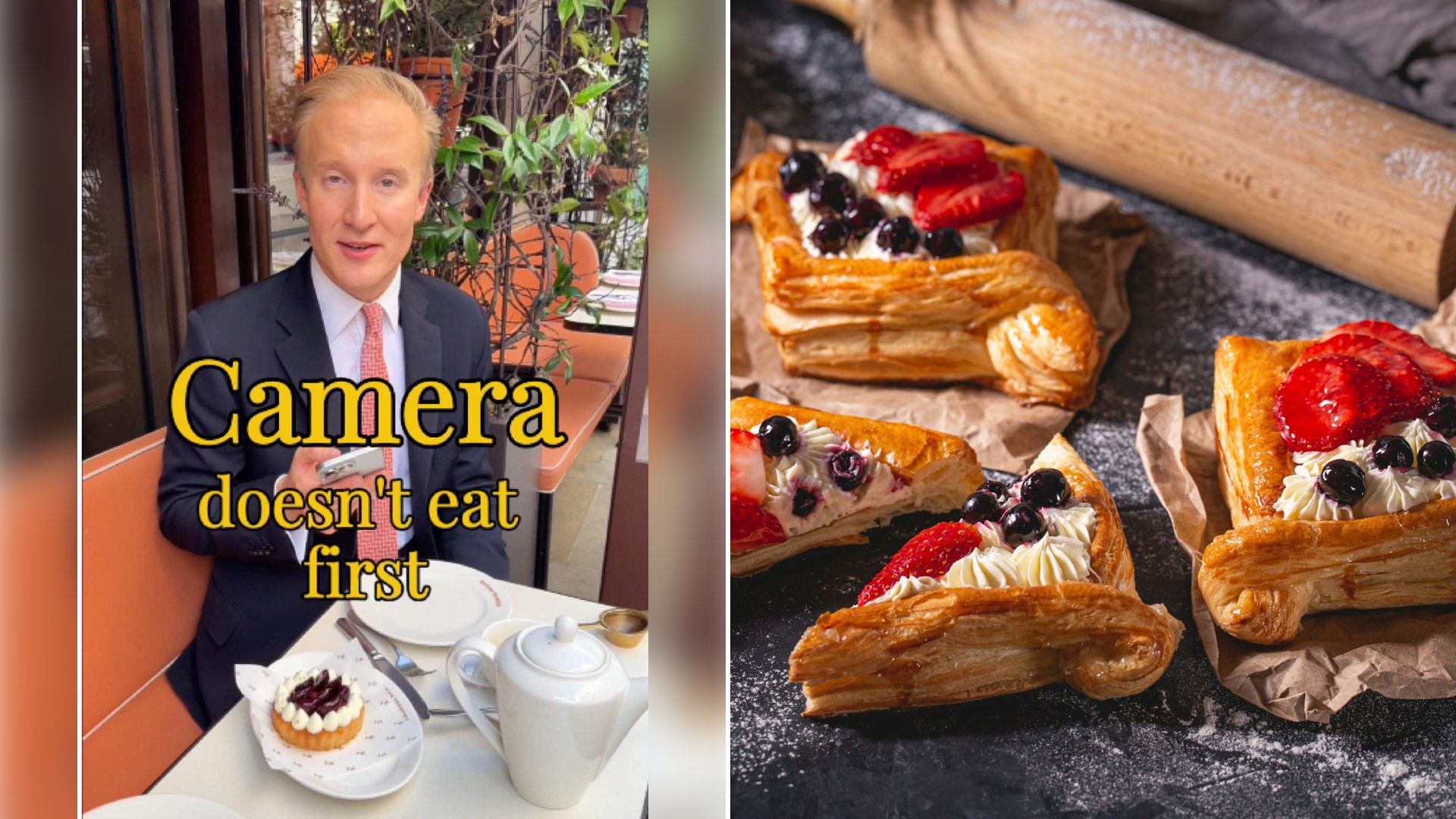
The tart in front of him is piled with dark berries and ringed with piped cream, and William Hanson is holding his phone over it. “Now, as aesthetic as that tart actually is, do remember you are meant to eat it rather than do an entire photo shoot,” the British etiquette coach says in a 12 second video posted on September 4, 2026 on his account @williamhansonetiquette.
He is seated at a white tablecloth on a leafy restaurant terrace, in a navy suit and a coral patterned tie, with a white teapot and cup beside the plate. His caption is a joke about the setting: “Tie and seat only accidentally matching,” a nod to the orange banquette behind him.
The advice itself comes in two lines. “If it’s that good, you’ll remember it anyway, so put the phone away and tuck in.” As he says “put the phone away,” he lifts the phone and waves it at the camera before setting it down.
Then comes the closer, with both hands open toward the camera: “And no one’s interested in photos of your food anyway. I’ll break it to you gently.” That last line is tongue in cheek, and the whole tip is just that: eat the dessert while it is in front of you, and do not turn the table into a set.
Who Is Giving the Advice
Hanson’s publisher, Penguin, describes him as director of The English Manner, which it calls the leading British etiquette training institute, and as an etiquette coach, author and podcast co host. His book Just Good Manners, subtitled “A modern guide to good British behaviour,” came out in paperback on August 28, 2025, and covers subjects from table manners to top hats.
What Other Etiquette Guides and Researchers Say
On phones at the table more broadly, the Emily Post Institute tells restaurant diners to “never disturb your own table and other diners by making or taking a call,” and, if a call cannot wait, to excuse themselves and go to another room, such as a lobby, or outside.
Research offers a twist on the photo question. In three studies published in 2016 in the Journal of Consumer Marketing (volume 33, issue 1), researchers Coary and Poor found that photographing food before eating creates a brief delay before the first bite. For indulgent foods, that pause increased savoring, which in turn raised people’s attitudes toward the food and their taste ratings. For healthy foods, taking the photo led to more favorable outcomes only when social norms about healthy eating were made noticeable.
In other words, a single quick photo of a rich dessert may make it taste a little better to you. What the studies tested was a short pause before eating, which is a long way from the “entire photo shoot” Hanson is warning against.
How to Handle the Photo Moment on Your Next Date or Dinner Out
Decide before the plate arrives. If a dish matters to you, a birthday cake or an anniversary dessert, tell your companion you would like one picture, so the pause is shared rather than sprung on them.
Take one photo from your seat, with no rearranging of glasses, plates or other people’s food, and no standing up for an overhead angle. Then put the phone face down or away, as Hanson does in the clip.
Eat while it is at its best. A plated dessert like the berry tart in front of him is assembled to be eaten right away; the cream and fruit will not wait for a long session of retakes.
Keep calls off the table entirely. Following the Emily Post Institute’s guidance, if your phone rings and the call cannot wait, step out to the lobby or outside rather than taking it in your seat.
If you are hosting, let guests photograph your cooking if they ask, and then serve. The food on the plate is the point, which is all Hanson is asking anyone to remember.