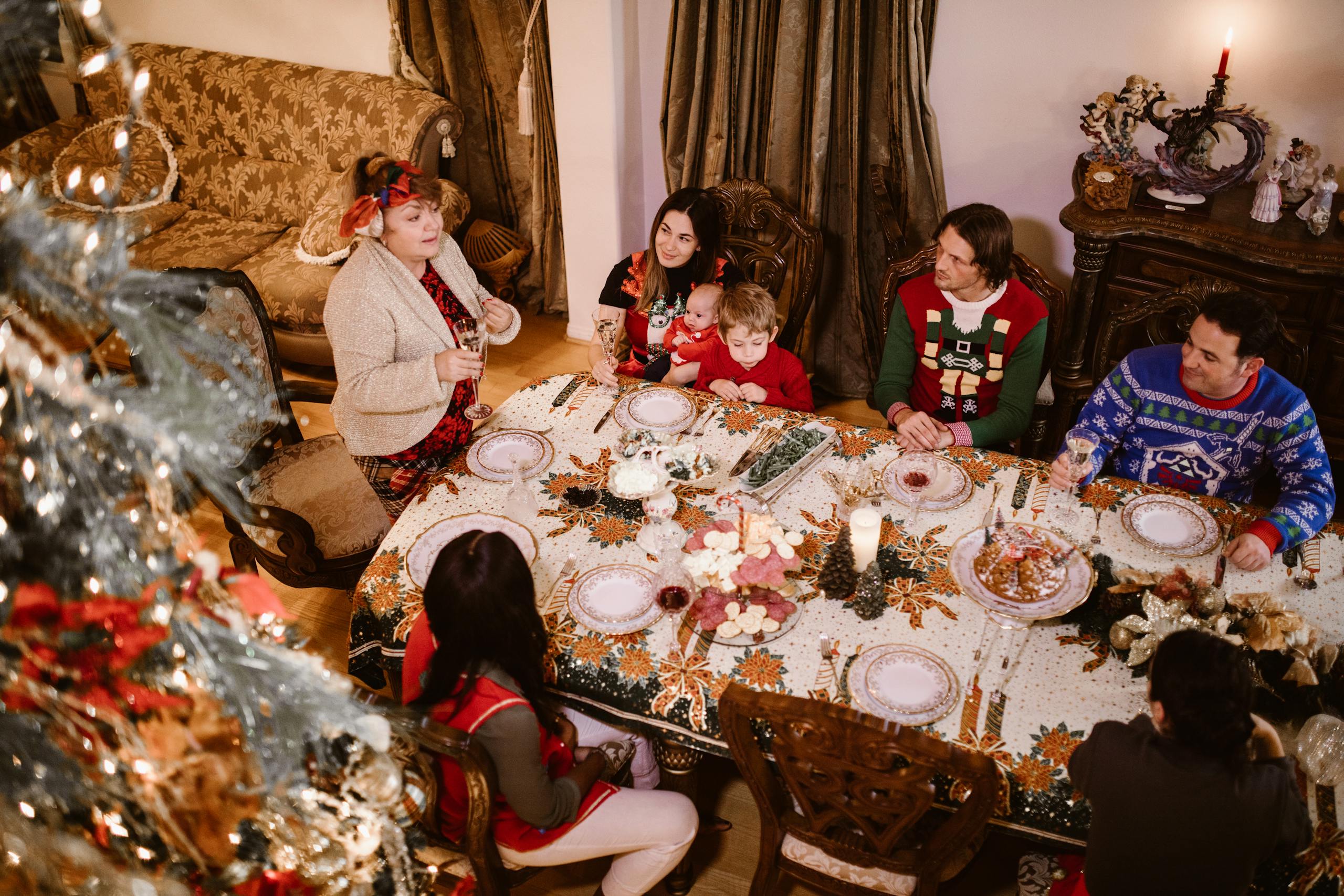
Forty-four percent of women report higher stress during the holidays, compared with 31 percent of men — and only 27 percent of women say they’re able to relax during the season, versus 41 percent of men, according to American Psychological Association survey data. The gap isn’t really about gift budgets or family drama. It’s about who ends up holding the actual workload once the calendar fills up with cooking, hosting, and coordinating — and the data shows that split is nowhere close to even.
The chore-by-chore breakdown behind the stress gap
The APA’s numbers get specific in a way that makes the imbalance hard to argue with. Sixty-six percent of women reported handling holiday cooking, compared with 35 percent of men. Fifty-two percent of women did the food shopping, versus 32 percent of men. Dishwashing split 70 percent women to 41 percent men. Meanwhile, the one holiday activity men reported doing more often than women was watching football — 46 percent to 26 percent. Both groups reported feeling roughly the same sense of obligation toward family during the holidays, according to the APA data, which makes the gap in who actually acts on that obligation the more telling number.
That pattern lines up with a broader body of research on household “mental load” — the invisible planning, remembering, and coordinating that happens before any task gets physically done. A study of 3,000 U.S. parents led by Dr. Ana Catalano Weeks at the University of Bath, published in the Journal of Marriage and Family, found mothers manage 71 percent of a household’s overall mental load compared with 45 percent for fathers. The split was starkest on daily recurring duties — cleaning and childcare — where mothers handled 79 percent versus fathers’ 37 percent. Fathers did carry more of the episodic tasks, like finances and repairs, but even there mothers contributed 53 percent. The holidays don’t create this imbalance. They just compress an entire year’s worth of extra planning, hosting, and gift logistics into about six intense weeks, on top of whatever imbalance already exists the other forty-six weeks of the year.

The gift-giving layer makes it worse, not better
Holiday gift-giving adds its own stress on top of the labor gap. Fifty-six percent of gift-givers report feeling stressed about the season, according to a LendingTree survey, with parents of young children (66 percent) and women specifically (64 percent) reporting the highest rates. Affordability was the top stressor overall, but women were disproportionately likely to cite it — 37 percent of women pointed to being unable to afford the gifts they wanted to give, compared with 28 percent of respondents overall. Nearly a third of gift-givers also said they felt pressure from family and friends around what to buy, layering social obligation on top of an already uneven workload.
That gift layer rarely gets counted as “labor” the way cooking or hosting does, but it carries the same invisible planning cost — tracking sizes, remembering who already has what, coordinating with in-laws so nobody doubles up, wrapping everything on a deadline. It’s the kind of task that shows up on nobody’s to-do list because it isn’t one task, it’s dozens of small decisions strung together over weeks, and the person doing that stringing-together is disproportionately the same person already managing the cooking and the cleanup.
What actually helps, according to the people who study this
None of this means holiday tension is inevitable. What the research points to is a labor-visibility problem more than a goodwill problem — both partners report caring about family and wanting the holidays to go well, per the APA data, but one partner is usually the one translating that care into a hundred small logistical decisions the other never sees. Making that invisible list visible, on paper, before the season ramps up, is the most consistently recommended fix among researchers studying household mental load: naming every task from “order the turkey” to “coordinate whose parents get which day” and assigning it explicitly, rather than assuming it will get split evenly by default.
Would you screenshot the 71-versus-45 number and send it to your partner before this year’s planning starts? It’s worth doing early, because the gap doesn’t announce itself in October — it shows up in late December as exhaustion, resentment, or a fight that looks like it’s about something small. The actual fix has less to do with spending less or wanting the holidays less, and everything to do with making sure the person doing 70 percent of the dishes isn’t also the one who planned the whole meal, bought every gift, and remembered whose allergy needed the stuffing recipe changed.