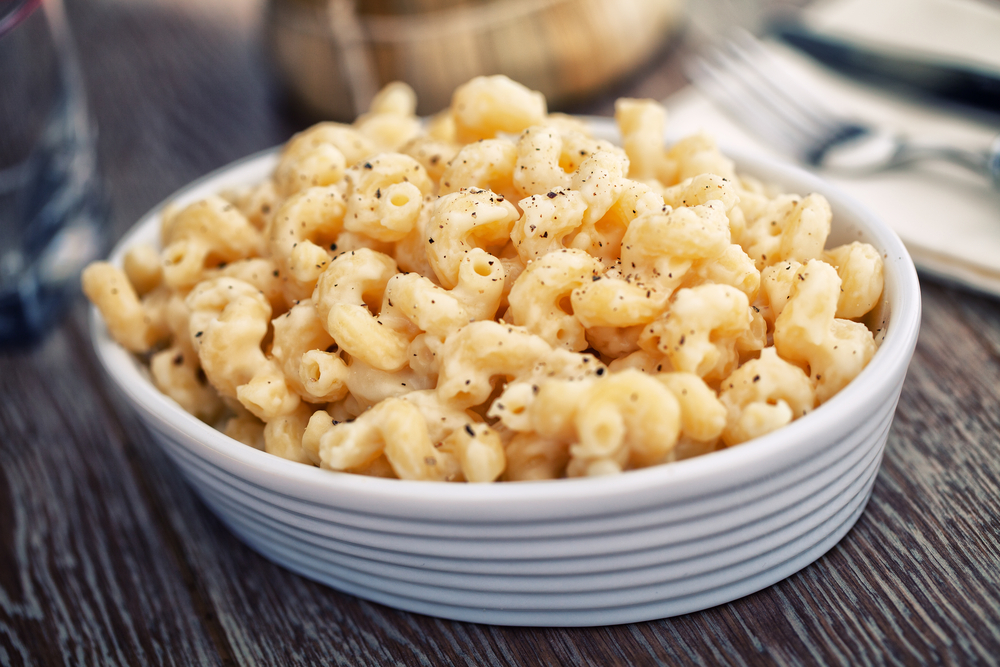
Stress hits, and the hand reaches for the mac and cheese or the mashed potatoes before the brain has finished registering why. That reflex isn’t a willpower failure or a mystery — researchers have spent years mapping exactly what happens in the body and the brain when a bad day sends someone toward a specific, familiar dish, and the answer is more precise than “comfort food tastes good.” It runs through memory, conditioning, and a newly identified neural circuit that links the brain’s reward system directly to its stress response.
The nostalgia mechanism is doing more work than the food itself
Chelsea Reid, a social psychologist at the College of Charleston, ran a series of experiments testing what actually makes comfort food comforting. Her findings, covered by Knowable Magazine, showed that the more nostalgia a food triggered in a person, the more comforted they reported feeling after eating it — and nostalgic foods worked specifically because they summoned memories of other people, not because of any nutritional or chemical property. In three of Reid’s four experiments, participants didn’t even need to eat anything: simply visualizing the food and writing about it produced the same emotional lift as actually consuming it.
That lines up with research from Nick Rogers, a sociologist at the University of Pittsburgh, who found that nearly every participant in his studies described a specific emotional attachment to a dish they’d eaten as a child. Comfort food, in other words, isn’t a universal category — mac and cheese and mashed potatoes show up so often because they’re common childhood staples in American households, not because those particular foods have some unique soothing property. The conditioning gets built early and reinforced over a lifetime of returning to the same dish during hard moments.
It might be more psychological than physiological
A. Janet Tomiyama, a psychological scientist at UCLA, ran stress studies comparing how people recovered emotionally after eating ultraprocessed comfort foods, fresh produce, or nothing at all. Per Knowable’s reporting on her work, mood improved at roughly the same rate across all three groups — meaning comfort food may get credit for a recovery that would have happened anyway, simply because stress tends to ease with time. That doesn’t mean the craving is fake; it means the food’s power is less about its ingredients and more about the ritual and the association it carries.
A newly mapped brain circuit explains the biology
The psychology side has an emerging biological counterpart. A research team led by Dr. Tu Jie at the Shenzhen Institute of Advanced Technology, part of the Chinese Academy of Sciences, identified a specific neural pathway connecting the brain’s reward system to its stress response, as detailed by Neuroscience News‘s coverage of the study, published in the journal Advanced Science. Eating palatable food triggers dopamine release in the prefrontal cortex, which activates a relay of inhibitory neurons that act as a structural brake on the paraventricular nucleus — the brain region where stress-response neurons become hyperactive during chronic stress. In stressed lab mice, eating palatable food measurably quieted those overactive stress neurons in real time.
That finding reframes stress eating as a wired survival mechanism rather than a lapse in discipline. The brain has a literal circuit that uses food to dial down its own stress alarm, which helps explain why the pull toward a familiar dish during a hard week can feel almost involuntary — because on a neurological level, it partly is.
Why mac and cheese specifically, and not just any rich food
Flavor scientist John Munafo at the University of Tennessee, also cited in Knowable’s reporting, has studied why certain textures and flavor combinations read as “comforting” across so many households — starchy, mild, creamy dishes like mac and cheese and mashed potatoes tend to be low-risk foods introduced early in childhood, before pickier eating habits set in, which helps explain why they become the default rather than something spicier or more complex. That early, repeated exposure is exactly the kind of conditioning Rogers documented: the dish doesn’t have to be objectively the “best” comfort food, it just has to be the one a person’s own history made familiar.
What this means at the dinner table
None of this research suggests comfort food is nutritionally special or that reaching for it is a problem to solve. It suggests the opposite: the craving is doing real psychological and neurological work, tied to memory, relationship, and a stress-dampening circuit that scientists are only now able to map directly. Understanding why the craving shows up doesn’t make it less real — it just makes the instinct to reach for a familiar bowl of something warm a little easier to trust rather than second-guess.