There’s a particular kind of pride that comes from continuing something a parent started, and one creator captured that feeling directly on camera, gesturing toward his family’s street food stall while speaking about what it means to carry on his father’s legacy. The cart in question isn’t new or recently opened; it’s the same one his father ran for decades, still serving the same neighborhood it always has.
Speaking plainly and directly to the camera, @sachin_evil_x7 frames the continuation of the family cart not as an obligation inherited by default, but as a genuine source of personal pride and a deliberate way of honoring the work his father put into building it in the first place. There’s no elaborate production behind the video; it’s simply a son standing in front of the cart that has fed his neighborhood for years, explaining in his own words why keeping it running matters to him.
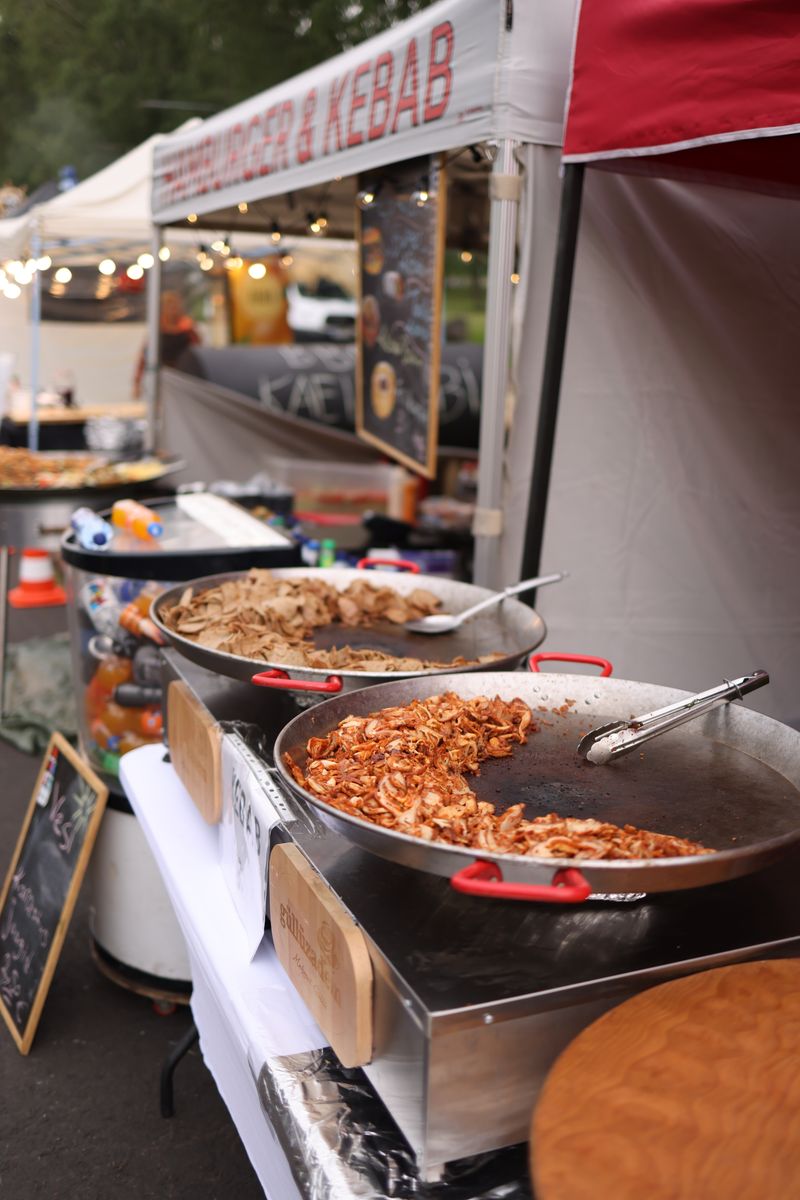
image: Lively street food scene at a Jakarta bazaar with diverse local cuisine. photo credit: pexels
View this post on Instagram
Family-run street food stalls occupy a particular place in the neighborhoods they serve, often becoming fixtures that outlast individual owners and even entire generations of a family. Unlike a restaurant that might change hands, rebrand, or close when a founder retires, these small, family-passed businesses tend to persist precisely because the next generation chooses to keep them going, absorbing not just the recipes and techniques but the relationships and reputation that took decades to build in the first place.
That continuity carries real value for a neighborhood beyond simply the food itself. A stall that has operated in the same location for decades becomes a kind of anchor point, a place regular customers have relied on across different stages of their own lives, sometimes watched over by two generations of the same family. When a son steps in to continue that legacy rather than letting it fade out, he’s not just keeping a business alive; he’s preserving a specific, lived piece of the neighborhood’s own history and identity.
For anyone thinking about their own family business, or considering whether to take on a legacy their own parents built, this video offers a grounded example of what that decision can look like when it’s made out of genuine pride rather than obligation. Taking over a family business isn’t always framed publicly as an honor; sometimes it’s discussed more as a fallback or a default path taken in the absence of other options. This creator’s framing pushes back against that narrative directly, presenting the choice to continue his father’s cart as something he’s genuinely glad to be doing, not something he’s settling for.
There’s also a broader lesson here about how small, unglamorous businesses can carry outsized emotional and cultural weight within a community, even when they never grow beyond a single cart or stall. Not every family business needs to scale into a chain or a storefront to matter. Sometimes its entire value lies in its consistency, in being the same reliable presence in the same spot for decades, run first by one generation and then, with evident pride, by the next, feeding the same neighborhood that has always depended on it.
There’s also something worth reflecting on regarding what actually gets passed down when a family business changes hands between generations. It isn’t only the recipes, the equipment, or the physical cart itself; it’s also the accumulated trust of the customers who’ve been coming back for years, the specific rhythms and routines of running that particular stall, and the relationships with regulars that a founder spends decades building. A son stepping into that role doesn’t just inherit a business; he inherits a web of relationships and expectations that took an entire generation to construct, and honoring that inheritance well takes its own kind of quiet skill.
For anyone reflecting on their own family’s legacy, whether that legacy involves a business, a trade, or simply a set of values passed down over time, this video is a reminder that continuing what a parent built doesn’t have to be framed as staying small or playing it safe. It can be framed, honestly and without irony, as a genuine choice made out of respect and pride, one that keeps a piece of a parent’s life’s work actively alive rather than letting it quietly end when they eventually step back. That reframing alone can change how an entire family thinks about who carries a legacy forward, and why.
There’s also something worth noting about the neighborhood side of this equation. A cart that has fed the same community for decades becomes woven into the daily life of that area in ways that are easy to overlook until the cart is gone, a familiar stop on someone’s walk home, a fixture at the corner they’ve passed a thousand times without thinking twice about it. Its continued survival into a second generation isn’t just a family milestone; it’s a small act of stability for an entire neighborhood that has quietly come to depend on it being there, decade after decade, through whatever else in the surrounding neighborhood has changed, closed, reopened, or moved on and shifted around it in that same long span of time.
There’s also a quieter form of recognition at play whenever a neighborhood watches a cart like this one pass from one generation to the next. Regulars who’ve been ordering from the same stall for years often treat that continuity as a kind of shared milestone of their own, proof that something dependable in their daily routine has survived a transition that, for plenty of family businesses, ends up marking the quiet end of the operation rather than its continuation into a second generation.