

Winning over a partner’s family is never guaranteed, and it is even less certain when that family carries strong opinions about food shaped by a specific cultural tradition. One woman managed to clear that bar decisively, with a single soup recipe that has apparently become a genuine hit with her husband’s entire Turkish family.
In her video, @lauraskitchendiary demonstrates her recipe for Turkish red lentil soup, narrating a personal anecdote about her husband’s family alongside the cooking process itself. She describes their deep, almost inherited attachment to soup as a household staple, a food that clearly carries more cultural weight in their family than it might in many others, and explains that her version of this particular soup has managed to win consistent approval across the family regardless of the season. The video walks through the full preparation, from sauteing the onions at the start to the finished, ladled bowl at the end.
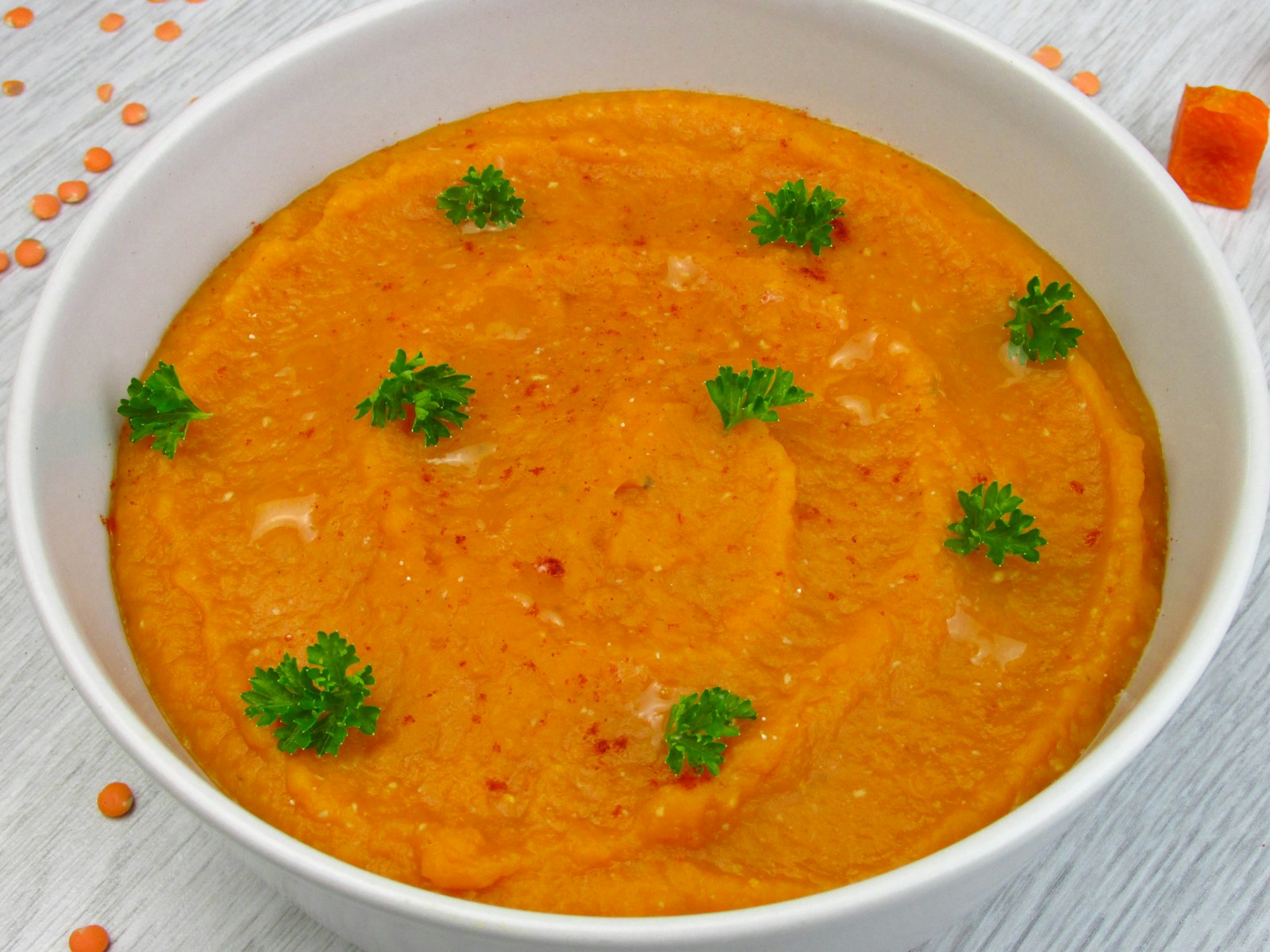
image: A bowl of vibrant orange soup garnished with fresh herbs. photo credit: unsplash
View this post on Instagram
There is something notable about a dish clearing this particular bar. Cooking a beloved regional dish for the family that originates that tradition is inherently a higher-stakes undertaking than cooking almost any other kind of meal for in-laws. A family with deep roots in a specific cuisine typically has strong, well-formed opinions about how a given dish should taste, informed by a lifetime of eating it prepared a certain way. Getting that family’s approval on a dish from their own culinary tradition, made by someone who married into the family rather than growing up inside it, is a meaningfully different accomplishment than simply cooking a dish nobody in the family has strong preexisting standards about.
Turkish red lentil soup, known in its home country as a dish with deep everyday significance rather than a special-occasion rarity, is exactly the kind of recipe where that dynamic plays out most sharply. It is a dish most Turkish families likely have strong internal standards for, shaped by however their own mothers or grandmothers made it, which means a version made by someone outside that lineage faces real scrutiny before it can be accepted as genuinely good rather than simply an acceptable approximation.
That the soup has apparently succeeded across every season, according to the creator, adds another layer of significance. A dish that only gets requested occasionally, or only in a specific context like a holiday, carries less weight than one a family wants regardless of the time of year, treating it less like a special dish and more like a permanent addition to their regular rotation. Being asked for consistently, without regard to season or occasion, suggests the soup has moved past being merely tolerated and into being genuinely wanted.
There is a broader dynamic here worth naming, one that plenty of people who marry into a family with a strong, distinct food culture will recognize immediately. Cooking for in-laws from a different cultural background often carries an implicit test, whether anyone states it outright or not: can this new family member genuinely engage with and respect a tradition they did not grow up inside, rather than simply observing it from the outside. Successfully cooking a dish from that tradition, well enough to earn real, repeated approval rather than polite tolerance, tends to function as a meaningful gesture of respect and effort, understood by the family even if it is never explicitly framed that way.
Food researchers who study family integration across cultural lines frequently point to cooking as one of the more effective, low-pressure ways that this kind of bridge gets built. Language barriers, differing customs, and unfamiliar social norms can all make integrating into a partner’s family feel intimidating in the early years of a relationship. Food, by contrast, offers a more direct and universally legible way to demonstrate genuine effort and care, since everyone at the table can immediately taste whether that effort translated into something good, regardless of any other barriers that might exist.
By the time the finished bowl is ladled out at the end of the video, what is really on display is not just a well-made soup, but a small, ongoing act of belonging, one bowl at a time, in a family she joined rather than one she was born into.
There is also a broader takeaway here for anyone entering a relationship with a partner from a strongly rooted food culture different from their own, wondering how to approach cooking for that side of the family without overstepping or getting it wrong. The instinct to attempt an authentic dish from a partner’s culture, rather than defaulting only to familiar dishes from one’s own background, tends to be read as a genuine act of curiosity and respect, even if the first few attempts fall short of a lifetime of family standards. What ultimately builds trust is not perfection on the first try, but visible effort and a willingness to keep refining the dish based on honest feedback. This creator’s soup, apparently good enough now to be requested across every season, likely did not arrive at that level on the first attempt. It probably took the same kind of patient repetition that wins over any skeptical audience, one bowl at a time.
Red lentil soup itself varies considerably across different regions of Turkey, with ingredient ratios, spice blends, and even the choice of garnish shifting from household to household long before any one version is declared the definitive family recipe. That variation is part of what makes winning approval so specific an achievement: she wasn’t just clearing a generic bar for soup, she was matching, or at least satisfying, one particular family’s own inherited version of a dish with countless competing regional interpretations.

