

Some hospitality doesn’t require advance notice or a special occasion, just a mom who sees hungry kids show up at her door and treats feeding them as a given rather than a favor.
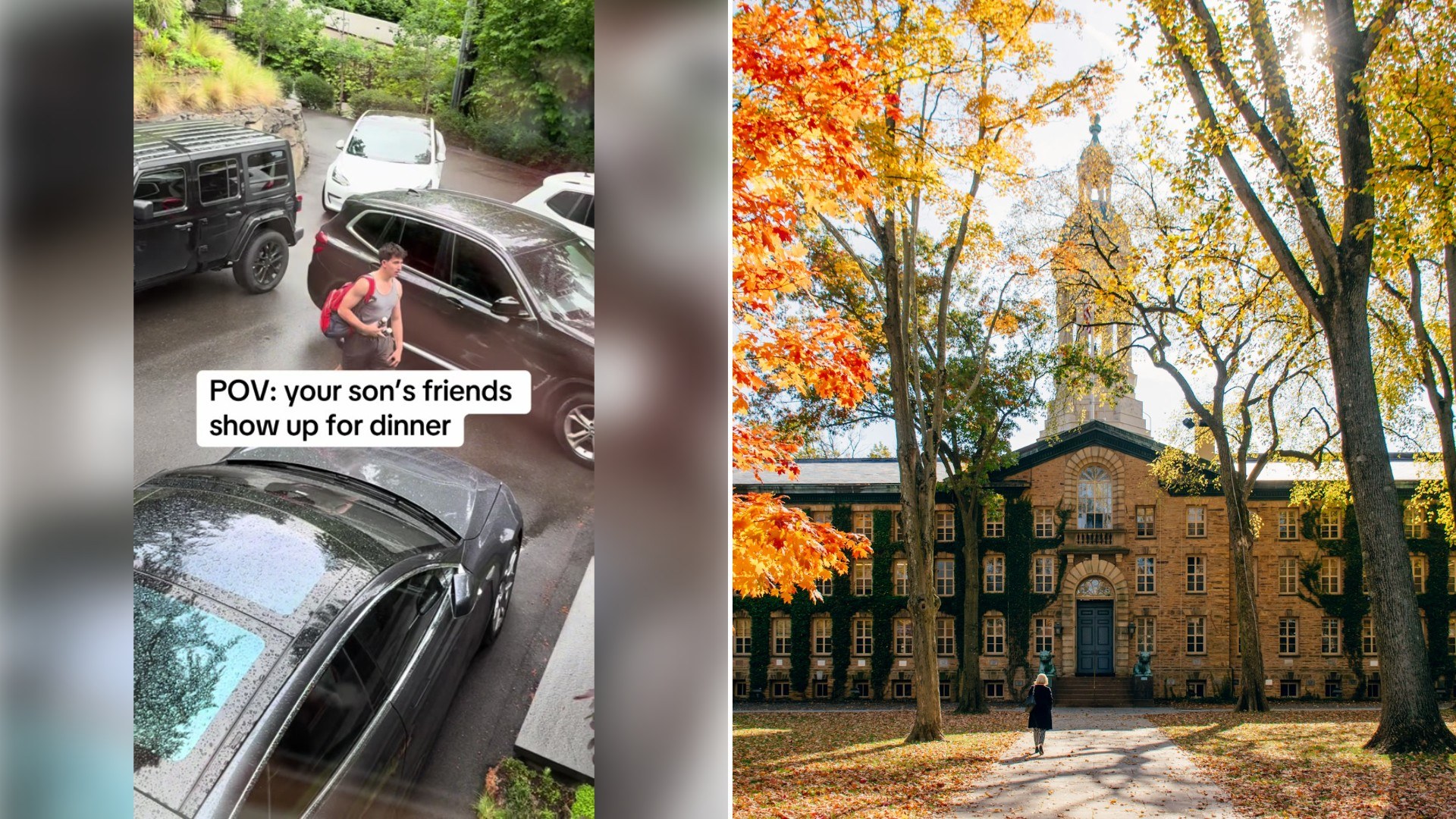
The creator, @seattlehanddoc, shares footage of her noticing her son’s friends arriving at the house unannounced, right before the group heads off to college, and without hesitation she puts together a full stir-fry and potsticker dinner for everyone. The video follows her fast-paced cooking process from that first glance out the window to a full spread ready for the group, framed around the simple warmth of feeding her son’s friends on short notice.
@seattlehanddoc
Feeding an unexpected group of teenagers on zero notice is a genuinely impressive logistical feat, requiring both a well-stocked kitchen and the instinct to treat the sudden arrival as an opportunity rather than an inconvenience. That instinct, saying yes to hospitality before anyone even asks for it, tends to be exactly what makes certain households the ones friend groups gravitate toward.
It’s worth naming exactly what has to be in place, both practically and emotionally, for a mom to pull off a spread like this one on no notice at all. Practically, it requires a kitchen stocked with the kind of versatile staples that can scale up quickly, vegetables, protein, dumplings that can go from freezer to table in the time it takes a group of teenagers to settle into a living room. Emotionally, it requires a mindset that doesn’t treat an unannounced group of hungry kids as an imposition on an otherwise planned evening, but as a genuinely welcome, even exciting, opportunity to feed people who clearly wanted to be there. That second part is harder to teach than the first; plenty of people could technically pull off the cooking logistics but wouldn’t have the instinct to say yes without a flicker of hesitation.
There’s also something worth saying about what it means, specifically, to be the parent whose house becomes the gathering point for a friend group. Every close-knit group of teenagers tends to gravitate toward one particular house, one particular family, where showing up unannounced feels not just tolerated but genuinely welcomed. That reputation doesn’t happen by accident; it gets built slowly, dinner by dinner, over years of exactly this kind of no-hesitation hospitality, until eventually a group of teenagers heading off to college instinctively knows exactly whose door to knock on for one last shared meal together.
The specific menu she chose, a stir-fry and potsticker spread rather than something simpler like sandwiches or takeout, also deserves a mention. Putting together a full, cooked meal for an unexpected group takes considerably more effort than ordering pizza or throwing together something quick and low-effort. Choosing to cook something more involved, on short notice, for a group of kids who weren’t even technically her responsibility to feed, signals a level of care that goes well beyond simply meeting a baseline expectation of hospitality.
The timing adds an extra layer of meaning here. A meal served right before a group scatters off to different colleges carries a small, unspoken sense of occasion, one last shared dinner together before a genuinely significant life transition pulls everyone in different directions. There’s something particularly poignant about a meal like this one landing at exactly that inflection point, a friend group that has presumably spent years showing up at each other’s houses without notice, about to scatter to different schools, different cities, different versions of adult life that will make casual, unannounced drop-ins considerably harder to pull off going forward. This dinner may well be remembered less as an ordinary meal and more as a quiet closing chapter of an era of friendship defined by exactly this kind of effortless, no-notice togetherness.
There’s also something worth noting about what a moment like this means from the mother’s own perspective, not just the friend group’s. Watching her son’s friends treat her house as a safe, welcoming place to land, right before they all head off in different directions, is its own quiet form of reassurance, evidence that the environment she and her family built over the years actually worked, that these kids felt comfortable enough to show up unannounced because they knew, on some level, they’d be fed and welcomed without question.
Videos like this one also resonate broadly because they tap into a specific, widely shared nostalgia for exactly this kind of household, one where a friend’s mom, not just a friend, became a genuine fixture of adolescence, remembered fondly for the meals, the open door, the sense that showing up hungry was never going to be a problem. A lot of viewers commenting on content like this one are likely doing so from the other side of that exact dynamic, recalling their own version of a friend’s parent who fed them without hesitation decades ago, a small kindness that, in hindsight, shaped their sense of what generosity and hospitality actually look like in practice.
Whatever these friends remember most about their last weeks before college, there’s a good chance a spontaneous stir-fry and potsticker dinner, made without being asked, ends up somewhere on that list, one more entry in a long, unspoken tradition of a house where showing up hungry was always, without exception, the right call, and one last shared meal to carry with them into whatever comes after this particular chapter of their friendship closes.
