Fifteen percent was a good tip, and 20 was generous. Most of us learned that around 1970 and never had to think about it again. Then one day a card machine was spun around on a counter, and the smallest number printed on it was 20. Nobody announced the change and nobody voted on it.
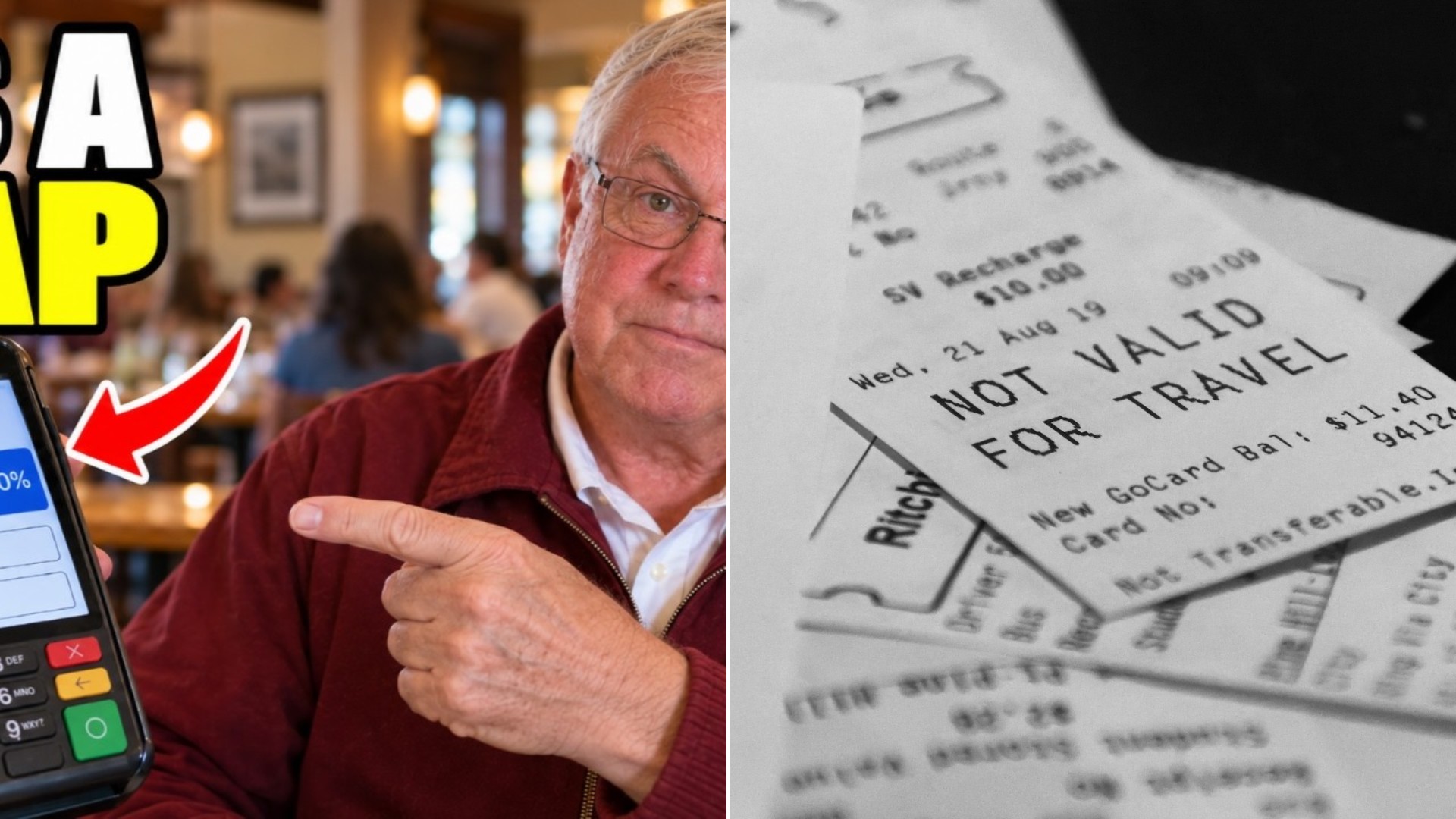
That is the starting point for Gus of Dining with Gus, who spent 31 years running restaurant kitchens and retired 2 years ago. He says almost nothing that happens at the end of a meal today is an accident, and he walks through 15 designs, each built to do a specific job. He starts with a clear note: tip your server, and tip well, because that money is how those people live, and none of this is about taking a dollar out of a server’s pocket.
Designs 1 And 2 Are The Numbers On The Screen
The suggested tip on a receipt is very often figured on the total after sales tax, not on the price of the food. On a $60 dinner the tax might be $5, so a 20% suggestion quietly asks for an extra dollar on money that went to the state. Gus says to tip on the food, where the service happened, because whoever programmed the receipt chose which number to multiply.
The choices themselves have shifted too. The lowest number offered is frequently 20, the middle one is 25 and the high one is 30, and the 15 many of us grew up with has vanished from the page. Gus says somebody chose those three numbers on purpose, knowing most people pick the middle one. There is a name for it in sales, anchoring, and when all three move up, the middle one moves with them and the whole country tips more without a conversation.
Designs 3 And 4 Are The Spinning Screen And The Hidden Button
Gus finds the spun-around screen the most bothersome. A card machine faces you, three large buttons are offered and a person stands about 18 inches away waiting to see which one you touch. In the old days you wrote a number on a slip and folded it closed. He says the companies that sell the tablets know what this does to the average tip because they print that number in their own sales material, and it works best on polite people who do not want to be seen choosing a small number.
On many screens the generous options are large and colorful, while the option to leave nothing or enter your own amount is small gray text in a corner or on a second screen. His answer is simple. Put your glasses on, turn the screen so you can see it, read the small text before you touch anything, and take your time, because the person holding the machine will wait.
Designs 5 And 6 Make You Pay Twice By Accident
A 20% service charge may be listed in small type above the total while the check arrives with a blank tip line in large print. Nobody lied, but a tired person at the end of a nice evening fills in the line, and on a $100 dinner that is $20 leaving your pocket twice. Gus says to read the receipt from the bottom upward and look for the words service charge, gratuity, service fee or administrative fee, which takes about 15 seconds. If you still want to reward great service, leave a few dollars in cash on the table so you know who it reaches.
The same thing happens with automatic gratuity. The check is printed from the same template for every table, so the blank tip line appears under the charge. Gus sees no malice in the paper, but the result is that a careful person pays twice. His fix is to ask kindly when the check lands, is gratuity already included on this, a five-second question every server has answered a thousand times.
Designs 7, 8 And 9 Are Slips, Takeout Prompts And Round-Ups
Some places hand over a credit card slip with a tip already written in. Crossing it out feels like a confrontation, and Gus says that feeling is exactly what is counted on. You are allowed to cross it out, write your own number or ask for a new slip, and the money is yours until you sign.
At takeout counters, bakery cases and self-serve lines, the same three buttons appear because the same payment system is used. Gus tips something on a real takeout order that someone packed, and he says some shops share that money with the kitchen. But he does not tip 25% for a cup of coffee he poured and lidded himself, and he says you should feel no guilt either, since the prompt is a default setting the shop switched on when it bought the system.
The round up for charity can arrive with yes already selected so you must uncheck it. Gus says the causes are usually real and the amounts small. His point is that a default is a decision somebody made for you, so make sure any giving is a decision you made with your eyes open.
Designs 10, 11 And 12 Are Big Parties, Buffets And Wine
A party of eight getting an automatic gratuity has been standard forever, and Gus calls it reasonable, since large groups take longer and servers used to get burned when everybody assumed someone else was handling the tip. What has been happening quietly is that the number keeps dropping to six, five, four and in some places any party at all. If it is printed on the menu it is a price and you owe it, but if it simply appears on the check, you are allowed to ask.
At a buffet you filled your own plate, yet the check arrives with a full tip suggestion. Someone did clear plates and refill water, and Gus tips at a buffet every time. He gives 10% or a few dollars in the hand of the person who actually worked his table. A bottle of wine works the same way. A $90 bottle takes about 90 seconds of labor, but a percentage applied to the whole check adds 18 or 20 dollars to the tip, so he suggests thinking about it for three seconds instead of letting the machine think for you.
Designs 13 And 14 Are Included Gratuity And The Second Ask
Gus draws a distinction few people know. A tip is money you chose to leave and it belongs to the staff, while a mandatory service charge is revenue for the restaurant, and the house decides where it goes, which may be to the staff and may be to the rent. Both are legal, but when a menu says gratuity included, a reasonable person assumes the server has been taken care of. So ask one plain question, does that go to my server? A good house answers instantly.
A second ask is another technique. After you tip and sign, another prompt asks whether you would like to add more, or a jar appears at your elbow. One ask is a request, two asks is a technique aimed at people who feel rude saying no twice in the same minute.
Design 15 Is The One Trick Behind The Other Fourteen
Gus says every item comes down to the default. None is a price. Each is a number somebody else chose in advance, put in front of you when you were tired, happy and wanting to be kind, and arranged so accepting is easy and declining costs you something in front of an audience. It works best on a generation raised not to make a fuss. His defense is a single sentence: a default is not a price or a bill, it is a suggestion written by a stranger, and you may write a different number calmly, and generously if the service was good.
He also confesses that he did this himself. In his last years he put tablets in his restaurant and chose the three percentages, moving his lowest button from 15 up to 20 after a sales representative explained what the numbers do. The average tip went up by several points within a month and no customer said a word. His staff made more money, which he calls the honest half, but he did it by changing a number on a screen that customers trusted to be neutral.
His homework is easy. Next time you are handed the machine, find the button that lets you enter your own amount and use it, even if you type exactly the number they suggested, so your hands learn where that button lives.
More Stories You May Like
- Man Shares His Two Cents on American Tipping Culture and Why He Thinks the System Has Gotten Out of Hand
- Diner Notices the Restaurant Already Added a $20 Tip to His Bill When He Only Wanted to Leave $10 and Shows Everyone Exactly What He Did About It
- Man Spends the Most Money He Has Ever Spent at Costco and Shows the Grocery Bill for the Week